
 Italiano
  English
  Français
  Español
  Deutsch
Making handmade candles is a fascinating art, but anyone who has tried it at least once knows how frustrating it can be to encounter aesthetic defects or discover that the candle does not emit the desired scent. In this article, we explore together the most common problems in creating DIY candles, and how to effectively solve them.
Why do holes form around the wick?
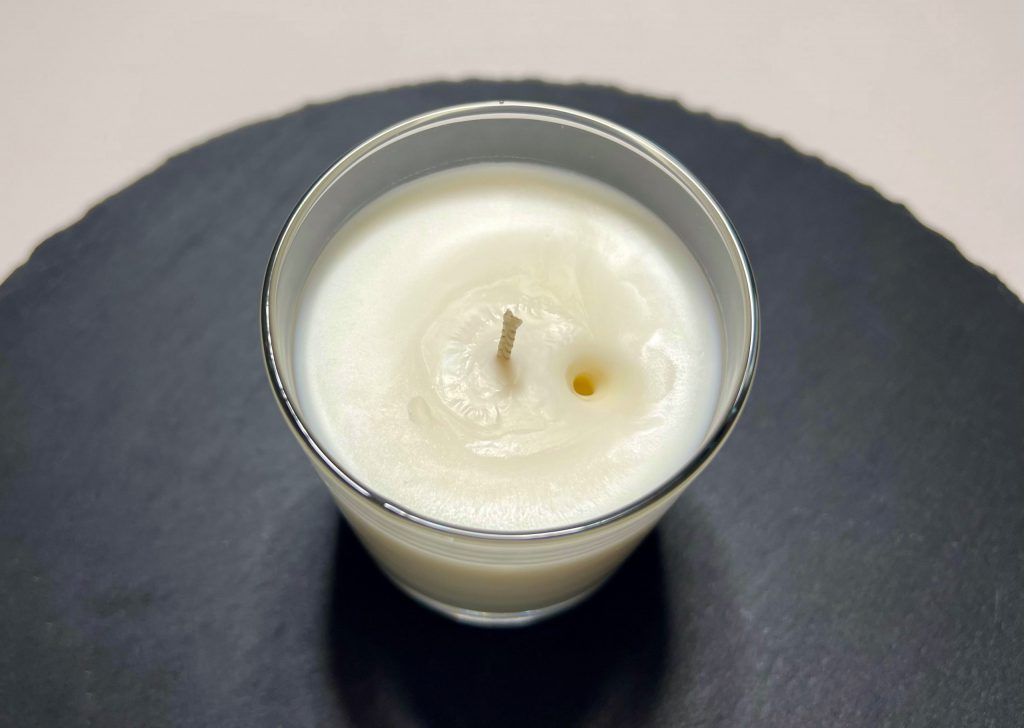
Often during the solidification of candles, holes form around the wick. This defect is mainly due to air bubbles trapped in the wax that rise to the surface as it solidifies.
To minimise this problem, it is essential to mix the wax slowly, avoiding incorporating air. Additionally, pouring the wax slowly so that it touches the wick can help burst any air bubbles.
Why do cracks or irregularities form on the surface?
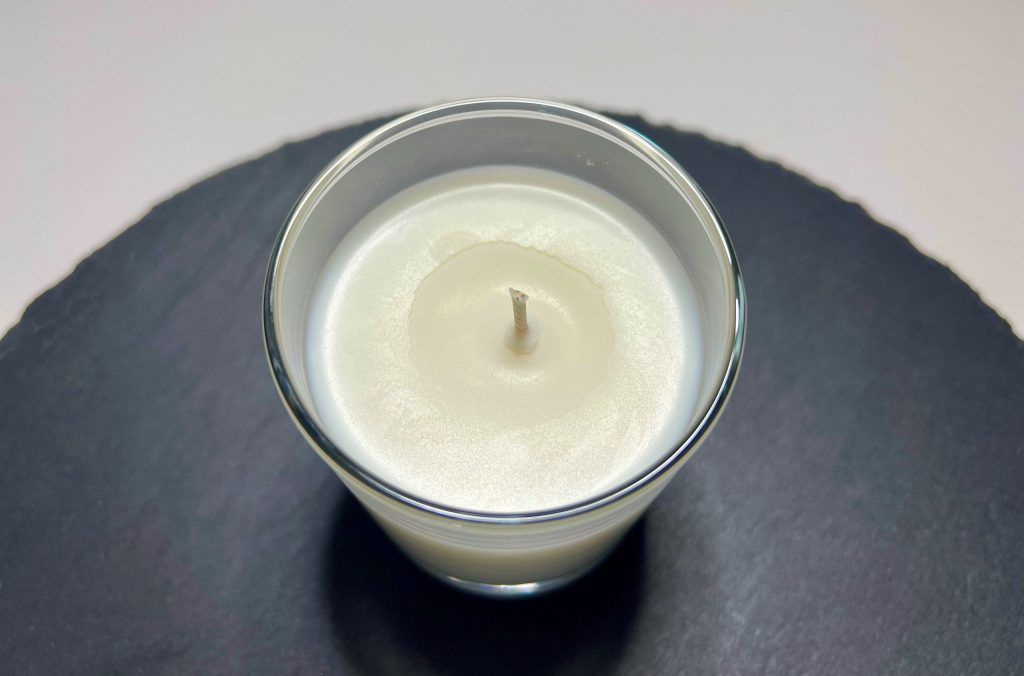
In most cases, cracks on the surface of candles form due to temperature changes. Specifically, if the wax cools too quickly, the likelihood of cracks or irregularities forming is much higher.
The solution to this problem is to ensure that once poured, the candles cool slowly and evenly, protected from temperature fluctuations and cold drafts. While they are solidifying, try to place the candles away from each other so they can cool uniformly. Finally, pay attention to the place where the candles are stored once ready, ideally at a temperature between 20 and 25°C.
What is the white patina (frosting effect) on candles?
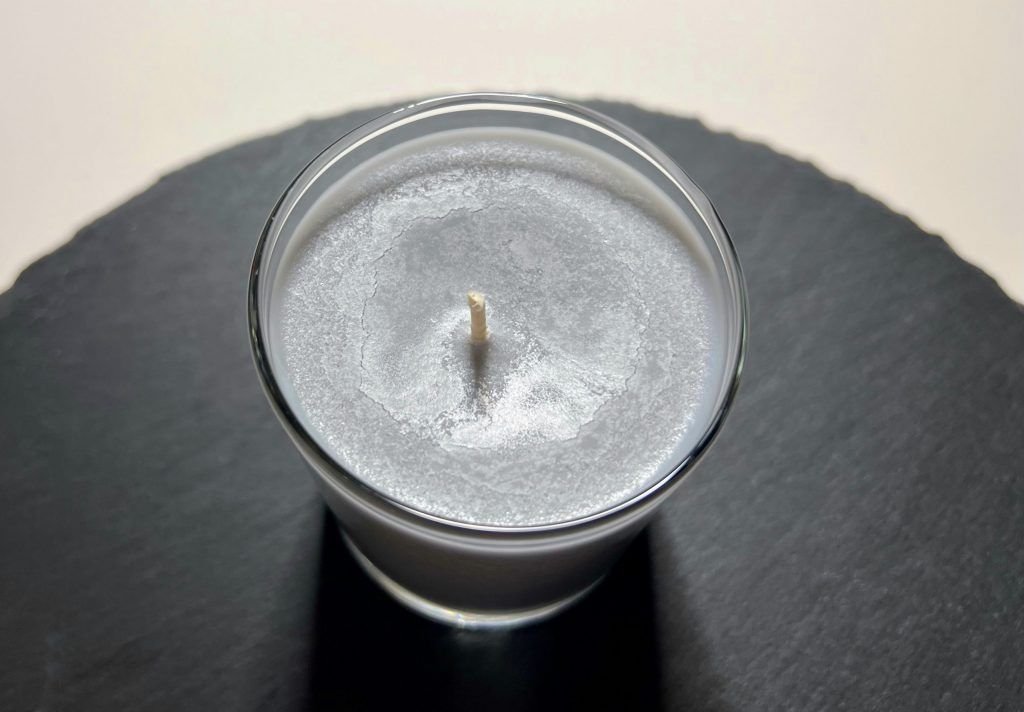
The white patina that sometimes appears on candles, known as the frosting effect, is common in vegetable waxes, especially soy wax. This effect occurs when the wax tries to return to its original state, forming crystals.
To minimise the frosting effect, it is important to carefully control the temperature of the environment in which you work and the pouring temperature. You can try making adjustments by increasing or decreasing it by a few degrees to get as close as possible to the ambient temperature.
It should be noted that this phenomenon, although unsightly and difficult to counteract, does not alter the quality of the candle in any way but rather demonstrates the purity of the wax used.
What are wet spots and how to avoid them?
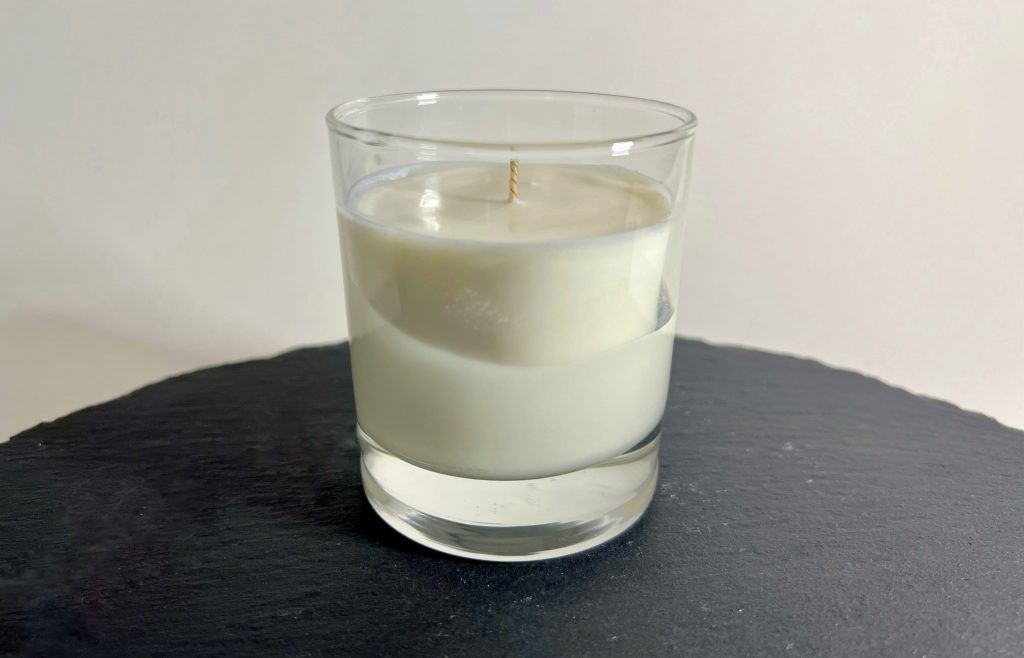
It often happens that in container candles, the wax seems to create wetter patches. This phenomenon is called a wet spot, but rather than moisture, it is actually related to the wax detaching from the container at certain points during the solidification phase.
You can try to reduce this effect by thoroughly cleaning and drying the containers and heating them in the oven or with a heat gun before use.
Why does the wick produce black smoke?
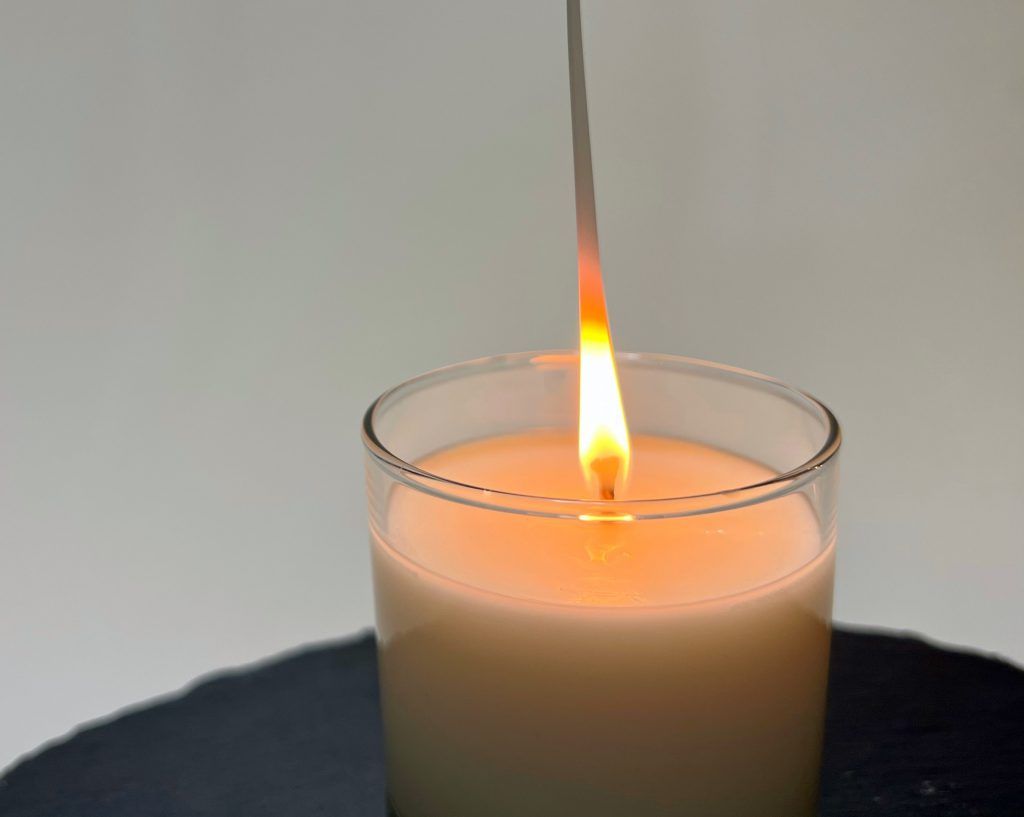
Black smoke can be caused by an excess of fragrance, the use of low-quality dyes or decorations, or by a wick that is too large or too long. Make sure to choose the wick of the correct size based on the diameter of the container and keep it at a length of about 0.5 cm, trimming it before each lighting.
Why does the candle break when removed from the mould?
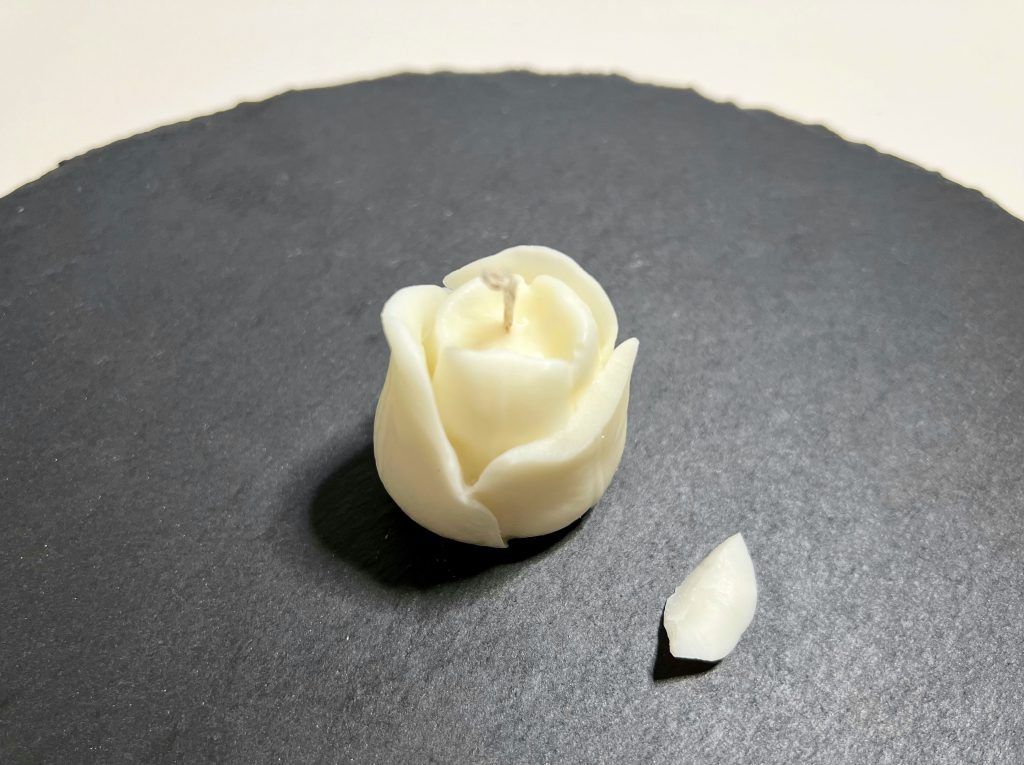
Vegetable waxes, particularly soy wax, are quite soft, so candles made with these waxes tend to be very fragile.
To prevent candles from breaking while demoulding, always use waxes specifically designed for moulds and, if necessary, add 10-20% of vegetable stearin to increase their hardness. You can also use release sprays to facilitate extraction.
Why does a moulded candle tend to melt too quickly?
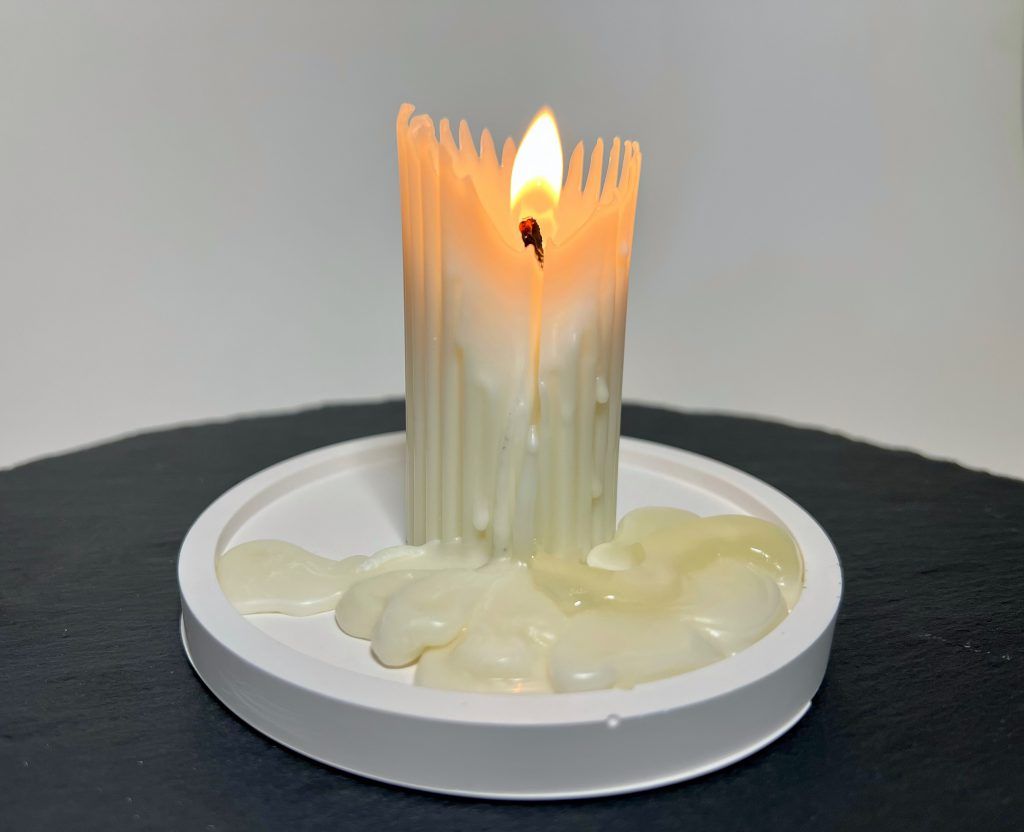
This happens mainly for two reasons: if the wick is too large for the diameter of the mould used or if the candle is not allowed to cure for at least two weeks. Again, adding vegetable stearin or paraffin to the wax can help create a harder and longer-lasting candle.
Why does my candle "sweat," meaning it has an oily surface?
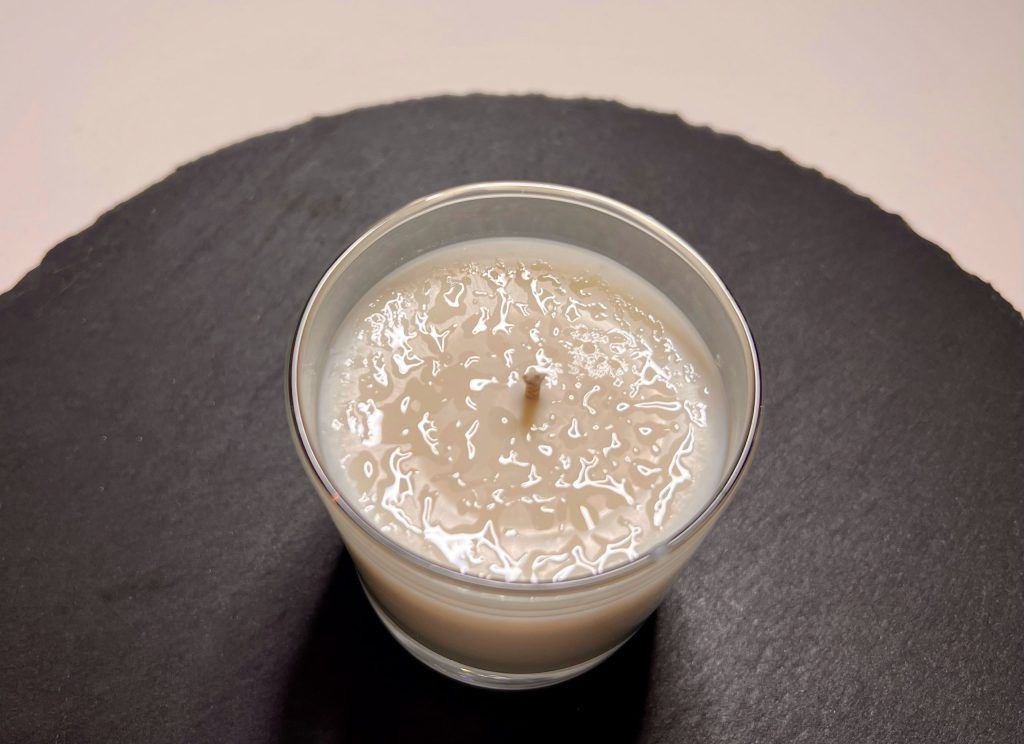
If the candle has droplets on the surface, it is likely that it has experienced a temperature fluctuation.
Once ready, store the candles in an environment of 20-25°C, away from heat sources, humidity, or temperature changes. Sometimes, the oil droplets on the surface can also be due to excessive fragrance doses, so do not overdo the dosage percentage.
Why does the candle not smell when lit?
If the candle does not smell as it should, it may be due to poor-quality fragrance or a dosing error.
It is essential to use high-quality fragrances and dose them correctly, usually between 4% and 10% depending on the type of wax used. The correct percentage to use depends on the type of wax: your supplier will be able to indicate the right percentage based on the wax you have chosen to use. Avoid adding too much fragrance, as it can cause smoke and an unpleasant odour. For vegetable wax candles, allow them to cure for at least two weeks before lighting them, to allow the fragrance to fully develop.
Martina Vigliotti, known as Diecizerocinquecandele, has also created a video where you can find a practical example not only of these problems but also of the most effective methods to solve them. You can find it below:
Creating quality candles requires patience, attention to detail, and the use of excellent raw materials. Every defect can be overcome with a bit of experience and the right precautions. Don't be discouraged if you don't achieve the desired result immediately: experiment and conduct tests to learn this fun art!