 Italiano
  English
  Français
  Español
  Deutsch
A ceramic kiln is an important and significant investment, as well as an essential tool for producing terracotta and ceramics of all kinds, and it is perfectly normal to desire - and expect! - that it functions optimally and for a long time. However, like all machines, ceramic kilns can also experience wear, malfunction, or damage, and in some cases, it is necessary to intervene with replacements or repairs.
We often receive messages from customers who are having difficulties with their kiln but do not know what the cause is, which is why we thought to create a brief guide to the main problems or malfunctions of the ceramic kiln to help you identify the type of problem and suggest the best, quickest, or most economical ways to resolve it.
How does a ceramic kiln work?
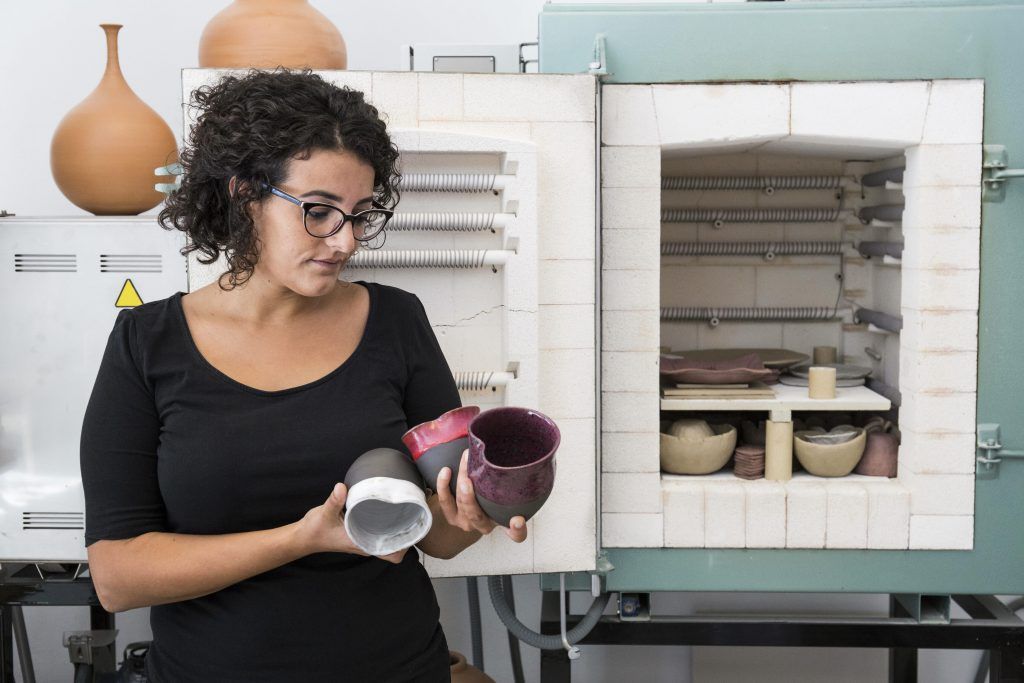
The basic premise is that the ceramic kilns available on the market today are all electric and are always equipped with a computer and a control panel for settings and information. Most of the problems that occur are indeed related to the malfunction or breakage of one of the electrical parts of the kiln, particularly those that regulate the temperature or interact with the computer. We will therefore focus on this type of problem.
The computer itself is usually able to detect and indicate the type of malfunction through an error message, and shortly we will also see what the most common messages are and what to do in such cases.
But let's see what can be done if the kiln has malfunctions due to electrical components.
The kiln does not start or turns off by itself
If the kiln does not start, or turns off by itself as soon as it is switched on or during the heating or firing process, the cause is likely to be found in the electrical supply.
Check that all the plugs are properly inserted and that there are no obvious problems with the cables or sockets. Ensure that your electrical system is compatible with the kiln's consumption, or that there have been no blackouts or power drops that may have interrupted the supply causing it to turn off. In this case, you just need to wait for the power to return and turn the kiln back on.
Another perhaps elementary but very important detail is the temperature of the room in which the kiln is located: if the surrounding environment is too hot, the kiln may automatically turn off for safety reasons. In this case, make sure to ventilate the room, turn off any heating in operation, or, if necessary, move the kiln to another environment.
The kiln does not reach temperature
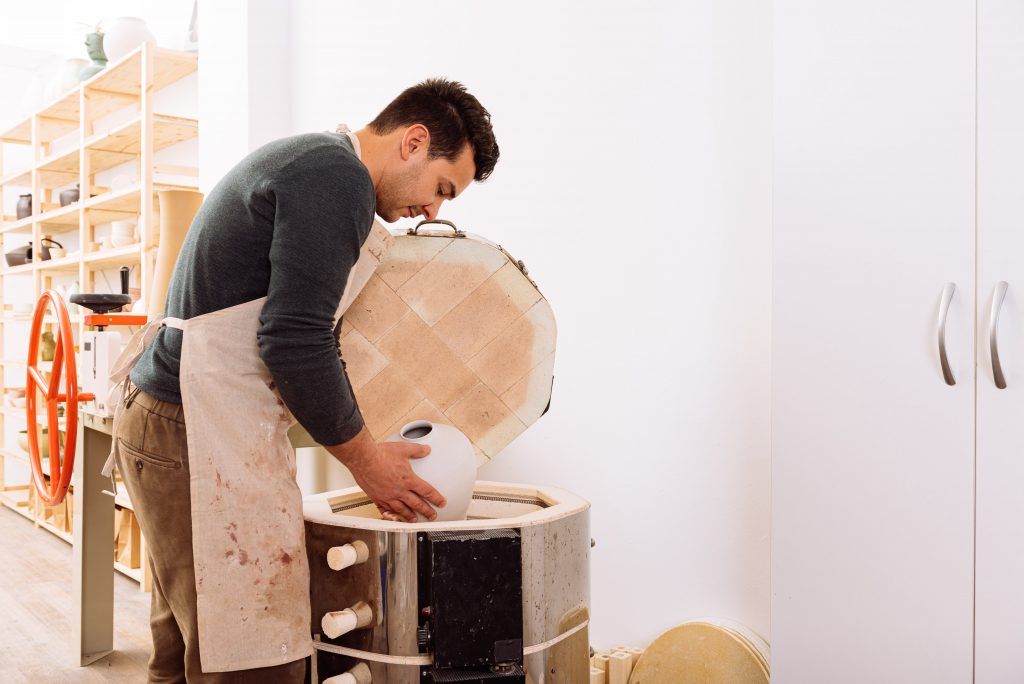
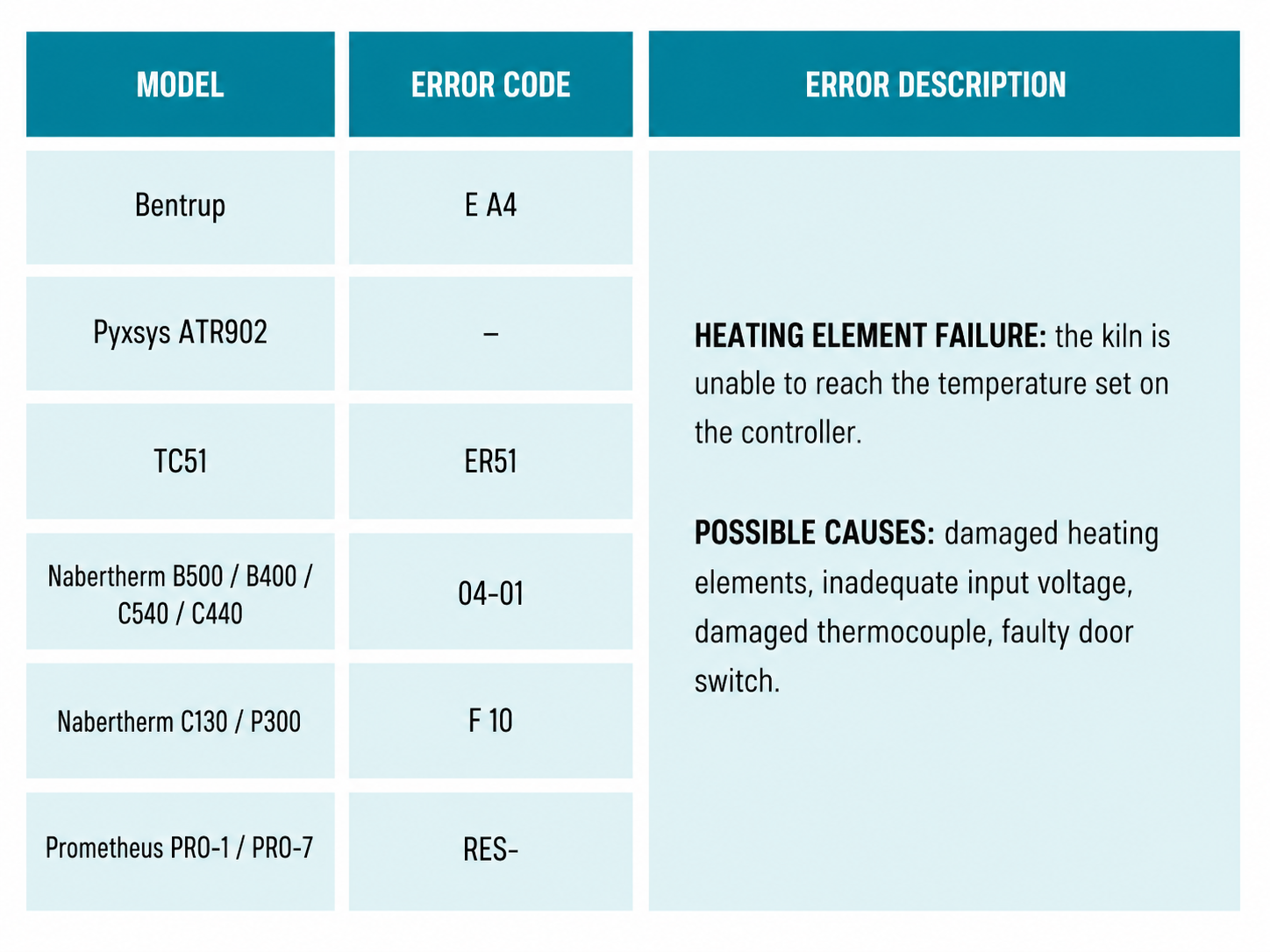
The ceramic kiln reaches its temperature thanks to the presence of heating elements inside it. If one or more heating elements are damaged, the heating process will be compromised or impossible. The good news is that a heating element is a very easy part to find as a spare part, and it is relatively easy to replace.
Contact us with information about your kiln (model, serial number, and type) and we will help you quickly find the replacement heating elements you need. As for the replacement, unless you have specific expertise in electrical systems, we recommend calling an electrician who can assist you in making the change.
The kiln heats up too much/too quickly
For firing ceramics, there are specific temperatures that the kiln must reach and, above all, maintain. Once the desired temperature is set via the control panel, the kiln heats up to the established level and then stops heating, maintaining a constant temperature inside the chamber.
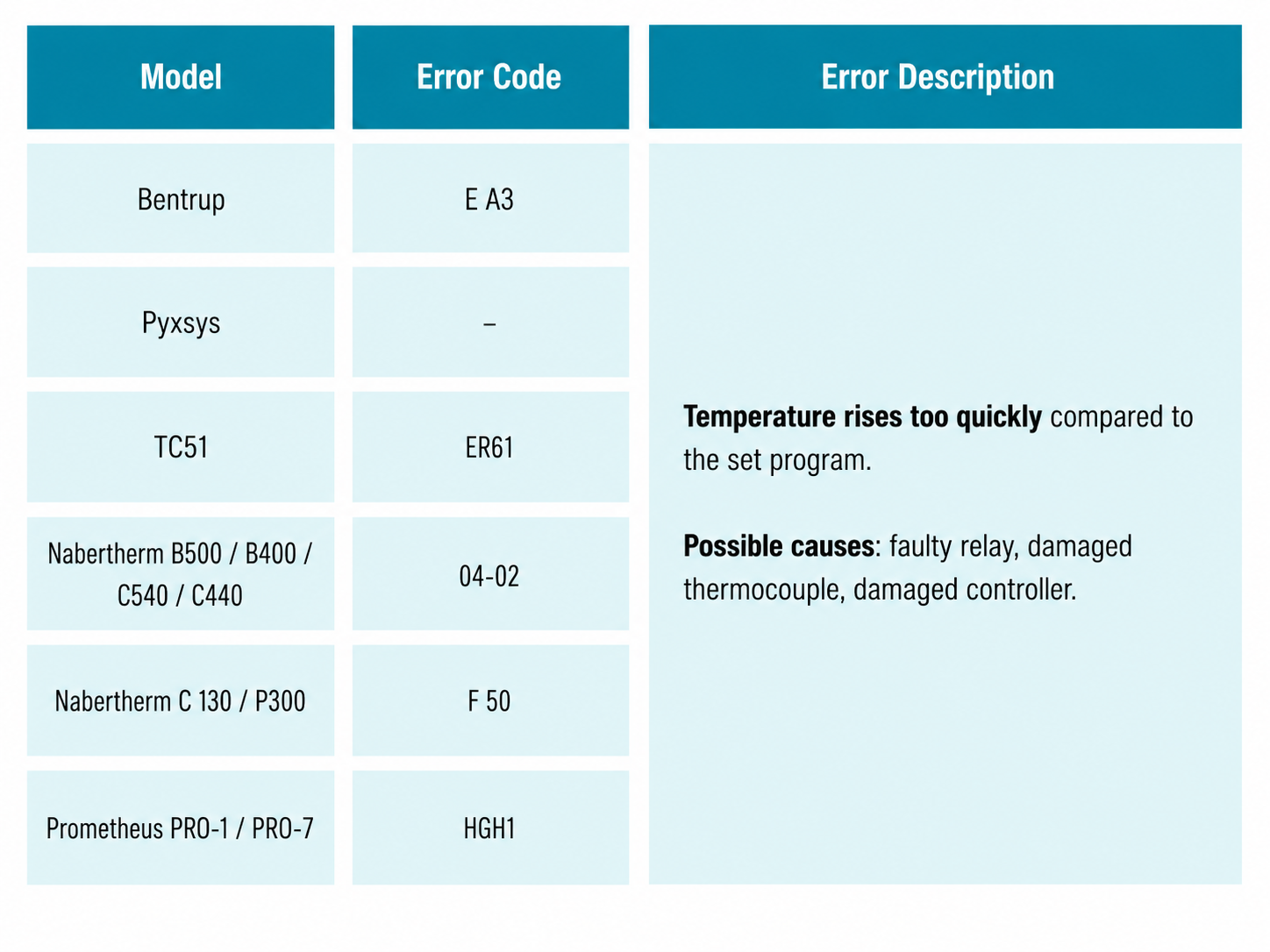
This happens thanks to the contactor (or relay), a switch that regulates the operation of the heating elements, turning them on and off to reach/maintain the set temperature. If the relay is stuck or broken, the kiln will not stop at the desired temperature and will continue to heat up, with consequences that can range from overheating to breakage, not to mention damage to the ceramic work inside!
Again, it is sufficient to purchase a replacement relay and ensure the assistance of an electrician to replace the part and have a perfectly functioning kiln again.
The kiln temperature is not what I set
Inside the kiln, there is a sensor that detects the internal temperature and communicates it to the control computer: this is the thermocouple, a fundamental element to ensure that the kiln reaches the correct temperature and maintains it without fluctuations.
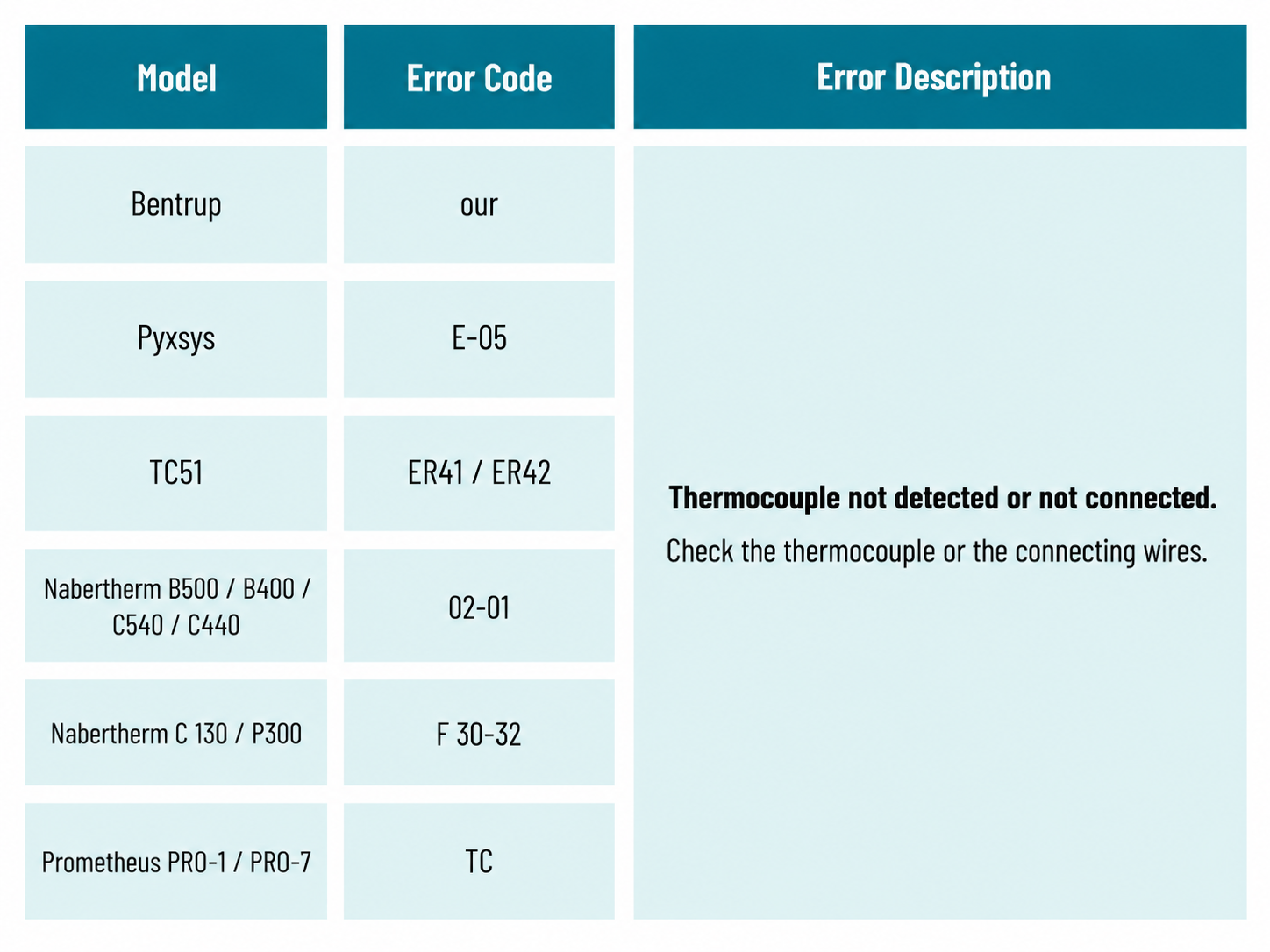
If the sensor is damaged or broken, which can happen after many years of use, the computer will no longer be able to know and control the kiln's temperature, causing problems such as excessive or insufficient heating, or failure to reach or maintain the desired temperature.
As in the previous cases, the solution is relatively simple: purchase the replacement thermocouple and replace it with the help of an electrician.
Our experts are available to advise you and guide you in choosing the components you need!
Control panel and error messages
The fact that modern ceramic kilns are all equipped with a control panel connected to a computer is certainly an advantage in every way: not only for the simplicity in settings and use but also for the ability to quickly detect a malfunction and communicate it to us. Just like in a car dashboard, the computer will inform us if the kiln has something wrong through error messages. The problem, in this case, lies in correctly interpreting the message, which is usually an acronym or a code.
Unless you are perfectly familiar with the kiln or have the manual at hand, these messages can be difficult to interpret and create confusion, achieving the opposite effect of what is desired!
At Hobbyland, we have experience with the most frequent types of malfunctions, and we thought to conclude this guide by gathering together the error messages of some of the most commonly used kilns to help you understand how to interpret them. Look in the table for your kiln model and consult the related error messages to discover what they refer to and what the possible solutions may be!