 Italiano
  English
  Français
  Español
  Deutsch
From a complex stained glass to a pendant jewel, up to decorative objects for the home, glass allows you to create works of art and decoration of every shape and size, and above all with a vast creative variety.

Perhaps you have found yourself enchanted by those beautiful lampshades made with glass of different colours and shapes? Well, you can learn to make one too! These are lamps made using the Tiffany technique, one of the most famous and sought after by glass lovers and enthusiasts of early 20th-century style decorations. With the Tiffany technique, you can create any type of artistic project, and with this in-depth guide, we want to provide you with all the indications and advice you need to get started.
Perhaps you have found yourself enchanted by those beautiful lampshades made with glass of different colours and shapes? Well, you can learn to make one too! These are lamps made using the Tiffany technique, one of the most famous and sought after by glass lovers and enthusiasts of early 20th-century style decorations. With the Tiffany technique, you can create any type of artistic project, and with this in-depth guide, we want to provide you with all the indications and advice you need to get started.
A bit of history: the Tiffany technique
Let's start with the name: why is it called that? If you are thinking of the famous jeweller, you are not far from the truth. Louis Comfort Tiffany was his son, and he is the creator of this technique that involves joining pieces of glass of different sizes and shapes through soldering. Its peculiarity is that, instead of lead, it uses thin copper strips to wrap the pieces of glass. Once the composition is created (using techniques and tools that we will discover), tin is used to solder the joints. The game is done. Sounds simple? Perhaps, but certainly, adequate tools and a bit of skill and practice in the techniques for preparing, cutting, and soldering your work are necessary.
What can I create with the Tiffany technique?
Anything your imagination suggests, more or less. You can start with small objects like boxes or pictures, create frames, and even compose decorative stained glass of various sizes. In this article, we will see how to proceed with the basic steps, which are valid regardless of the type of project you want to create, and with the tools you will need. You always start with the preparation of the pattern and the choice of materials, before moving on to the practical phases of creation: cutting and grinding, taping, soldering, and finishing.
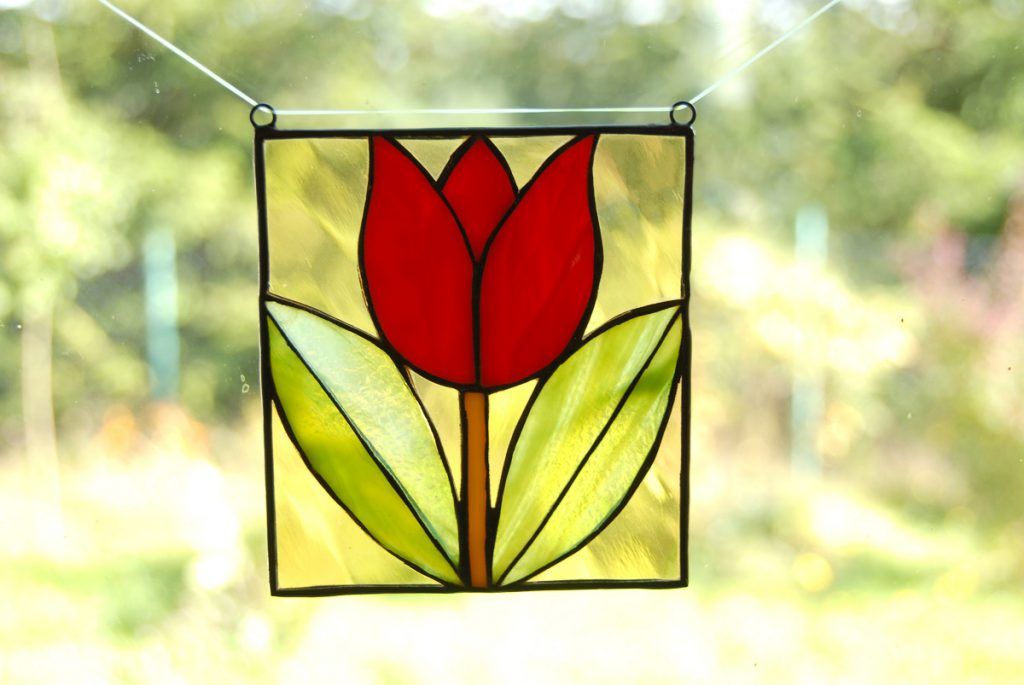
Creating and preparing the pattern and cutting the templates
You can choose your pattern from the hundreds available in paper format or online on forums and specialised sites. Find one that suits your style and level. Alternatively, if you wish, you can draw it yourself: the important thing is that the model can be easily broken down into individual, small elements, and that these can be clearly indicated and recognised in the pattern. Once you have created the model, trace it onto a white cardboard using carbon paper. Carefully trace all the lines and then number the pieces of the model on the copy as well.
We recommend adding directional arrows to each shape, so you always know the position of the piece in the drawing. At this point, you need to cut out all the elements of the drawing, which will become the templates for creating the glass pieces. To do this, you need to use a special three-blade scissors, specific for Tiffany work, which allows you to create a thin separation space between the elements of the drawing, which will then be “filled” by the copper tape necessary for soldering.
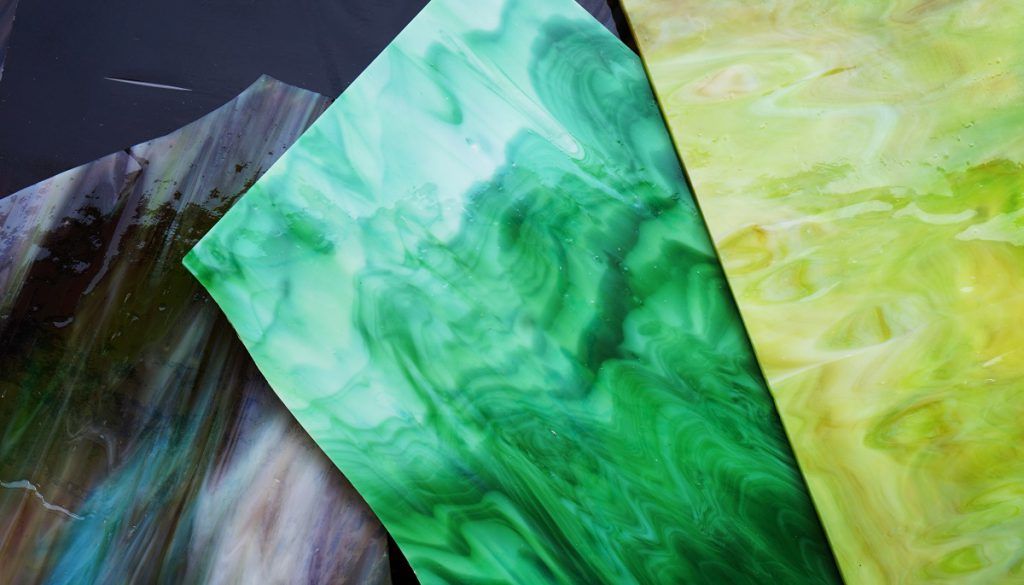
Choosing the material for your Tiffany stained glass
The choice of glass for this type of work is truly vast: opaque, translucent, opalescent, iridescent, textured, etc. Moreover, often the two sides of the same sheet have different effects and characteristics. Not to mention all the possible colourations!
As is often the case in any artistic work, there are no right or wrong glasses from the start, as it depends on what you want to achieve. A glass with small defects can prove particularly suitable for giving a unique character to your work, for example. Just as the choice to use glasses with different characteristics. If you intend to use textured glasses, keep in mind that you will need to orient them all in the same direction to create an effect of continuity and regularity.
Our advice, however, is to choose all your glasses together, already knowing what result you want to achieve. Check that the glass is in good condition, observing it from different angles: if there are cracks or defects, it could break during work. Also, consider obtaining a quantity of glass greater than what you have planned, just to avoid running short of material in case of breakages.
And at this point, it’s time to get to work!
Cutting, breaking, and grinding the glass
The tools and precautions
We have arrived at one of the most delicate phases of your work: cutting the glass and breaking it correctly, then beveling and smoothing the edges, to obtain all the pieces that will make up your “puzzle.” Being a delicate operation, it requires specific tools as well as some small precautions. To create a glass work using the Tiffany technique, you will need several tools.
What you need
- a glass cutter, to score the grooves corresponding to the shapes you want to create. We recommend getting one with a built-in reservoir where you will insert the oil needed to lubricate the head.
- a pair of breaking pliers: their purpose is to allow you to separate the glass along the cutting line. It can be useful to have pliers of different sizes to perform this operation easily, even with very small templates.
- a grinding pliers for finishing, which you can use to work along the edges once the piece of glass is separated.
- a grinder, the tool you will use to smooth the edges of the templates, so that the copper tape adheres perfectly to the surface. A tweezers can also be useful in this case, to help you hold the glass during processing.
- Finally, a pressing tool, made of wood or plastic, which you will use to ensure perfect adhesion of the copper to the glass.
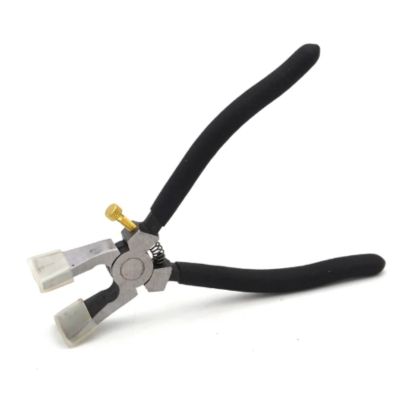
Breaking Pliers
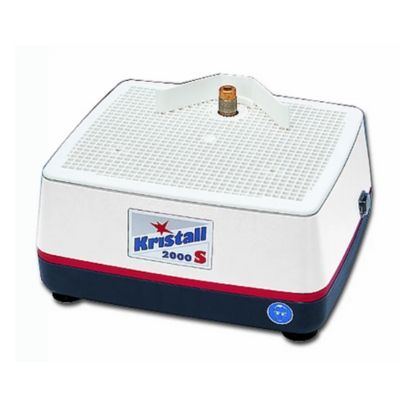
Kristall 2000 Grinder
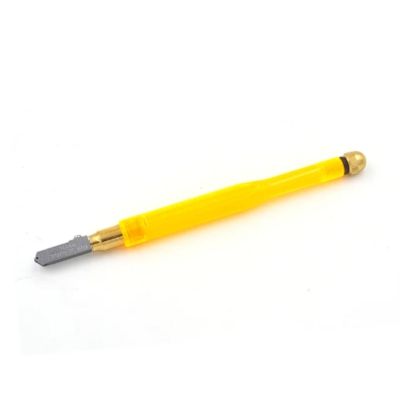
Glass Cutter
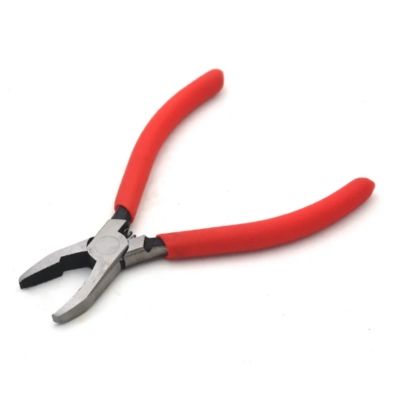
Grinding Pliers
And now, a quick reminder of the precautions to take. First of all: protective glasses! They are truly essential for working with glass. Your hands also need protection from the risk of splinters, so in addition to wearing gloves, always keep a tweezers handy in case you need to extract some. Another good habit is to wash your hands often during processing. Finally, a small brush will be useful to keep the work surface clean from all glass debris.
Ready for cutting!
Choose which side of the sheet you want to use as the front and draw the shape to be cut on the glass, positioning the cardboard template you previously cut out and tracing along the edges with a marker. Keep in mind that the glass should always be cut on its smooth side. If for aesthetic and style reasons you have decided to use the rough side, you will need to mirror the cutting lines on the smooth side and then cut from there.
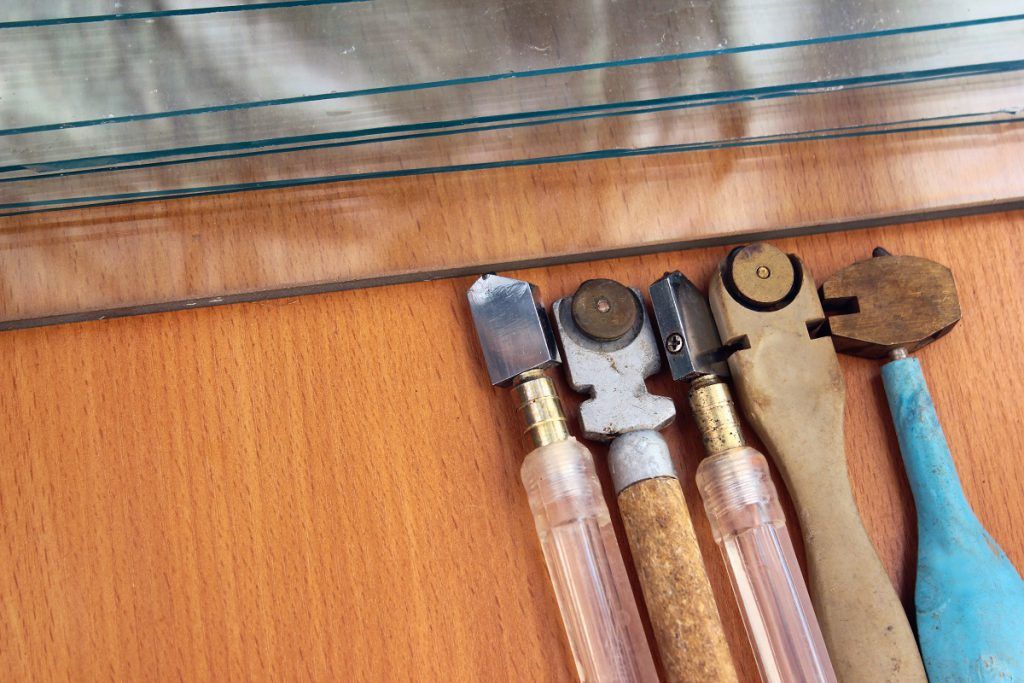
Wipe the glass with a cloth to have a clean and dry surface. Ensure that the head of the glass cutter is adequately lubricated and hold it firmly, as if it were a pencil. Keep it perpendicular to the glass and start from the cutting line closest to you. Guide the glass cutter along the surface, following the trace and using light but constant pressure, never interrupting the movement and without going back into the same groove: you risk breaking the glass.
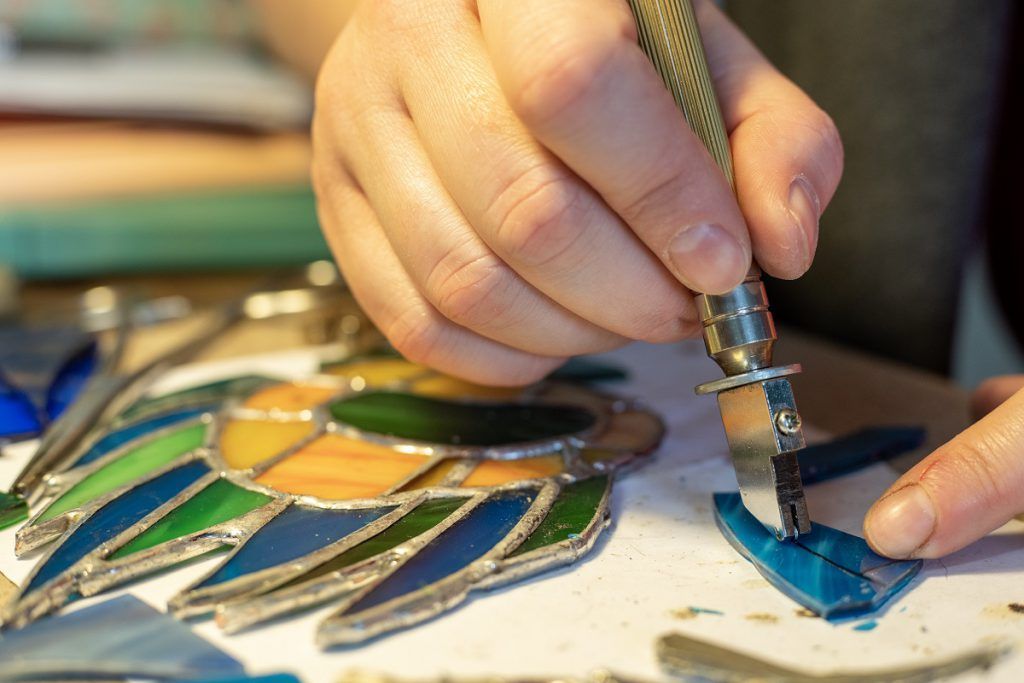
Once you have scored the groove, you need to break the glass along the traced line. There are several methods, which we will see shortly, but the main rule is that you must always break along a groove before creating the next one. In the case of pronounced curves, which cannot be broken in one go, you will need to proceed by removing small pieces at a time, creating short lines parallel to the original groove until you reach the desired result.
To break the glass with your hands, you need to hold the sheet with your thumbs on the upper side and the other fingers on the lower side, so that the groove is well centred between the knuckles of both hands. With a quick and decisive movement of the wrists and uniform pressure from the thumbs, separate the two pieces of glass. The breaking procedure with the pliers is quite similar: with one hand, hold the glass, always with the thumb up and the knuckles down, so that they are adjacent to the groove. With the other hand, position the pliers on the opposite side, with the tip as parallel as possible to the line. With uniform pressure, snap the pliers and separate the glass. If the glass breaks unevenly, you can use the grinding pliers to refine the edges by removing excess fragments.
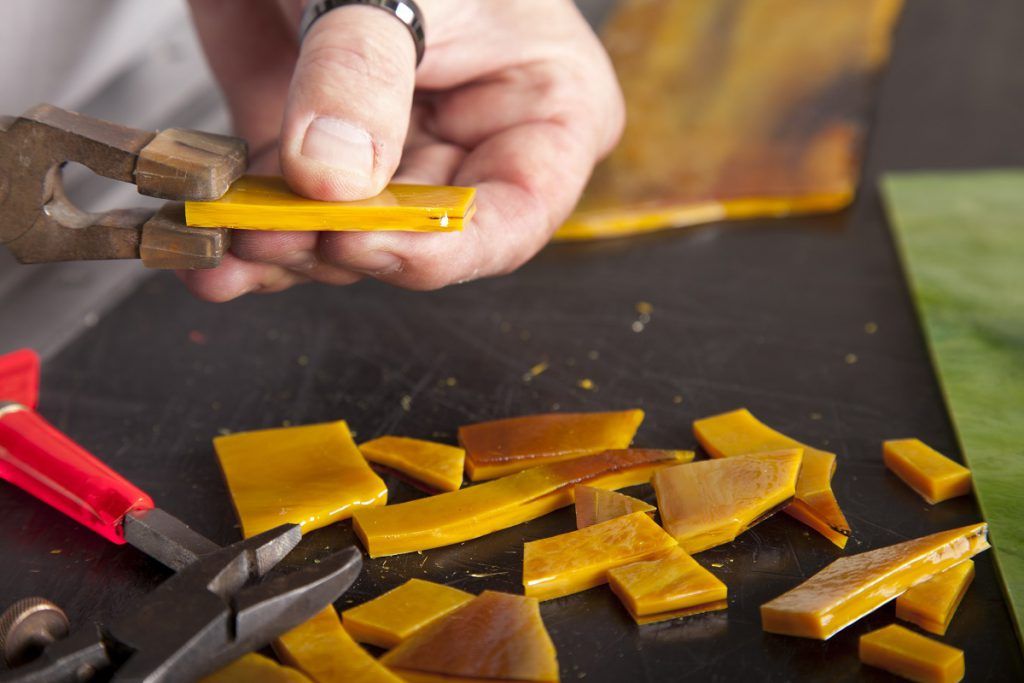
At this point, you can move on to grinding, to give the templates the exact shape, without irregularities: the final result should be smooth and even edges. In the first pass, use the grinder to remove irregularities, applying very light pressure. In the second pass, apply greater pressure to shape the lines: proceed in small steps, comparing your piece with the drawing each time until you reach the desired shape.
Copper Taping
We have arrived at the taping phase, where the templates are wrapped in thin sheets of copper that will allow you to proceed with soldering. The choices you have at this stage essentially concern the thickness of the tapes and their colour, factors that influence the work and the final aesthetic effect.
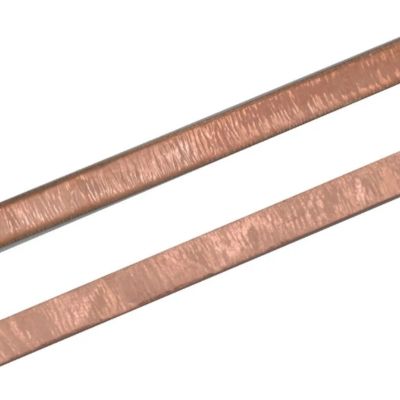
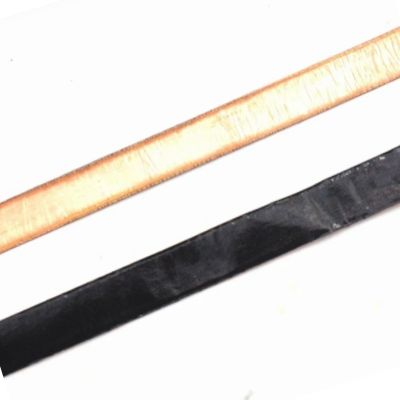
Copper tapes are available in thicknesses ranging from 1 to 1.5 millimetres. The thinner one is also the easiest to bend and adhere to the glass, but it breaks easily, so it is less suitable for beginners. On the other hand, the 1.5 mm tape requires more effort to wrap but does not break: it is therefore more suitable if you are a beginner.
Copper-Copper Tape
Copper-Black Tape
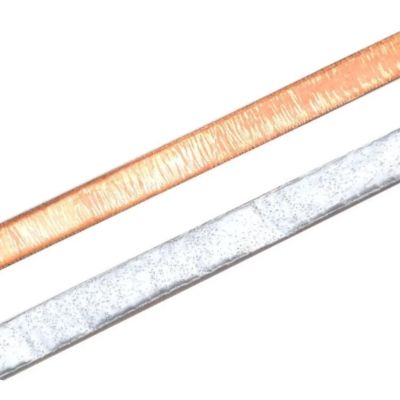
Copper-Silver Tape
The back of the tapes can be copper-coloured, but also black or silver. There are also some that are silver on both sides. If you will use dark or opalescent glass in your work, the colour of the tape is less relevant, as it will not be visible through the glass. Conversely, if you use transparent glasses, you will need to consider the chromatic effect in relation to the rest of the composition. Another factor to evaluate is whether you intend to give your work a patina, which is generally black or copper: it will be useful to use tapes with the same colouration. If your intention is not to apply a patina and keep the soldering silver, we recommend choosing silver tapes.
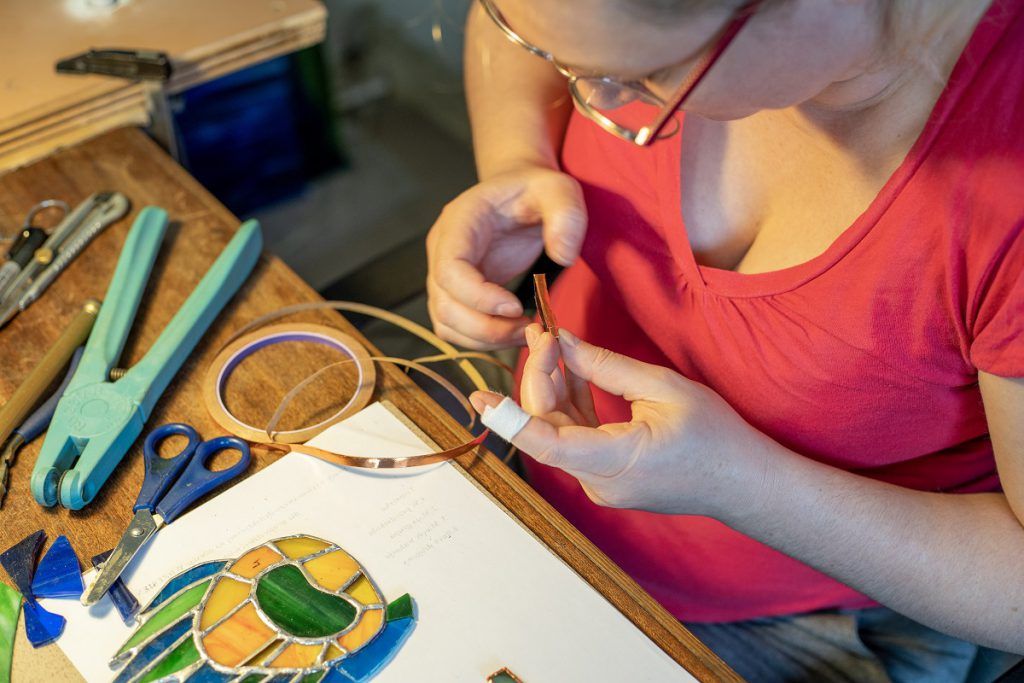
Let’s move on to some technical indications: before applying the tape, ensure that the glass is clean, dry, and perfectly smooth. Take the copper tape holding it between your thumb and index finger and remove approximately a couple of centimetres of protective paper; then, holding the glass with the other hand, centre it well and attach the sheet to the edge of the glass. Always start from the sides, not from the corners, and always keep the sheet below the glass, to control the alignment from above. Gradually remove the protective paper and proceed with the application of the copper.
Once you have returned to the starting point, overlap the sheet by about half a centimetre and then cut it. Use your fingers and then the pressing tool to ensure the copper adheres well to the glass, ensuring there are no exposed spots, but without rubbing too much against the sheet, as it might break.
Soldering the Tiffany stained glass
What will you need at this stage? Obviously, a soldering iron. But also an adequate amount of solder bars, which is the material that allows you to bond the copper edges together. Normally, a tin-lead alloy is used, with a percentage of the former equal to about 60%. You will also need a sponge to periodically clean the tip and some flux, also known as salty water, a chemical agent that allows the soldering material to adhere to the copper.
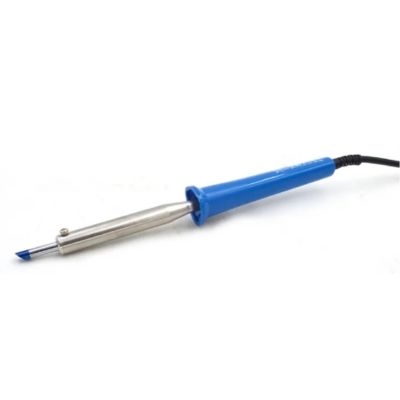
Soldering Iron
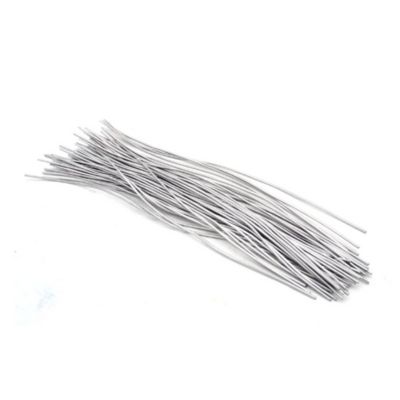
Solder
To choose a soldering iron, rely on specialists and certified manufacturers, and ensure that it is a soldering iron specifically designed for glass. And we cannot say it enough: be very careful when using it, as it reaches extremely high temperatures and requires utmost caution!
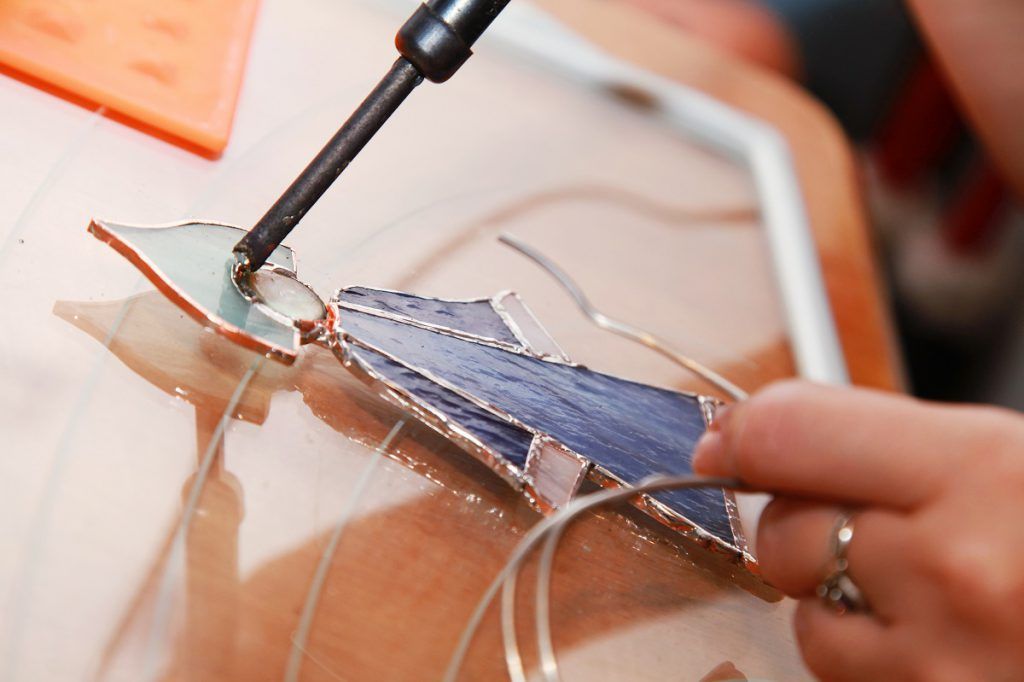
It’s time to prepare your work surface for soldering: apply all the templates to the pattern and ensure they are well positioned on a flat and heat-resistant surface. The first step will be to solder all the joints, to ensure stability for the model.
Start by applying a thin layer of flux to these points, then, holding the soldering iron in one hand and the solder bar in the other, melt a small portion of metal with the tip and gently pass it over the copper: you will hear a slight sizzling and see the solder “boiling.” Then proceed along the various lines, applying flux as you go, accompanying the solder with the movement of the soldering iron, so as to always provide the right amount of metal.
Creating good solders requires patience and practice, so don’t be discouraged if the result is not immediately up to expectations. If you are not satisfied with a solder, do not keep going over it, but let it cool and then return to it later, as the heat could break the glass. Once the top side is completed, you need to work on the other side. Gently turn the work over and repeat the procedure on the opposite side.
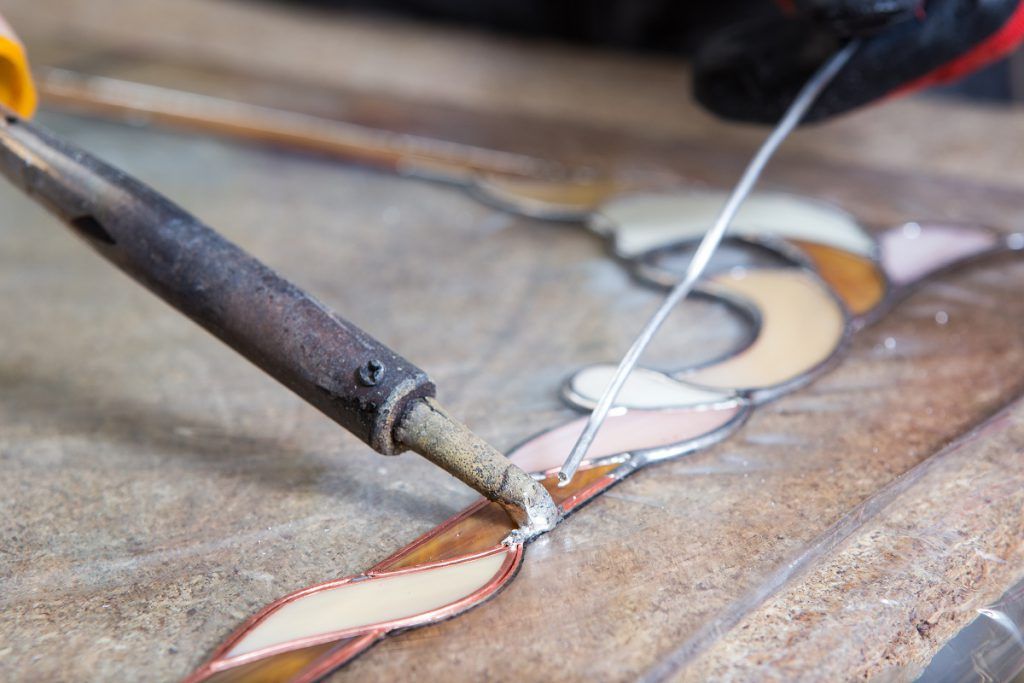
At this point, you can proceed to the “bulging”: the first pass of soldering will tend to create fairly flat lines, while a good finish requires that the metal parts connecting the templates are slightly raised. To do this, you will need to add a bit more solder to the soldering to slightly swell it, but be careful not to add too much, as it could run down the edges.
At the end of the work, wash the panel with warm water and mild soap or with a glass cleaner, to remove all residues of flux. Pass over it several times, insisting on the soldering lines, until you have removed all the dirt.
Finishing your Tiffany glass creation
At this point, you need to think about how you want to finish and personalise your work. You can decide, for example, whether you want the soldering to remain silver, or if you want to give it a burnished effect. In the latter case, you will need to apply a patina, which is a chemical agent that interacts with the soldering, changing its colour. Traditionally, Tiffany stained glass has a dark patina, but of course, the choice is entirely personal!
To apply the patina, dry the panel thoroughly and then apply the solution to all the solders with precision and uniformity using a patina brush: you will see the colour change immediately. Carefully apply the patina to all the lines and allow it to dry. The final phase of the processing is the treatment with the antioxidant that serves to clean the work more deeply and protect it, but also to give the solders a more intense and lasting shine.

As you may have gathered from this detailed overview, creating artistic glass objects using the Tiffany technique is certainly a demanding and complex task, requiring specific tools and a lot of practice. But the results can be truly extraordinary and impactful!
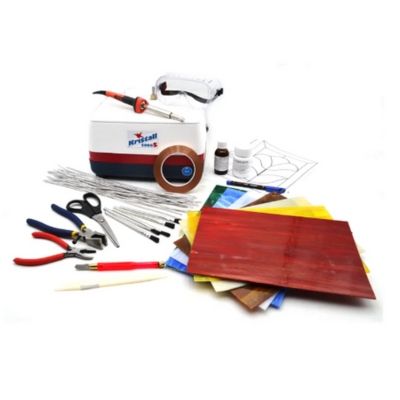
If you are interested in this technique, we recommend starting with small objects and very simple patterns, perhaps beginning with one of our Tiffany kits, which, in addition to all the necessary tools, also offers very simple models, perfect for your first experiments!