 Italiano
  English
  Français
  Español
  Deutsch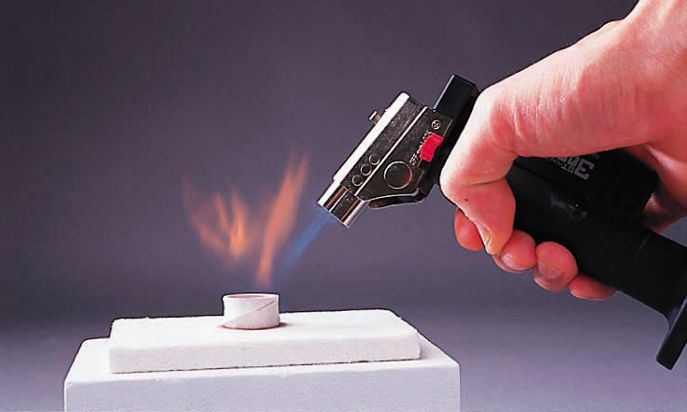
In this guide, we will explore details and information about firing objects in metal clay. If you haven't read our guide to different metal clay products with usage tips, we recommend doing so before proceeding!
Firing is one of the crucial stages in metal clay processing. After shaping, drying, and finishing, this is the moment when the binders in the clay burn away, leaving the final product: the object in pure metal. Depending on the type of product and the characteristics of the object (size, thickness, etc.), firing can be done with a torch or gas burner, on a stove with a special grill, or in an electric kiln. A thin, flat piece, for example, can be easily fired on the open flame of a stove, while a larger piece or one with various shapes joined together is best suited for the kiln. Some types of metal clay require high temperatures, so the kiln is the only viable solution.
In this article, we will look at the characteristics and firing methods for the three different techniques, and how they best suit the products we presented in the first part of this guide to discovering metal clay.
Firing with a torch / gas burner
With a butane torch, you can fire various objects made from metal clay, provided they are small (no more than 25 grams in weight) and do not contain inserts such as ceramics, glass, or porcelain that would be damaged by the heat of the flame.
Before you begin, ensure that the clay is completely dry. Place your piece on a heat-resistant firing surface (such as ceramic fibre bricks or similar). Keep a timer handy, already set with the expected firing times. Dim the lights in the room enough to see the flame during firing: the colour of the flame will indicate the temperature at which the silver is. Turn on the torch and direct the flame at the clay from a distance of about 5/10 centimetres. The distance may vary depending on the type of product you are firing and the power of the torch you are using, while you should try to maintain the angle of the flame at a constant angle of about 45°. The flame should never be directed directly at the object, as the silver will radiate heat back that can damage the torch.
Slowly move the flame around the piece to heat it evenly, facilitating the sintering process and limiting the risks of partial shrinkage. As the binder burns away, you will see smoke, but don't worry, as the material is organic and non-toxic. When the heated metal reaches incandescence, start the timer. If the colour becomes too dark, move the torch away. If the incandescence becomes too faint, it means the silver is too cold, and you need to bring the flame closer. Once firing is complete, allow the object to cool on its work surface. If your piece does not include inserts, stones, or settings, you can also immerse it in cold water to complete the cooling.
Regarding firing times and temperatures with the gas torch, here are some general guidelines:
- one minute to one and a half minutes for pieces weighing less than 5 grams;
- two minutes for pieces up to 15 grams;
- from two to 4 minutes for pieces up to 25 grams.
Let's look specifically at some of the metal clay products you can fire with an open flame.
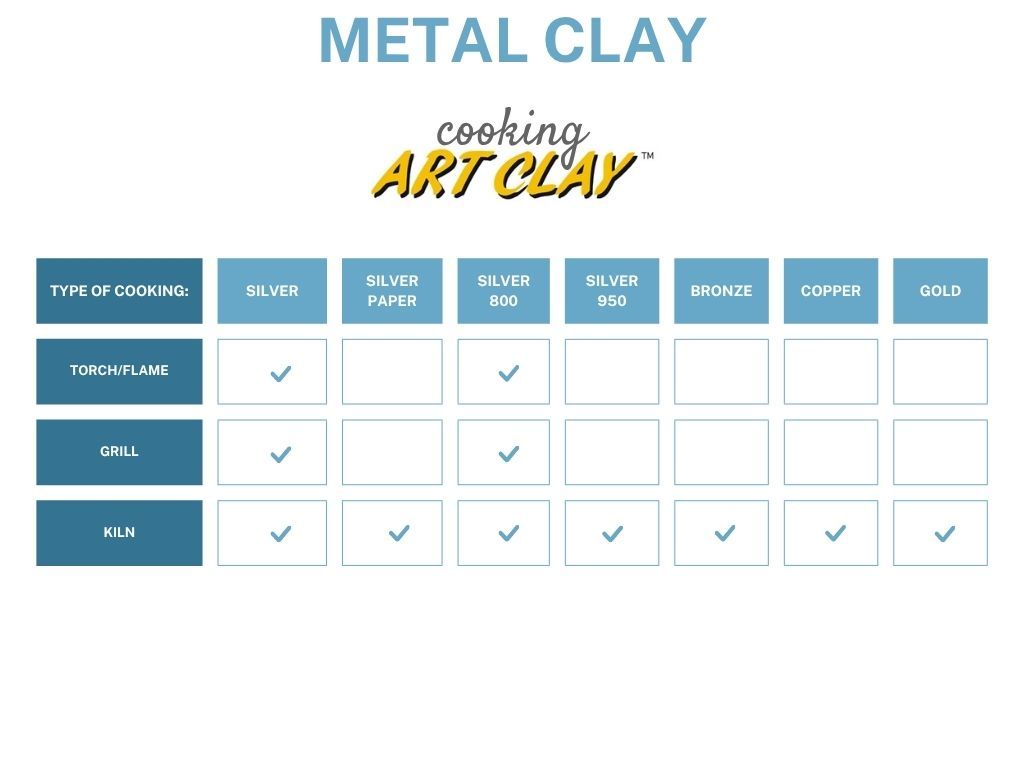
Art Clay Silver 800 in cream, block, and syringe, Art Clay Silver new formula
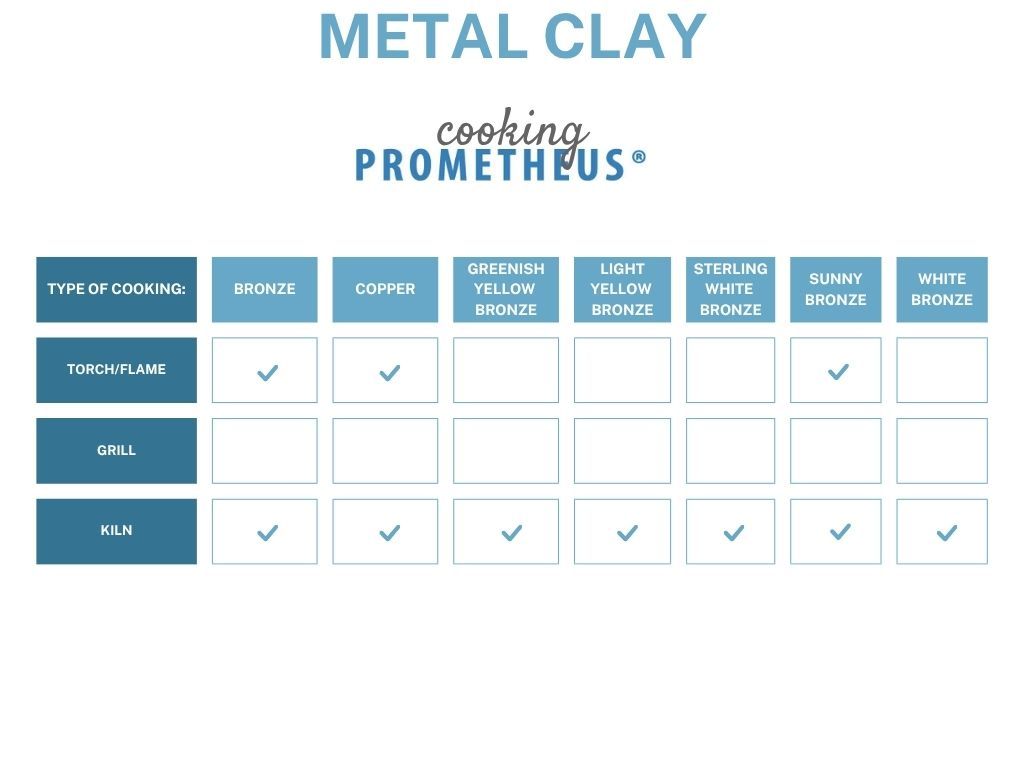
Prometheus Bronze Clay and Prometheus Copper Clay and their respective syringe versions. For firing, place the piece on a fibre ceramic slab and activate the flame. Fire for about 5-10 minutes once the piece has reached a bright red incandescence. For Copper Clay, after firing, we recommend using a pickling solution before proceeding to polish with brass bristles.
Prometheus Sunny Bronze: for firing this product, place the dry piece on a stainless steel grill and put the grill over a heat-resistant support (brick or fibre ceramic block). Heat slowly until the piece begins to burn and smoke like a candle. At this point, proceed at full power until the incandescence reaches a bright red colour. Fire for 5-10 minutes. Allow to cool in the air or by immersing the piece in water. If necessary, immerse it in warm pickling solution to remove oxidation residues.
Firing on a gas stove
The stove is suitable for firing Art Clay Silver objects weighing up to about 25 grams and 2 centimetres thick. You can use a kitchen stove or a camping stove, but it is always necessary to apply a special firing mesh over the flame, on which you will place your object.
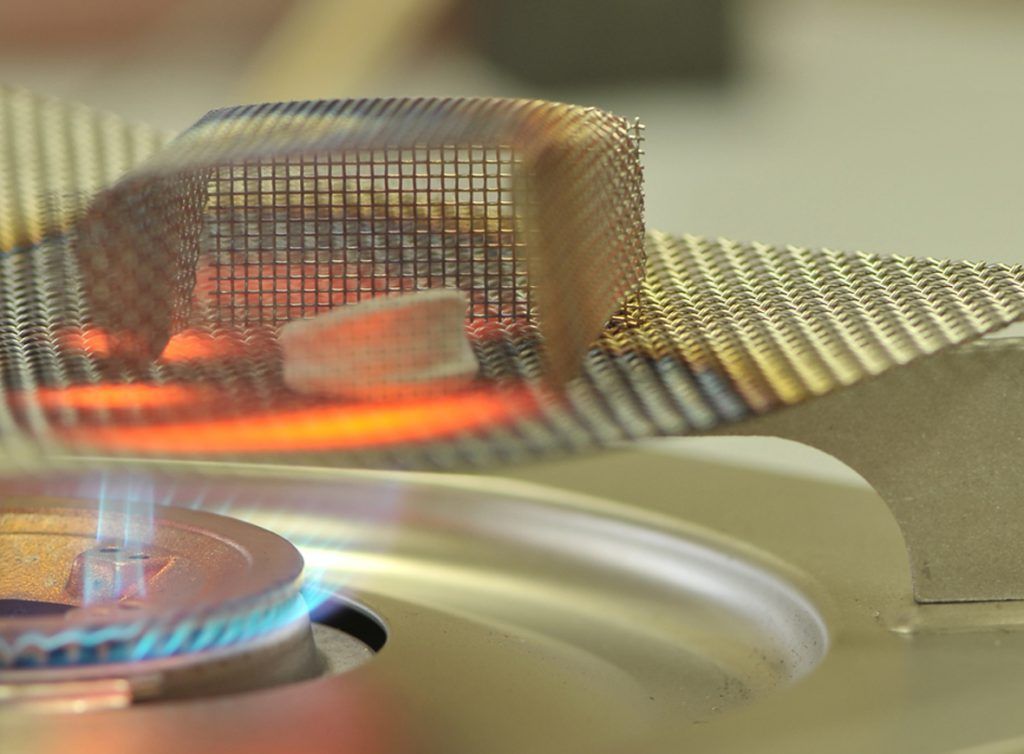
Again, the clay must be completely dry before starting the firing. Turn on the flame and, observing the incandescence on the firing mesh, locate the hottest point. Turn off the gas and immediately place the Silver Clay in the identified spot. Turn the stove back on and monitor the firing. From the moment the silver reaches a peach colour, start a timer for 5 minutes. Once firing is complete, turn off the stove and allow to cool for at least 5/10 minutes. Do not attempt to take the object before this time, as it may still be stuck to the mesh and get damaged. Again, you can accelerate cooling by immersing it in water, if the characteristics and dimensions of the piece allow it. Check the shrinkage of the silver: for this type of product, you should notice a reduction of about 8/10% in volume. If shrinkage does not occur, the piece has not been fired correctly, so you will need to repeat the process.
Firing in the kiln
The electric kiln and the kiln for metal clay are the main, safest, and most reliable tools for practically all types of metal clay and for objects weighing more than 25 grams and thicker than 2 centimetres. The kiln ensures uniform and constant heating, with temperatures and times that can be adjusted extremely precisely, making it suitable even for metal clay with very high sensitivity.
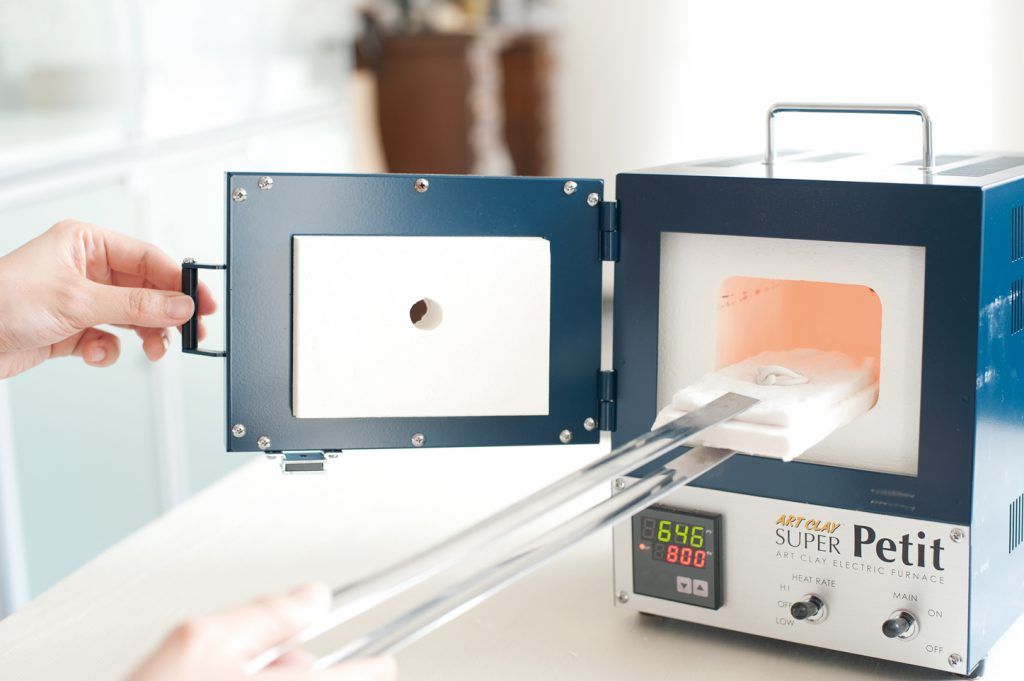
All metal clay products from the brands we presented in the first part of this guide can be fired in a kiln. However, some of them need to be placed inside stainless steel containers with activated carbon, a specific preparation for firing metal clay pieces.
The activated carbon wet with acid creates a coloured patina on the pieces during firing. Before use, the carbon should be placed in the steel container and fired for 30 minutes at 843°C. The coconut shell-based carbon allows for a lighter patina. In this case, the carbon should be prepared before use by firing in a steel container at 840°C for 30 minutes.
Art Clay Silver 800 Cream / Art Clay Silver 800 block / Art Clay Silver 800 Syringe must be fired at 800° for 30 minutes.
The firing procedure for Art Clay Silver 950 involves two phases, for a total duration of about 2 hours. Place the piece on the kiln shelf at room temperature, raise the temperature to 500° and fire for 30 minutes. Immediately after, without allowing the kiln to cool, set the temperature to 850° and, once reached, fire for another 60 minutes. Do not remove the piece from the kiln between the first and second phases to avoid the risk of breakage.
Art Clay Silver new formula, in block form and in syringe form: fire at 650° for 30 minutes or at 800° for 5 minutes.
Art Clay Bronze must be fired with carbon. Prepare the stainless steel container so that there is at least 1 cm of carbon on the bottom, place the pieces, and cover them with at least 2 cm of carbon. Firing begins at room temperature with the temperature set to 820°. Once the temperature is reached, maintain it for firing for 2 hours. Once firing is complete, allow the container to cool outside the kiln. The bronze metal clay typically has an oxidised layer post-firing: you can use rotary tools or pickling solutions to remove it. We recommend completing the treatment with a soak in baking soda for 15 minutes to remove any traces of acid from the pickling solution, followed by rinsing under running water.
Bronze Clay should be fired in the kiln with a ramp heating of 120° per hour until reaching 843°. At that point, you can proceed with firing for 3 hours. Bronzeclay fastfire must be fired in a steel container with activated carbon for two hours at a temperature of 830°.
For firing Prometheus Bronze Clay, place the piece in a cold kiln on a steel grill. Raise the kiln temperature to 500° and maintain it for 15 minutes. Remove the piece from the kiln and allow it to cool. At this point, place about 3 cm of activated carbon at the bottom of the stainless steel container and insert the cooled piece. Preheat the kiln to 820° and insert the container for a firing of 60 minutes. Alternatively, you can use the open kiln firing method: place the piece in a preheated kiln at 820° for 30 minutes. Once firing is complete, remove the piece and allow it to cool on a heat-resistant surface or immerse it in water for rapid cooling.
Art Clay Copper should be fired in the kiln at 970° for 30 minutes. After firing, it should be immersed in water to remove oxidation.
For COPPRCLAY, firing should be done in a ramp to full speed until 930°, maintaining for 3 hours. It must be fired with activated carbon with coconut shells in a steel container.
Firing Prometheus Copper Clay should be done at 920° for 30 minutes. It is not necessary to use carbon, but it may be helpful to cover the piece with a ceramic fibre mat.
Prometheus Yellow Bronze Clay firing in the kiln occurs in two phases: in the first, the piece is fired in a preheated kiln at 500° for 15 minutes. The piece is then removed from the kiln and allowed to cool, before being placed in a stainless steel container with activated carbon and fired for one hour at 800°. The shrinkage of Yellow Bronze Clay is about 13-14%. The same instructions apply to Prometheus Yellow Bronze Clay in syringe form.
The firing of Prometheus Light Yellow Bronze Clay and its syringe version follows the same procedures, with the difference that the firing of the second phase requires a temperature of 780° and a duration of 2 hours. It has a shrinkage percentage of 17-19%.
The same procedure applies to Sterling White and its syringe version, with a temperature of 770° for two hours. The shrinkage is about 15-16%.
Prometheus Sunny Bronze Clay and its syringe version can be fired in two ways.
Firing in the kiln with carbon: in the first phase, the pieces are placed on a stainless steel grill and fired starting from a cold kiln, cooking for 15 minutes once 500° is reached. The pieces should then be cooled and placed in the stainless steel container with activated carbon (at least 3 cm of layer on the bottom and completely covered) and fired in a preheated kiln at 820° for 60 minutes.
In the open kiln firing, the dry pieces are placed on a stainless steel grill directly in a preheated kiln at 820° for 30 minutes. Once firing is complete, the pieces should be allowed to cool in the air or immersed in cold water. Most of the residues should fall off on their own; if not, a pickling solution and subsequent rinsing can be used.
Prometheus White Bronze is fired in two phases, like many other metal clays we have already seen. The first phase involves firing in a preheated kiln at 500° for 15 minutes, followed by cooling. In the second phase, the cooled piece is placed in the container with activated carbon and fired for two hours at 770°. For the White Bronze in syringe form, the procedure is the same, with the difference that in the first phase, the paste should fire for only 10 minutes instead of 15.
In conclusion of this long but – we hope! – interesting guide, you can find summary tables indicating the most suitable firing methods for the different types and brands of metal clay available on the market. And remember that for any further information or advice, you can turn to our experts who will guide you on the best ways to use metal clay!