 Italiano
  English
  Français
  Español
  Deutsch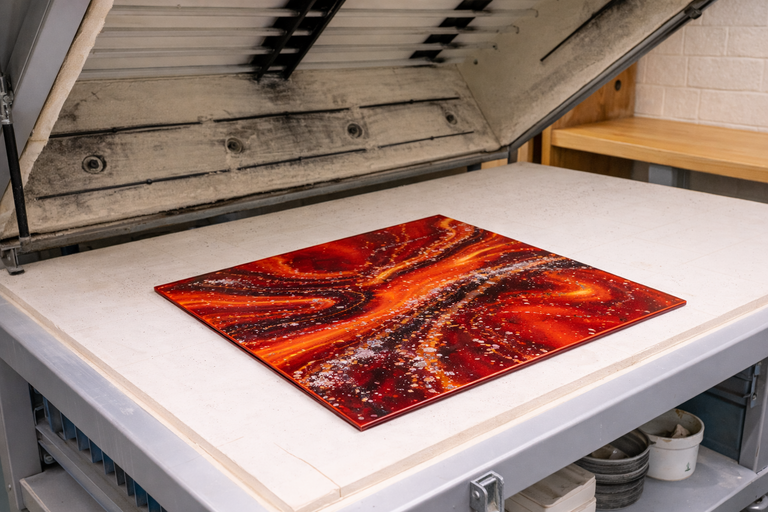
Those approaching this technique for the first time often find themselves facing many doubts. Which kiln should I choose? Is a small one better or a large one? Is a specific electrical system required? What type of temperature control is necessary?
In this guide, we will see how to choose the right kiln for glass fusing, analysing the most important features to consider before purchasing, with the aim of helping you understand which model may best fit your workspace, your budget, and especially the projects you wish to create.
Historical Curiosities
The art of glass fusing has ancient origins: already the Mediterranean civilisations, such as the Egyptians and Mesopotamians (around 1500 BC), used heat to create small decorative objects and jewellery, giving rise to the first forms of glass fusing.
In Roman times, glass processing spread widely and the technique of blowing glass developed, which prevailed over glass fusing for centuries. Only in the 20th century, thanks to electric kilns and the Studio Glass movement, did this technique return to prominence.
Today, glass fusing is highly appreciated for creating jewellery, decorations, and artistic works. At the centre of it all remains the kiln, the fundamental tool that allows glass to take shape. Let’s see how to choose it!
What is a glass fusing kiln?
A glass fusing kiln is an electric kiln designed to reach and maintain high temperatures in a controlled manner, allowing the glass to melt and cool slowly.
The glass used for glass fusing is heated to temperatures that can exceed 800-900 °C, depending on the technique used. During this process, the glass becomes soft and can fuse with other pieces, take on new shapes, or adapt to a mould.
Once the desired shape is achieved, cooling must occur in a gradual and controlled manner. This step is crucial to avoid internal stresses that could make the glass fragile or cause it to break.
For this reason, glass fusing kilns are equipped with programmable controllers, which allow you to set the entire firing cycle.
What to consider
Purchasing your first kiln is one of the most important steps for anyone deciding to practice glass fusing continuously. A kiln that is too small may limit future projects, while one that is too large could be costly to purchase and operate, especially in the early stages of learning.
Many artists recommend finding a good balance between size, practicality, and versatility, choosing a kiln that allows for experimentation without technical complications.
An interesting aspect is that many professional studios continue to use smaller kilns as they are ideal for testing, small jobs, or decorative components.
What size?
When choosing a glass fusing kiln, the size of the internal chamber is one of the main elements to consider.
A compact kiln, often referred to as a tabletop kiln, is perfect for those creating small projects such as jewellery, pendants, cabochons, or small decorative objects. These models take up little space and can be easily placed on a workbench. Medium-sized kilns, on the other hand, allow for the creation of plates, bowls, decorative panels, or more complex compositions. They offer greater creative freedom and often represent the most balanced choice for those looking to develop their business over time.
Larger kilns are generally used by professional artists or specialised studios. They allow for working on large-scale pieces or producing multiple items simultaneously, but require adequate space and sometimes dedicated electrical systems.
Types of kiln
In the glass fusing market, there are several types of kilns. The main difference concerns how the kiln opens, either frontally or from above, and how the material is loaded inside.
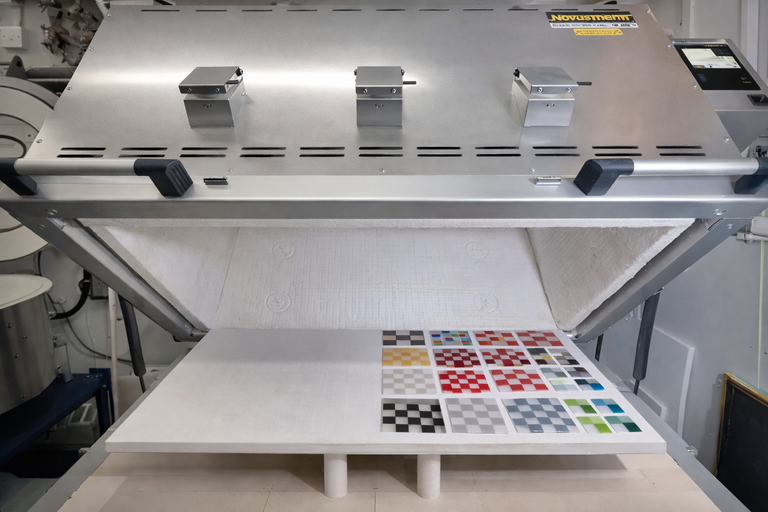
Kilns with a top opening are the most common because they allow for very uniform heat distribution across the surface of the glass.
Digital controllers
Modern kilns use digital controllers that allow you to programme the entire firing cycle. This means that the kiln can gradually increase in temperature, maintain heat for the necessary time, and cool down following a precise curve.
This system allows for much more consistent results compared to kilns with manual controls.
In the past, many kilns used very simple controls, with manual power adjustments. In these cases, the artist had to continuously monitor the kiln to adjust the temperature during firing.
Today, programmable controllers have made glass fusing much more accessible even to hobbyists.
The position of the heating elements
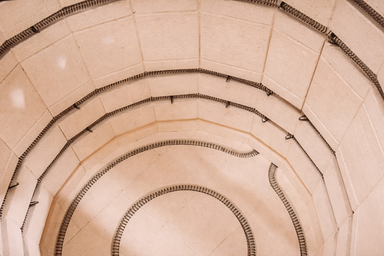
In glass fusing, the glass must be heated evenly across the surface. For this reason, many kilns use heating elements in the lid, which diffuse heat from top to bottom.
In deeper models, there may also be side heating elements, which help distribute heat better within the chamber. This is particularly useful when creating three-dimensional objects or using taller moulds.
The quality of the materials used in the construction of the kiln also affects the longevity of the heating elements and the stability of the temperature.
Electrical supply and consumption
Before purchasing a kiln, it is important to check what type of power supply it requires.
Many compact kilns operate with standard household outlets, making them ideal for home studios or small creative spaces. Larger kilns, on the other hand, may require dedicated electrical lines or higher power.
Regarding consumption, the cost of a firing mainly depends on the power of the kiln and the duration of the melting cycle.
In general, a well-insulated and compact kiln can have relatively low operating costs, especially for small projects.
The most frequently asked question: can a ceramic kiln also be used?
In theory, a ceramic kiln can reach temperatures sufficient for working with glass, but it is not specifically designed for this type of processing.
Ceramics are primarily heated from the sides, while glass requires a more uniform heat distribution across the surface. This can cause issues such as uneven melting, internal stresses, or devitrification.
Additionally, residues from ceramic firings can contaminate the surface of the glass, altering the final appearance of the creations.
Recommended kilns for beginners
Here is a selection of our kilns:
Compact kilns for jewellery and small projects - Prometheus PRO
Versatile kilns for plates and decorative objects - Vitro and Nabertherm series F
Larger kilns for complex projects - Nabertherm series GF
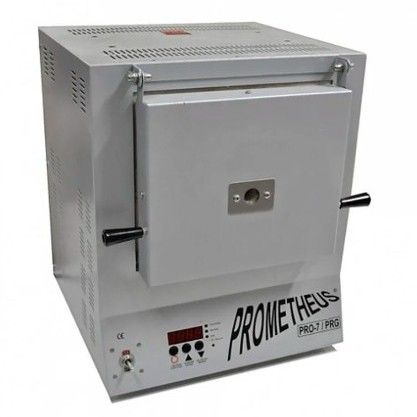
PROMETHEUS PRO
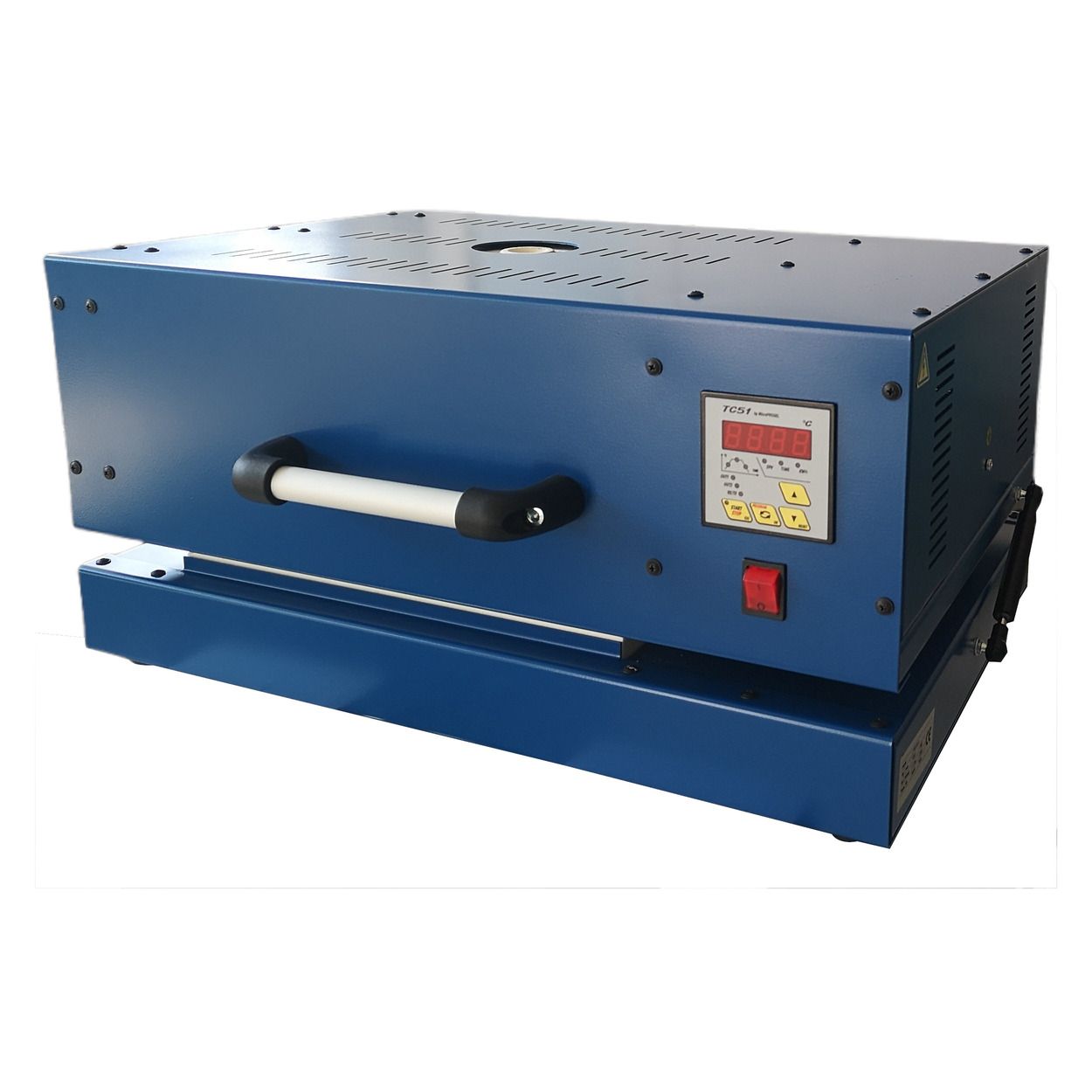
VITRO
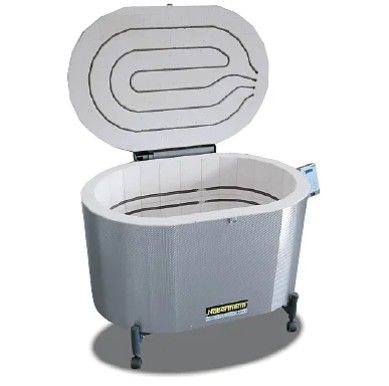
NABERTHERM F
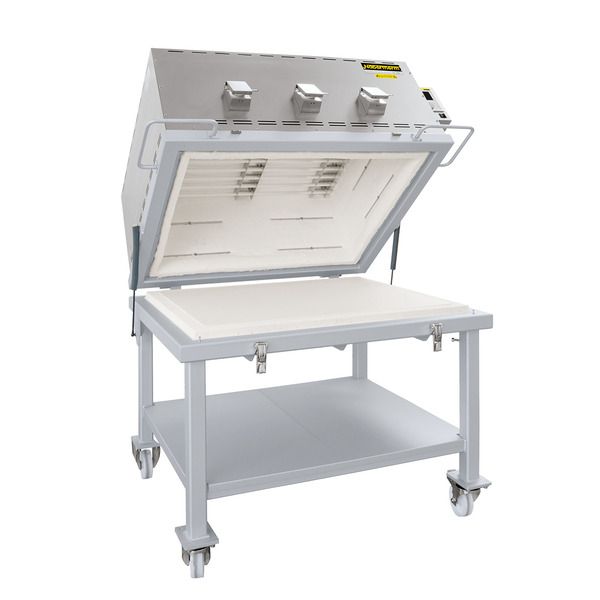
NABERTHERM GF
A tip for new enthusiasts
When choosing your first kiln for glass fusing, it’s easy to focus solely on the projects you want to create immediately. In reality, it can be helpful to also think about how your creativity might evolve over time.
Many enthusiasts start by creating small jewellery pieces and, with experience, move on to plates, decorative panels, or glass sculptures.
Choosing a versatile kiln allows you to experiment with new techniques without having to change equipment too soon.
Glass fusing is a technique that combines creativity and precision, and the kiln is the tool that makes the entire process possible. With the right choice and a bit of practice, it can become the heart of your creative workshop.
Moreover, if you wish to delve deeper into the technique of glass fusing, you can find all the information in our article: GLASS FUSING