 Italiano
 English
 Français
 Español
 Deutsch
Whoever approaches acrylic painting is often surprised by the versatility of these colours. They are intense, opaque, dry quickly, and can be used on many different surfaces, from canvas to wood, including cardboard, paper, and decorative surfaces.
However, it is precisely their quick drying time that represents one of the aspects that most challenges beginners. A brief pause is enough to notice that the colour on the brush has already changed, or that it has started to dry on the palette. At other times, one realises that a simple addition of water makes the colour too runny, less opaque, and more difficult to control.
It is at this moment that one of the most important allies of acrylic painting comes into play: the acrylic medium.
Many imagine it as a simple additive, but in reality, it is much more. A medium allows you to modify the behaviour of the colour without altering its quality. It can make it more fluid, more transparent, denser, shinier, or more matte. It can slow down drying time, help create raised textures, or even add particular decorative effects.
In other words, the medium does not change the colour: it changes the way you can use it.
This is precisely why, over time, almost every artist ends up pairing their colours with a small collection of different mediums. Each responds to a specific need and opens up new creative possibilities.
In this guide, we will discover together what acrylic mediums are, when it is advisable to use them, and how to choose the one most suitable for the result you wish to achieve.
What is an acrylic medium?
To truly understand what a medium is for, we must start from how an acrylic colour is made.
Every colour is primarily composed of pigments, which determine its hue, and an acrylic resin, also called a binder, which holds the pigments together and makes them adhere to the surface once dry.
When you simply add water, the colour certainly becomes more fluid, but at the same time, the concentration of resin in the mixture is reduced. If this dilution is excessive, the paint film can become less durable and lose some of its characteristics.
Mediums work differently.
They do not replace water, but complement it. Water remains a useful tool in acrylic painting, while mediums allow you to achieve results that would be much more difficult to obtain with dilution alone.
Being formulated with acrylic resin as well, they modify the consistency of the colour while keeping its balance intact. In practice, you can achieve a more transparent, softer, or thicker paint without compromising adhesion, elasticity, and durability.
It is a detail that often escapes beginners, but it makes a significant difference, especially when you want to create works intended to last over time.
What is a medium for acrylic colours?
The simplest answer would be to say that it serves to modify the colour, but that would be reductive.
The medium primarily allows you to control the behaviour of the paint.
Think of an artist who wants to create a very textured painting, where brush strokes remain clearly visible. Or someone who wants to create a smooth and shiny surface without altering the intensity of the colours. Or even someone who loves to paint slowly, blending tones into one another without having to fight against the rapid drying of acrylics.
These are completely different needs, and each finds a response in a specific medium.
For this reason, talking generically about "acrylic medium" is a bit like talking about brushes: there are many models, each designed for a specific purpose.
Knowing the differences means being able to consciously choose the product most suitable for your painting style.
The different types of acrylic mediums
One of the most interesting characteristics of acrylic painting is the ability to customise almost every aspect of the colour. There are mediums that modify glossiness, others that change consistency, others that affect drying times, or allow for the creation of very particular decorative effects.
Let’s look at the main types together:
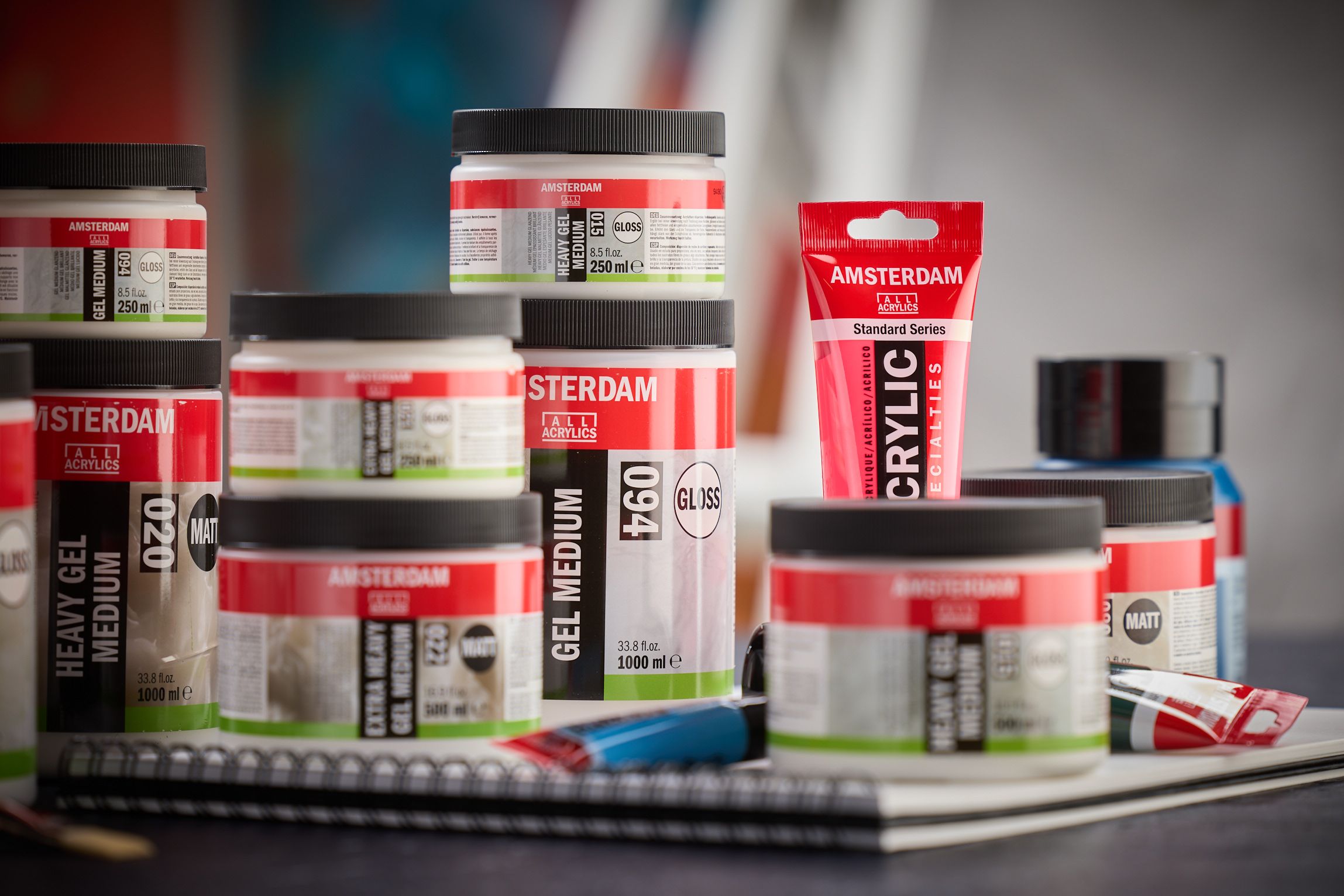
Acrylic Medium: the starting point
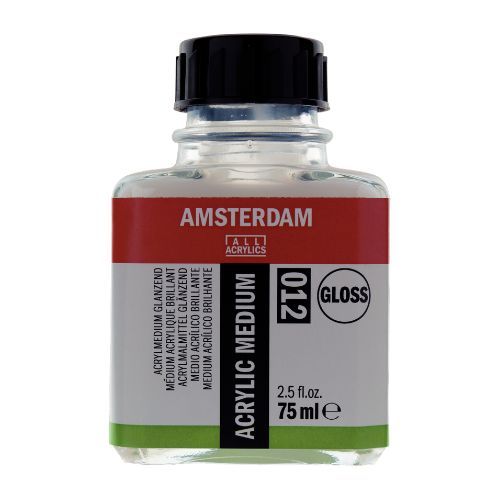
GLOSS
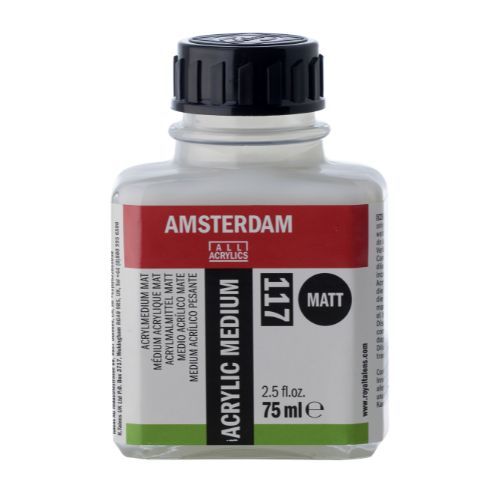
MATTE
If we had to recommend just one medium for beginners, it would definitely be the classic acrylic medium.
It is the most versatile because it improves the fluidity of the colour while maintaining its properties. It helps make brush strokes smoother, slightly increases transparency, and allows for greater control.
There are versions with a glossy and matte finish. The difference does not concern how the medium is used, but the final appearance of the surface. A glossy finish tends to enhance colour depth, while a matte finish reduces reflections and gives a softer, velvety effect.
For those who want an all-purpose product, it often represents the first purchase to accompany acrylic colours.
Gel Medium: when colour gains volume
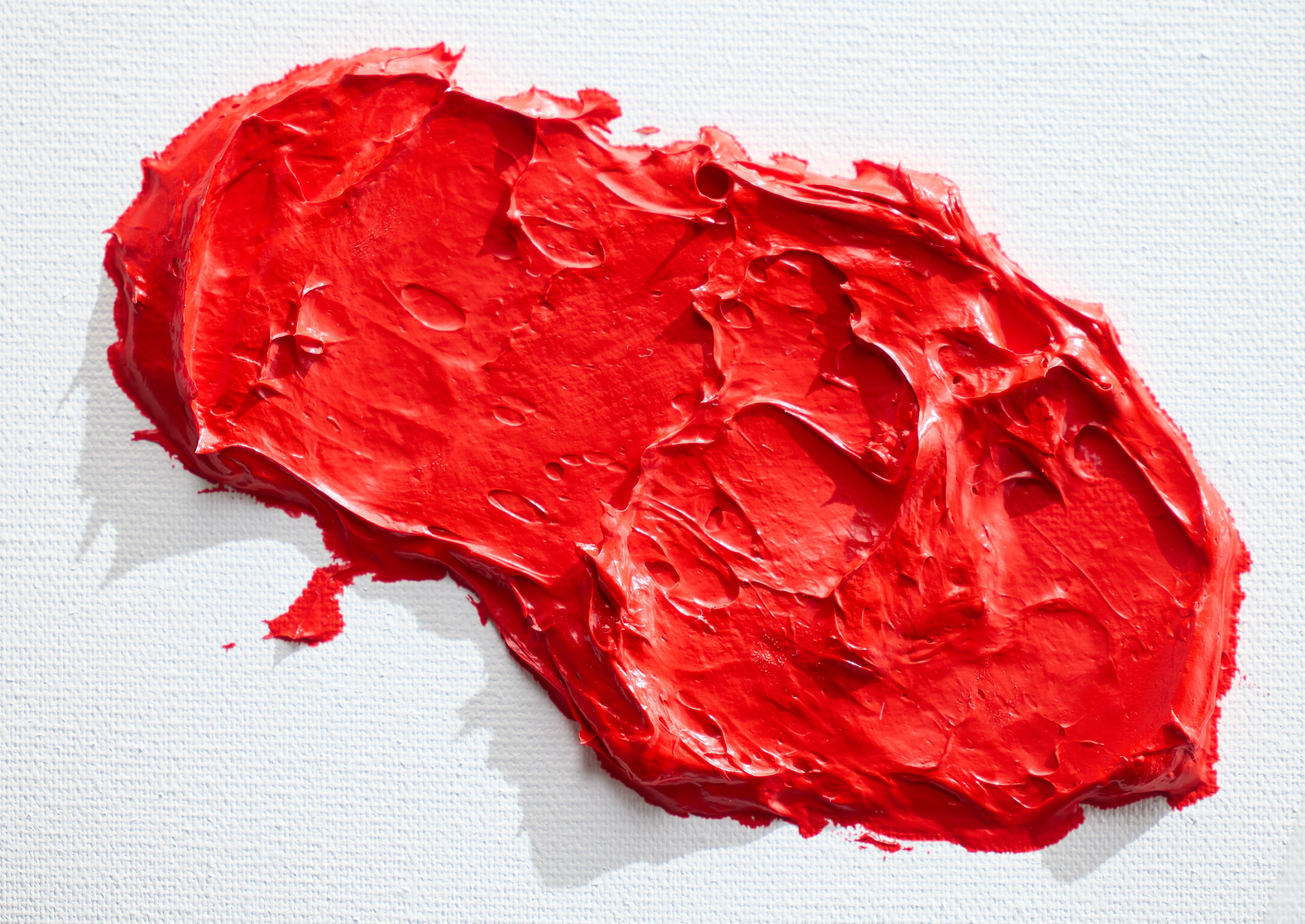
If you have closely observed a contemporary painting and noticed thick brush strokes, evident reliefs, or almost sculpted surfaces, it is very likely that a gel medium was used.
Unlike liquid mediums, the gel has a decidedly thicker consistency. When mixed with colour, it allows you to maintain its volume even after drying, preserving the mark of the brush or spatula.
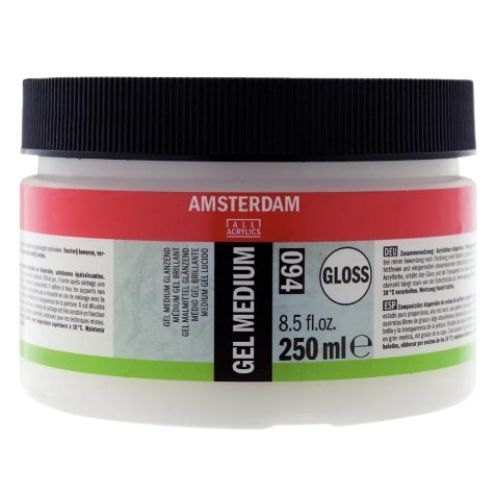
GLOSSY GEL
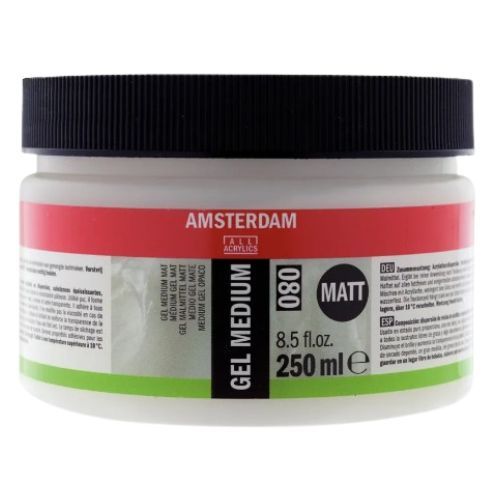
MATTE GEL
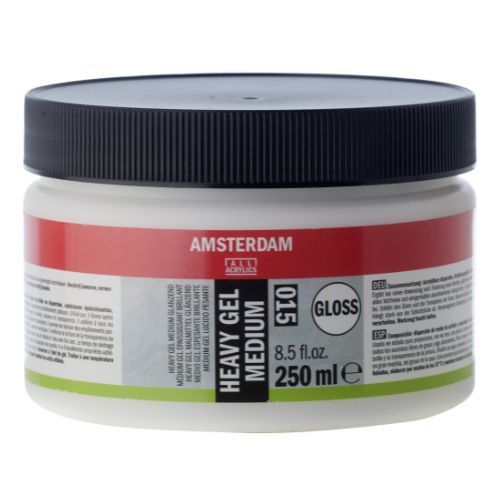
HEAVY GLOSSY GEL
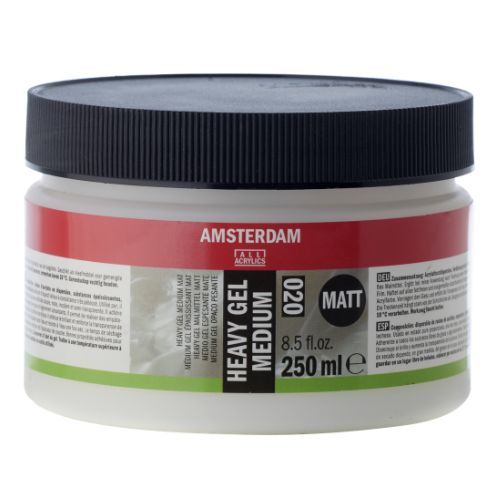
HEAVY MATTE GEL
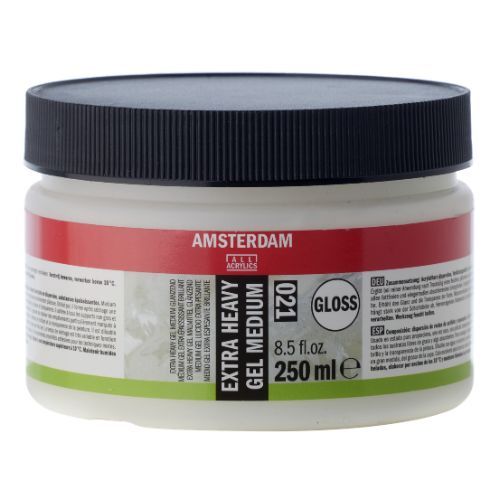
EXTRA HEAVY GLOSSY GEL
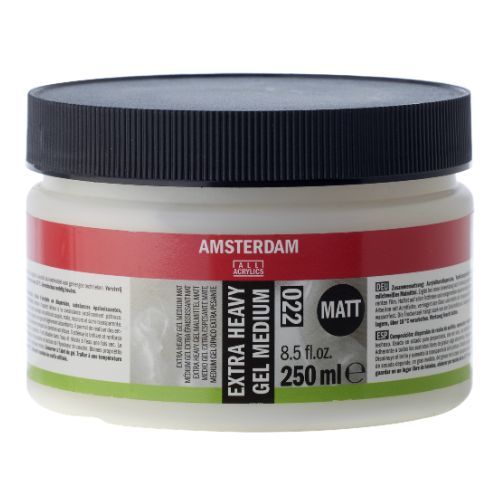
EXTRA HEAVY MATTE GEL
It is a solution highly appreciated by those who love textured painting and mixed media techniques because it offers great expressive freedom without altering the quality of the colour.
Again, there are glossy and matte variants, as well as denser or extra dense formulations. The choice mainly depends on the effect you want to achieve: a delicate texture or more pronounced reliefs that become an integral part of the composition.
Glazing Medium: depth without covering
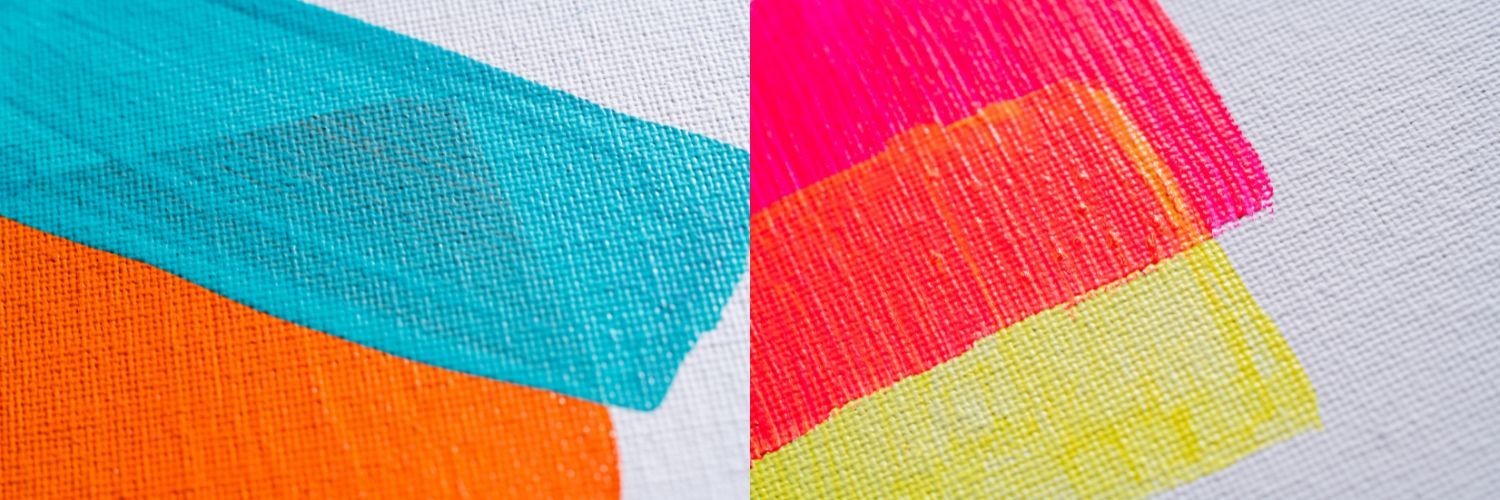
Glazing represents an ancient technique that continues to be used in acrylic painting.
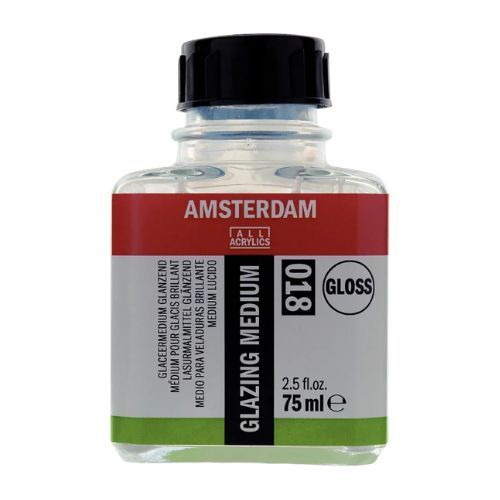
GLOSSY
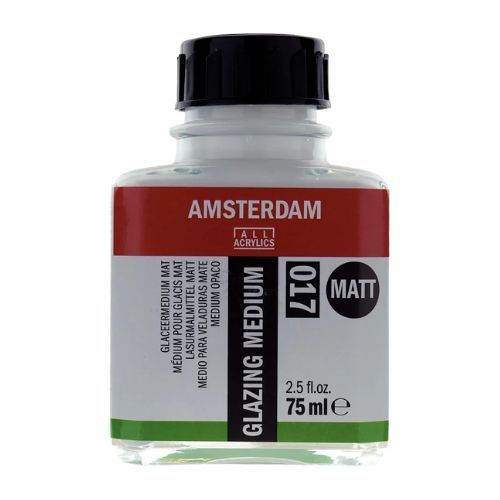
MATTE
The idea is simple: to layer very transparent colours to gradually build lights, shadows, and depth.
With just water, this effect can be difficult to control. The glazing medium, however, increases transparency while keeping the mixture stable and allows for much more delicate colour transitions.
It is a particularly interesting solution for landscapes, portraits, and realistic subjects, where soft transitions make a difference.
Retarder and Slow Drying Medium: when time makes a difference
One of the qualities that makes acrylics so appreciated is also one of their main limitations: they dry very quickly**. While this allows for multiple layers of colour to be applied in a short time, it can be challenging when soft gradients or gradual colour transitions are desired.
For example, someone painting a portrait knows how important it is to work calmly on the transitions between light and shadow. The same goes for a sunset sky or a landscape where colours need to blend without sharp breaks.
In these situations, two products are often confused with each other: the acrylic retarder and the slow drying medium.
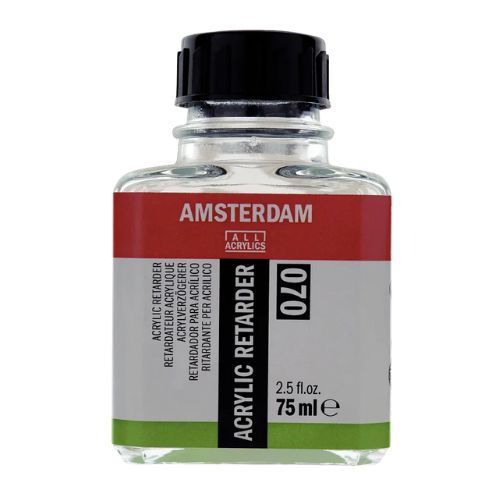
The retarder serves to slow down the drying process of the colour. A small amount is enough to gain a few extra minutes and work with greater peace of mind. It is particularly useful during the summer months or in very warm environments, where acrylics tend to dry even faster.
The retarder serves to slow down the drying process of the colour. A small amount is enough to gain a few extra minutes and work with greater peace of mind. It is particularly useful during the summer months or in very warm environments, where acrylics tend to dry even faster.
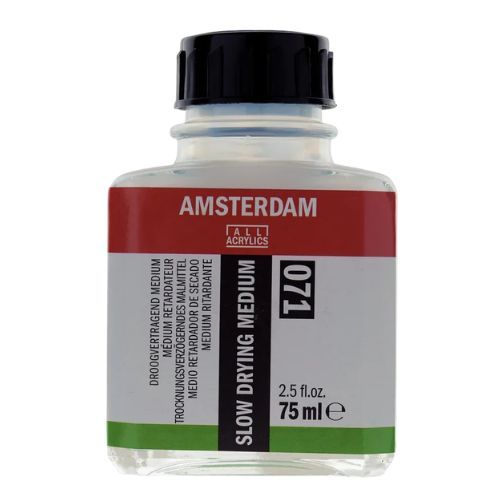
The slow drying medium, on the other hand, in addition to extending working time, maintains an optimal balance of the mixture and makes the colour more pleasant to apply. It is an interesting solution for those who want greater control during painting without sacrificing the typical advantages of acrylics. Adding a large amount of slow drying medium will also affect the transparency and glossiness of the paint.
The slow drying medium, on the other hand, in addition to extending working time, maintains an optimal balance of the mixture and makes the colour more pleasant to apply. It is an interesting solution for those who want greater control during painting without sacrificing the typical advantages of acrylics. Adding a large amount of slow drying medium will also affect the transparency and glossiness of the paint.
Both tools do not serve to "correct" a flaw in the colour but to adapt it to your working style. Some love the speed of acrylics, while others prefer to take all the time necessary to build gradients and details.
Pouring: when the colour moves on its own
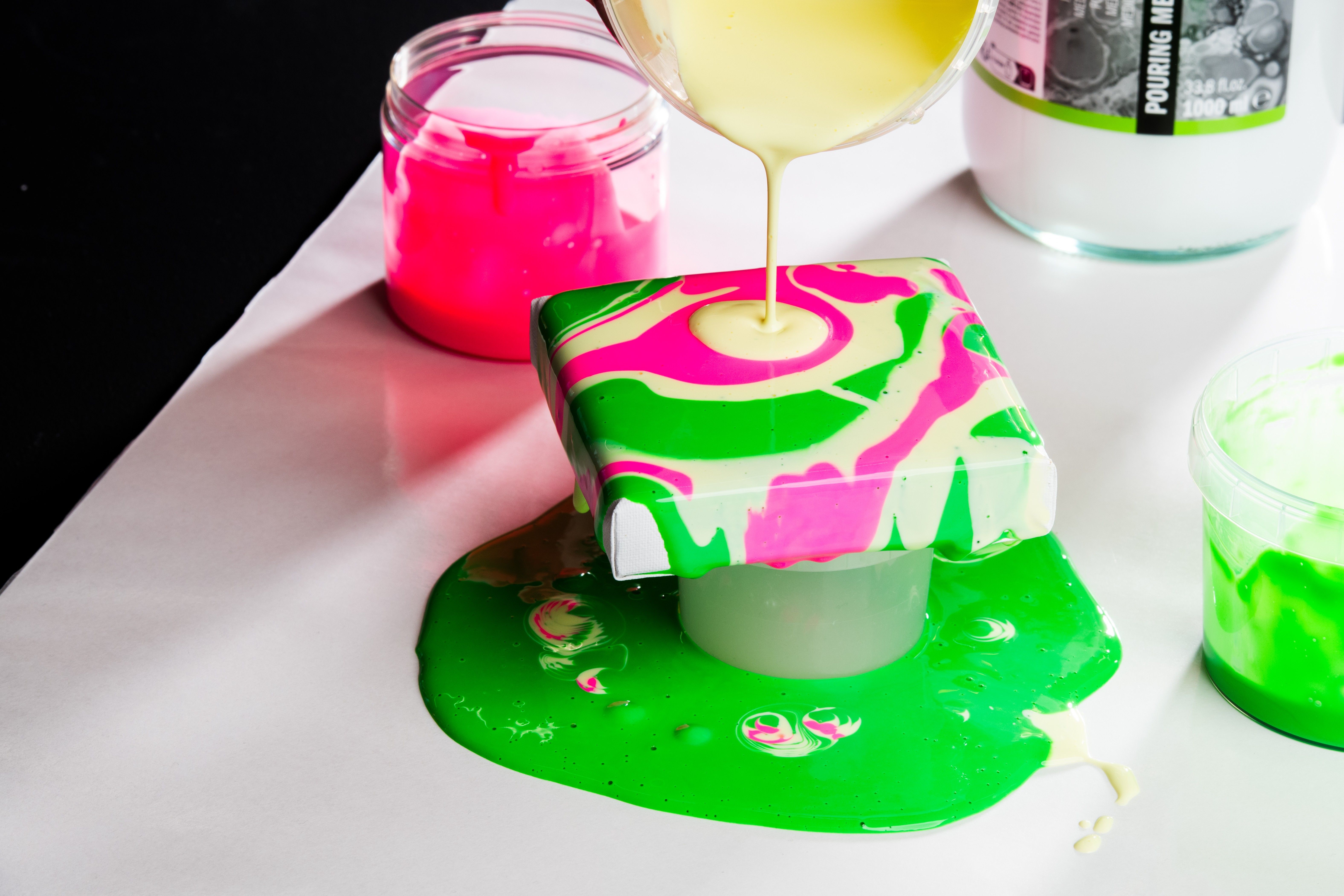
In recent years, the pouring technique has captivated thousands of enthusiasts.
The principle is as simple as it is fascinating: the colour is made very fluid and poured directly onto the surface, allowing gravity and movement to create intertwining, gradients, and ever-changing shapes.
However, to achieve a harmonious result, it is not enough to add water. A mixture that is too diluted risks separating pigments and binder, compromising the uniformity of the painting.
The pouring medium is specifically designed to maintain the right balance between fluidity, adhesion, and glossiness, allowing colours to move freely without losing quality.
It is a technique perfect for beginners as well, as it allows for experimentation and often yields surprising results from the very first attempts.
How to create textured effects with acrylics
One of the most fascinating aspects of acrylic painting is the ability to transform a completely smooth surface into a work rich in reliefs and textures. To achieve this result, there are specific products that allow you to increase the thickness of the colour or create very different textured effects.
Gel mediums are ideal for giving more body to the paint and preserving the mark of the brush or spatula, while structuring paste allows for creating more significant reliefs and three-dimensional surfaces.
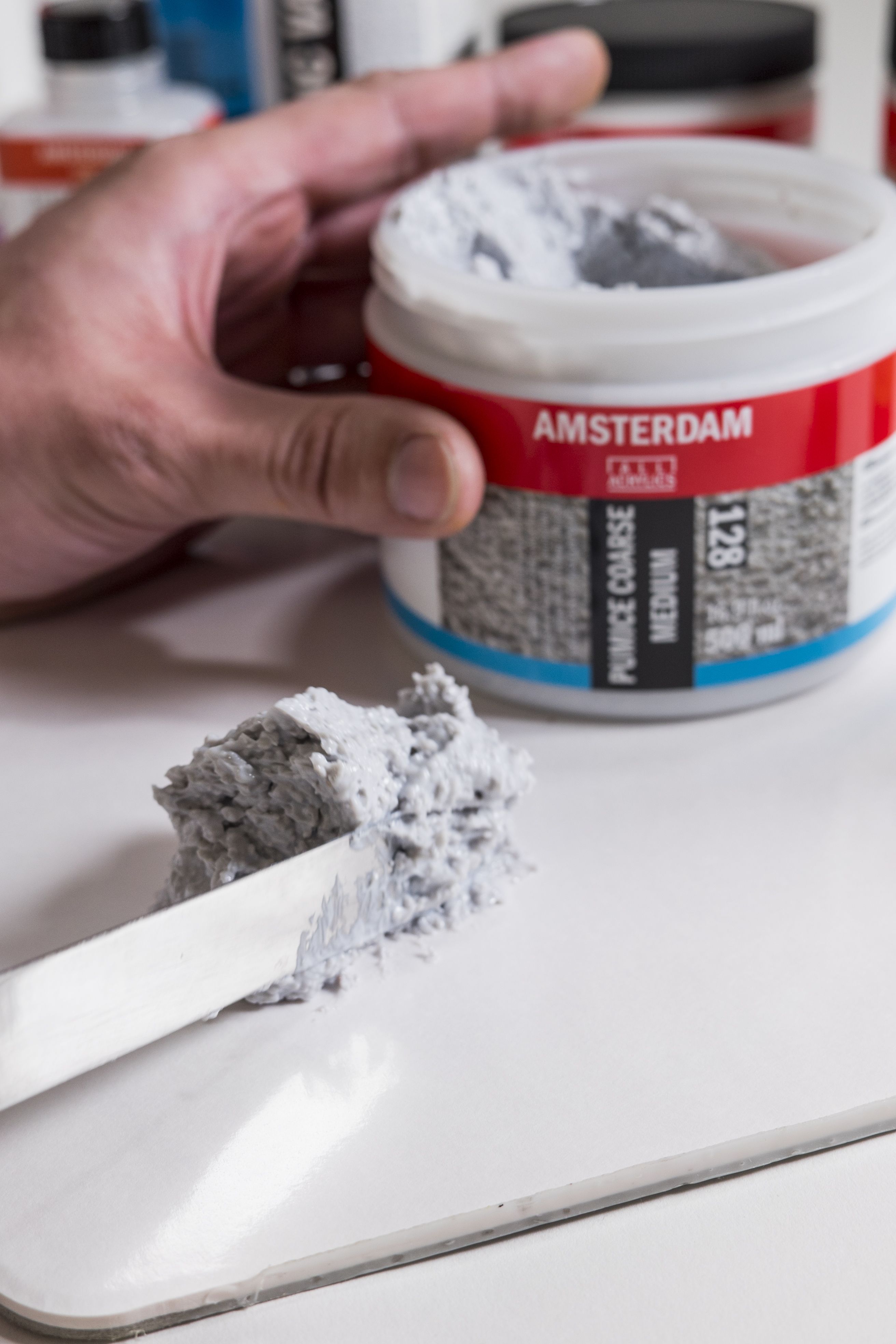
For those who want to add an even more pronounced texture, there are also mediums with pumice, available in different grain sizes: fine, medium, coarse. Thanks to the presence of mineral particles, they recreate surfaces that resemble stone, concrete, or sand and are particularly suitable for landscapes, abstract works, and textured art techniques.
For those who want to add an even more pronounced texture, there are also mediums with pumice, available in different grain sizes: fine, medium, coarse. Thanks to the presence of mineral particles, they recreate surfaces that resemble stone, concrete, or sand and are particularly suitable for landscapes, abstract works, and textured art techniques.
If you want to experiment with original effects, the Pearl Medium offers a completely different texture. It contains tiny glass microspheres that, when used alone or mixed with acrylic colours, create a unique three-dimensional surface. It is a very interesting solution for mixed media works, decorations, and creative projects where texture also becomes a protagonist.
Experimenting with these products means expanding the expressive possibilities of acrylic painting and discovering how matter can become a true element of artistic language.
Common mistakes made by beginners
One of the most common mistakes is thinking that the medium can solve any problem. In reality, each formulation is designed for a specific purpose and performs best when used in the right context.
Exceeding quantities does not necessarily lead to better results. A well-balanced mixture is almost always preferable to an excessively modified colour.
Many beginners also purchase very specific mediums without yet being clear about the effect they want to achieve. In most cases, it is advisable to start with a versatile acrylic medium and add more specific products as new techniques are experimented with.
Acrylic painting is a journey of trials, observation, and practice. Each medium represents an opportunity to expand your expressive possibilities, not a shortcut.
Conclusion
Those who start using mediums soon realise that there is no one-size-fits-all rule for every situation. Much depends on the technique employed, the chosen support, and the effect you want to achieve.
One of the most frequent questions concerns the possibility of mixing multiple mediums together. In many cases, it is possible, especially if they belong to the same product line, but it is always advisable to do a small test before using them on an important work.
Another doubt concerns colour: the medium does not add pigments and therefore does not alter the hue of the paint. However, it can change its transparency, glossiness, or final appearance, influencing how we perceive the colour once dry.
Many also wonder if it is really essential to use a medium. The answer is no. With just acrylic colours, it is possible to create beautiful paintings. However, mediums allow for greater control and open up creative possibilities that would otherwise be much more difficult to achieve.
Domande frequenti
What is gel medium?
Gel medium is an acrylic medium with a much thicker consistency compared to liquid mediums. When mixed with colour, it maintains its volume even after drying, preserving the mark of the brush or spatula: for this reason, it is the most commonly used choice for achieving thick brush strokes, evident reliefs, and textured surfaces. It is available in glossy and matte versions, as well as denser or extra dense formulations depending on the desired effect.
What is the purpose of medium for acrylic colours?
The medium serves to control the behaviour of acrylic paint without compromising its adhesion, elasticity, and durability — which can happen when diluting the colour too much with just water. Depending on the type chosen, it allows for a more transparent, fluid, thicker, glossier, or more matte paint, or to slow down drying time for a more relaxed working pace.
What is the right medium to start with?
For beginners, the advice is to start with the classic acrylic medium: it is the most versatile, improves the fluidity of the colour while maintaining its properties, makes brush strokes smoother, and allows for greater control. It is the typical first purchase to accompany acrylic colours before moving on to more specific formulations like gel medium, glazing medium, or retarders.
What is pouring medium?
Pouring medium is a specific medium designed for the pouring technique: it maintains the right balance between fluidity, adhesion, and glossiness, allowing colours to move freely on the surface without losing quality. It is a technique suitable for beginners as well, as it allows for experimentation.
Is it possible to mix multiple acrylic mediums together?
There is no one-size-fits-all rule: much depends on the technique employed, the chosen support, and the effect you want to achieve. In many cases, it is possible to mix multiple mediums, especially if they belong to the same product line, but it is always advisable to do a small test before using them on an important work.
Does the medium change the colour of acrylic paint?
No: the medium does not add pigments and therefore does not change the hue of the colour. However, it can change its transparency, glossiness, or final appearance, influencing how the colour is perceived once dry.