 Italiano
 English
 Français
 Español
 Deutsch
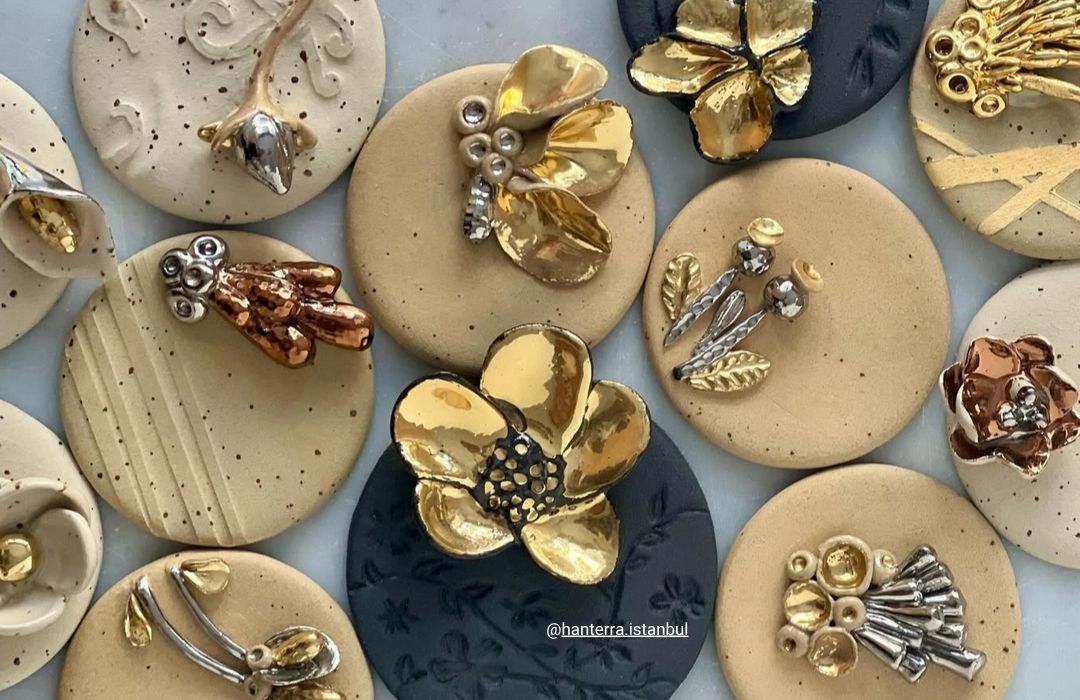
Liquid gold for ceramics is one of the most commonly used materials for creating precious decorations on ceramics and porcelain. In this guide, you will discover how to correctly apply lustre, at what temperature to fire it, and the differences between liquid gold, liquid platinum, and coloured lustres.
What is ceramic lustre
Ceramic lustre is a third-fire colour made from a mixture of resins, solvents, and metallic compounds that, after firing, leaves an extremely thin metallic film on the surface of the ceramic.
Unlike normal ceramic colours, lustre is applied to an already glazed and fired object, when the surface is completely vitrified. After application, a new firing, called third-fire, is necessary, during which the organic part evaporates, leaving only the thin metallic deposit.
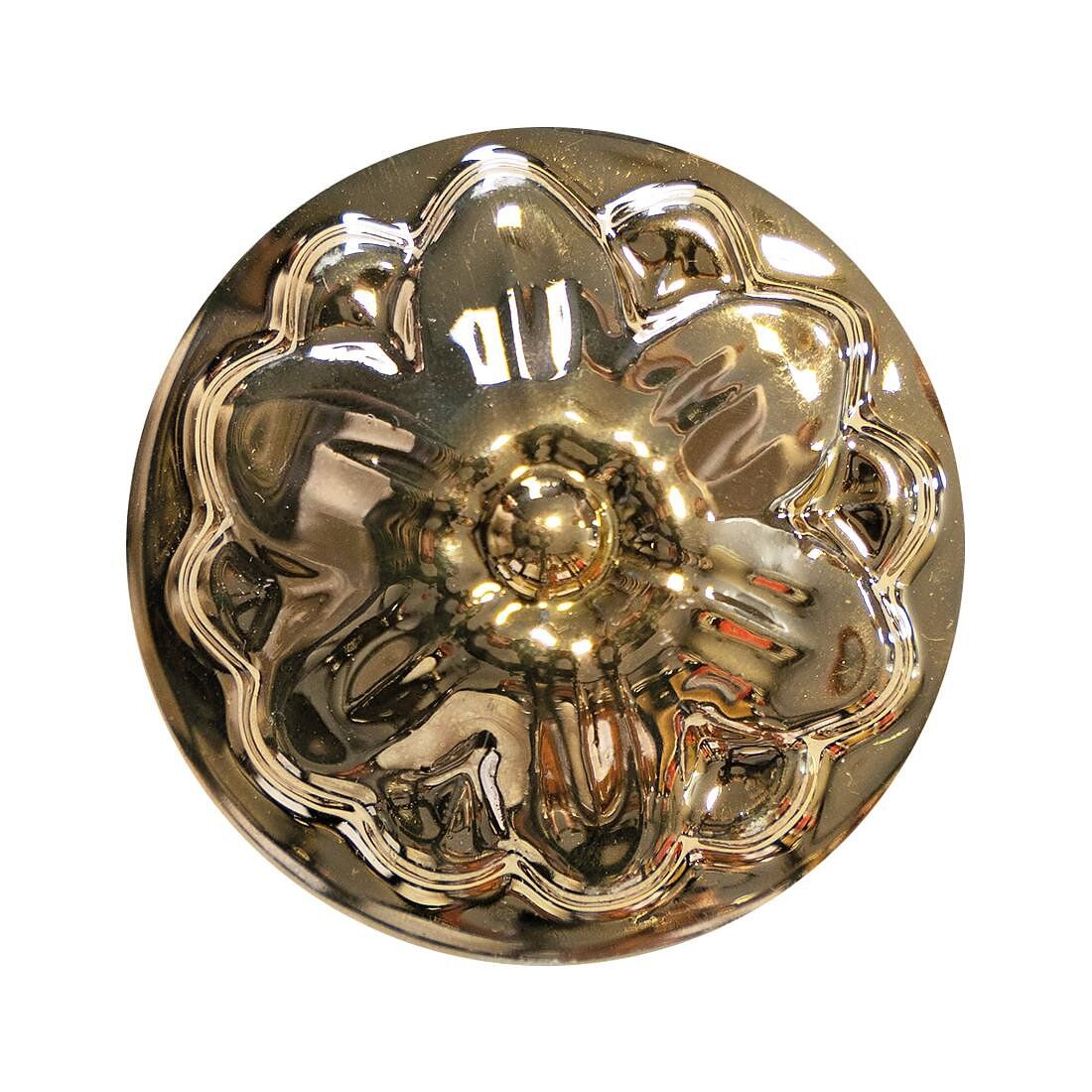
BRIGHT LIQUID GOLD 8%
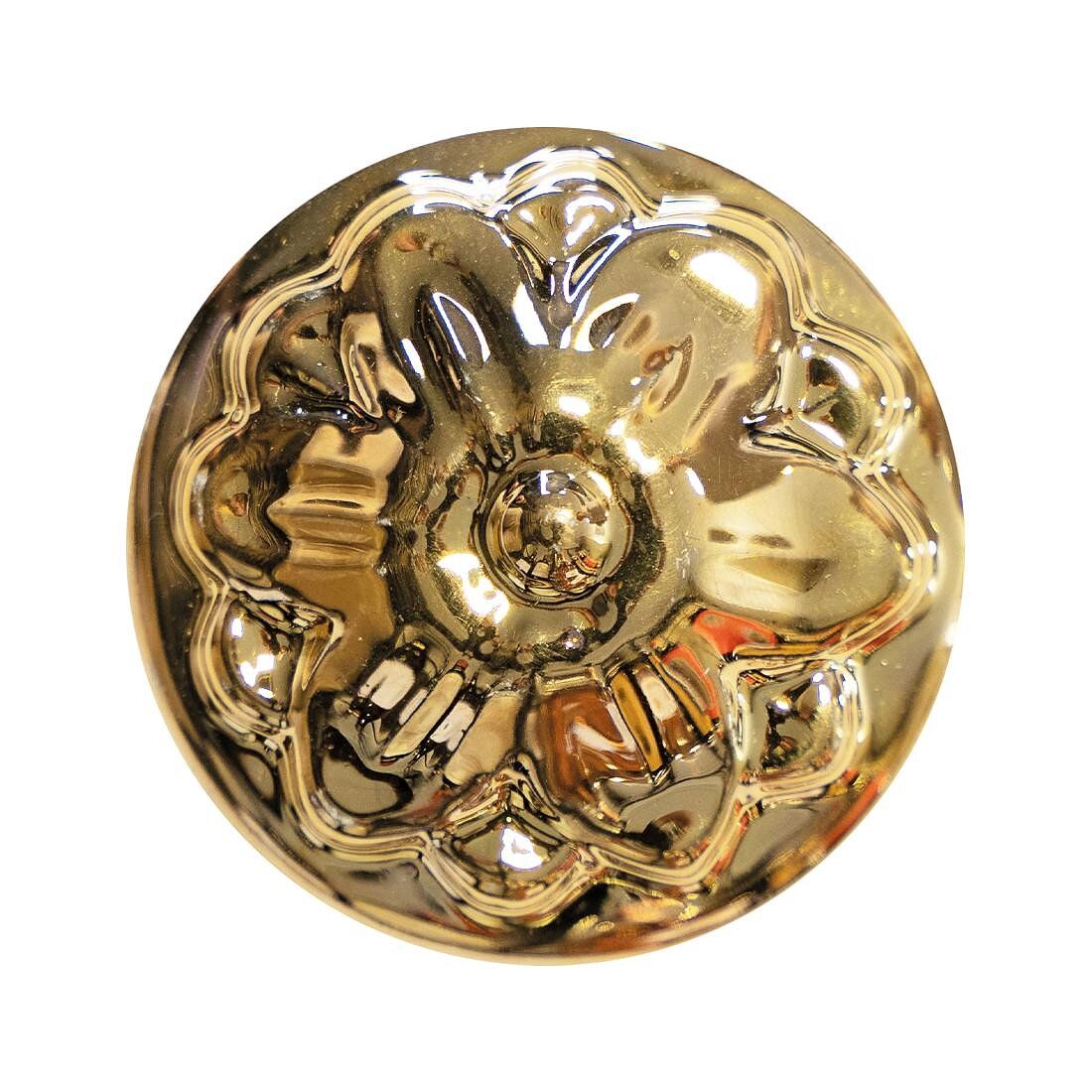
BRIGHT LIQUID GOLD 10%
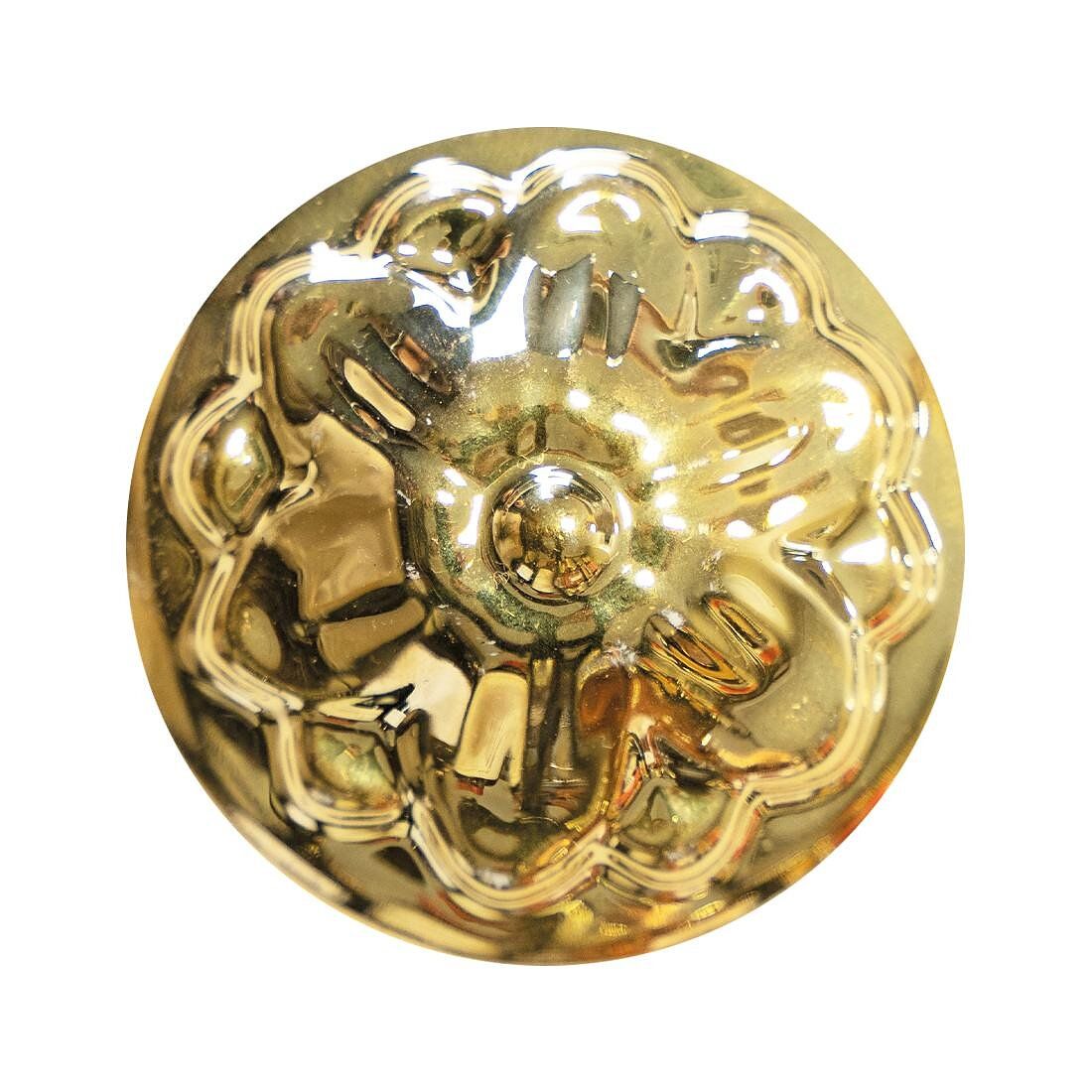
BRIGHT LIQUID GOLD 12%
When raw, the product can be surprising: liquid gold, for example, has a dark brown colour and only reveals its characteristic brilliance after firing.
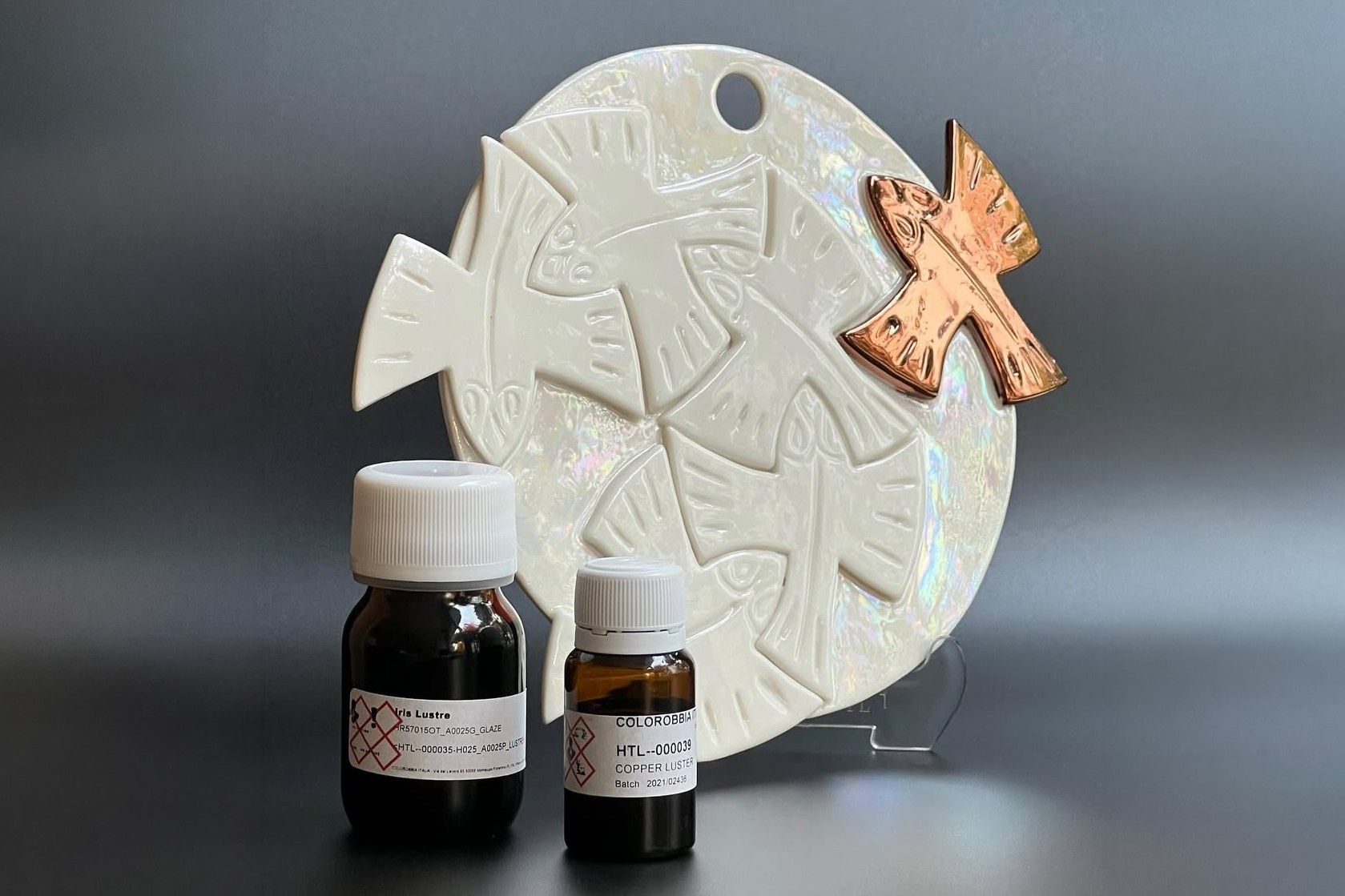
In addition to the classic finishes of gold and platinum, there are numerous decorative lustres that allow for coloured and iridescent metallic effects.
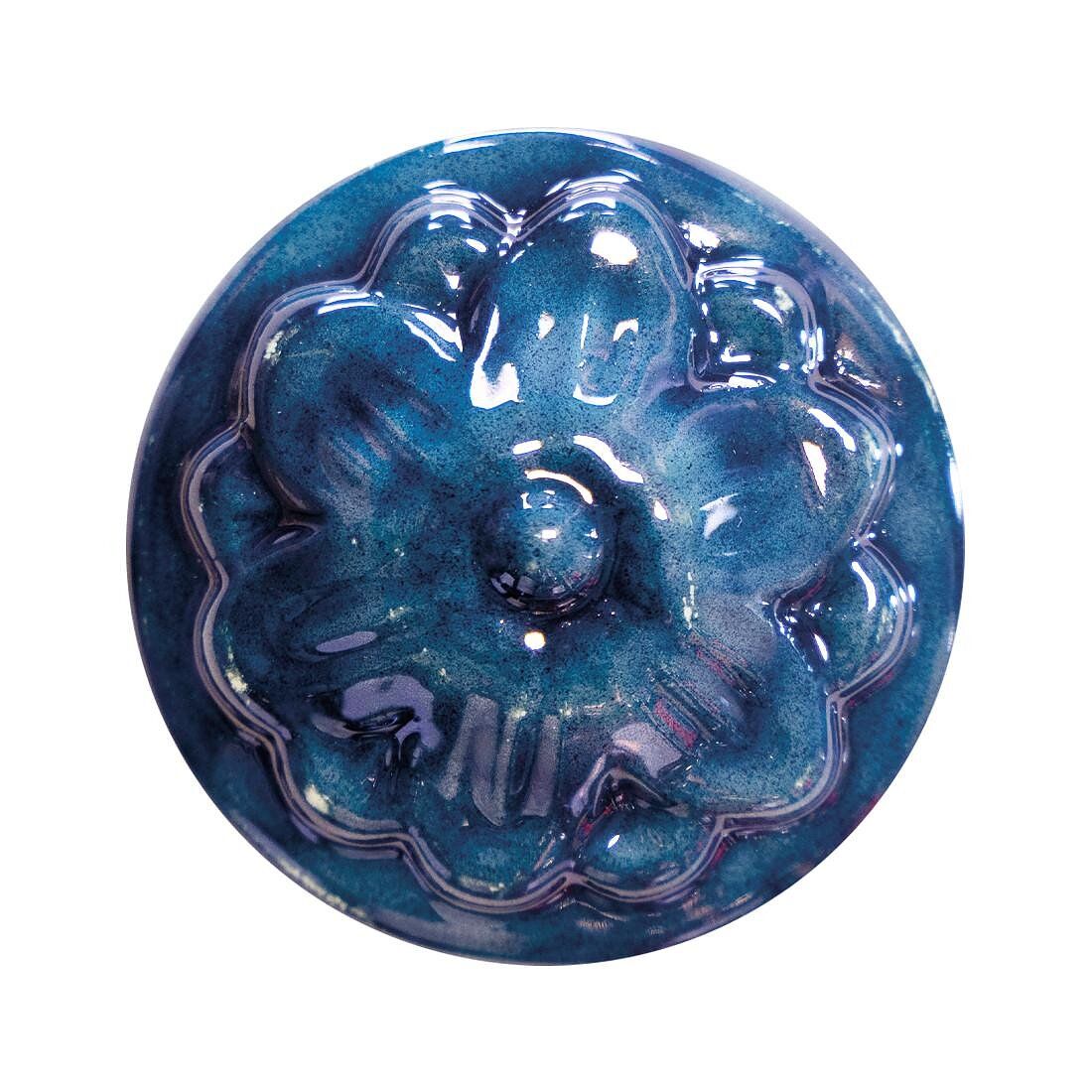
The Hobbyland range includes, for example, lustres Amber, Orange, Blue, Bronze, Yellow, Black, Copper, Red, Green, Violet, and Mother of Pearl Iris, ideal for customising any ceramic project with original effects.
Difference between lustre, liquid gold, and liquid platinum
These terms are often used interchangeably, but they refer to products with different characteristics.
The coloured lustre contains metallic compounds that produce iridescent reflections or metallic effects in various shades. It is perfect for creating creative decorations, gradients, and bright details, and includes finishes such as bronze and copper.
The liquid gold, on the other hand, contains a small amount of real gold dispersed in a special medium that, after firing, forms a very thin layer of shiny gold on the surface of the ceramic. It is the product used to create fillets, borders, precious details, or high-quality decorations on ceramics and porcelain.
The liquid platinum works on the same principle but provides a shiny silver metallic finish, very elegant and contemporary.
For those wishing to create professional decorations, Hobbyland offers various grades of Bright Liquid Gold (8%, 10%, and 12%), Lemon Liquid Gold, and Bright Liquid Platinum, designed to meet different aesthetic needs.
How to apply lustre on ceramics
Application requires precision, but with a few tips, even beginners can achieve excellent results.
The surface must be perfectly clean, dry, and free of dust, grease, or fingerprints. Even a simple contact with fingers can compromise the quality of the decoration after firing.
The lustre should be applied with a single continuous brush stroke, avoiding going over the same area multiple times, using a brush dedicated exclusively to this purpose. Since the product has a rather thick consistency, similar to honey, it can be used pure or slightly diluted with a specific lustre thinner, added gradually until optimal brushability is achieved.
Applying too thick a layer risks creating accumulations, runs, or small bubbles, while a layer that is too thin may produce, after firing, a purplish or poorly covering surface instead of the desired brilliance.
For this reason, many ceramicists prefer to apply two light coats, allowing the first to dry before proceeding with the second.
Once the decoration is complete, it is advisable to wait at least 24 hours before firing, allowing the solvents to evaporate naturally.
Firing temperature for third-fire
Lustre decoration requires a third firing, much lower than the normal firing of glaze.
For most ceramics, the final temperature is around 700 °C, while for porcelain it can reach between 750 and 815 °C, depending on the characteristics of the clay and the manufacturer's instructions.
A commonly used firing schedule includes:
- ramp up to 500 °C in about 3 hours;
- ramp up to 700 °C in the next 4 hours (or higher temperature for porcelain);
- hold for about 15 minutes at the final temperature.
During the first hours of firing, it is normal to perceive odours due to the evaporation of solvents present in the product. For this reason, it is important to use a well-ventilated kiln or work in adequately aired environments.
Not just for ceramics: application on high-fired glazing
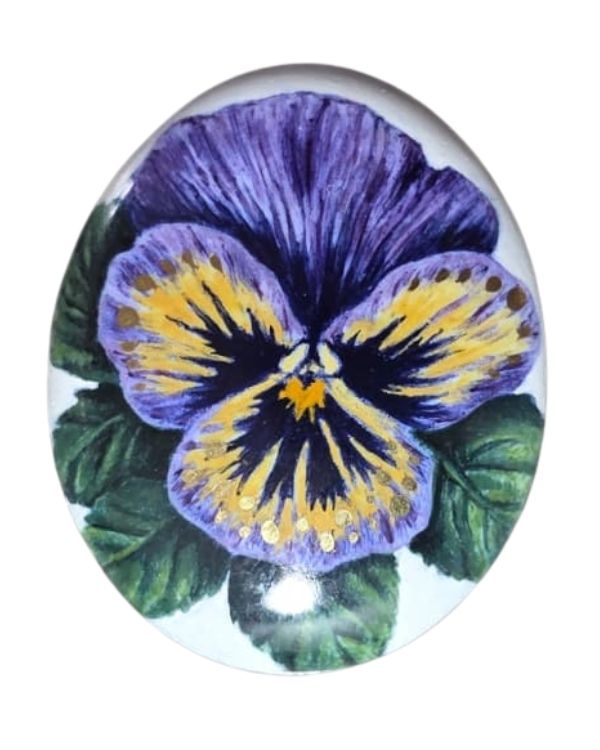
Artist: @rebeccadenamel
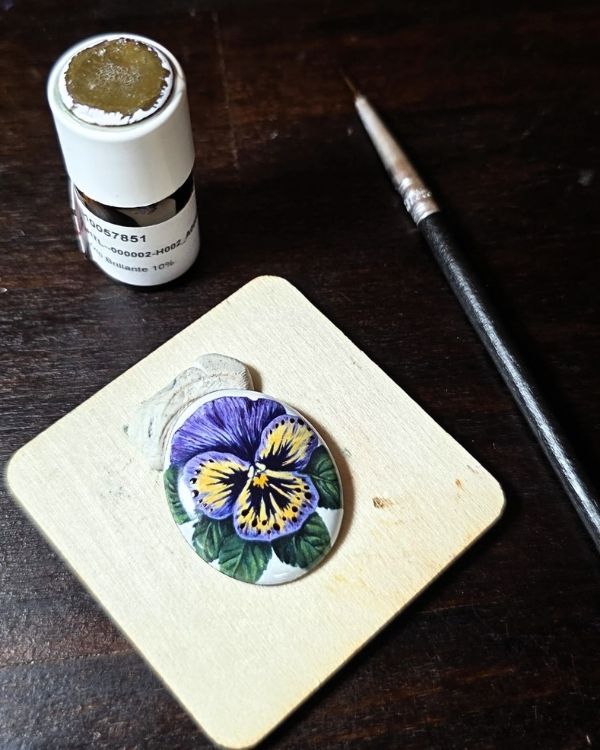
In addition to the classic application on glazed ceramics, some lustres can also be used on high-fired glazed surfaces and miniatures.
In the case of a third-fire decoration, the lustre is applied only after completing and firing the entire decoration. Once the decoration is finished, the lustre is applied, and an additional dedicated firing is carried out, necessary to fix the metallic finish. This allows for adding details in gold, platinum, or with iridescent effects without altering the underlying decoration.
Even on glazed metal surfaces, the firing follows a different procedure compared to traditional ceramics. Generally, it is done visually, bringing the piece to a temperature of about 780-800 °C. For small items, about 20 seconds may be sufficient, but the actual time depends on the piece and should be assessed by directly observing the transformation of the lustre, which progressively develops its characteristic brilliance during firing.
To achieve a uniform result, it is important to apply a thin layer, avoiding both product dilution and excessive thickness. As with decoration on ceramics, it is advisable to allow the piece to dry for at least 24 hours before firing, to ensure complete evaporation of the solvents.
If after firing there are some small dark or black areas, they can be gently polished with an agate tip, bringing out the brilliance of the metallic finish.
Most common mistakes in application
Lustres are very special products and require more attention than normal third-fire colours.
The most frequent mistake is applying a layer that is too thick or too thin. In the first case, bubbles, cracks, or runs may appear; in the second, the final colour may appear greyish, purplish, or uneven.
Surface contamination is also a common problem. Traces of grease, dust, or foreign solvents can compromise the adhesion of the metal.
It is also advisable to use dedicated brushes exclusively for lustres and to always clean them with the appropriate thinner after use.
Finally, it should be remembered that many lustres are not chemically compatible with normal third-fire colours and, when used together, may require separate firings.
How to achieve a shiny and even finish
The secret to perfect decoration depends not only on the quality of the product but especially on the care with which it is applied.
An even brush stroke, without continuously going over the same areas, allows for a smooth surface. The choice of support is also important: the lustre faithfully reproduces the finish of the underlying surface. On a glossy glaze, it will appear shiny, while on a matte glaze, it will maintain a satin effect.
After firing, lustre decorations are durable but require some care. It is advisable to wash the items by hand with mild detergents and non-abrasive sponges. To preserve brilliance over time, it is also preferable to avoid dishwashers and microwaves, especially in the case of gold or platinum decorations.
Conclusions
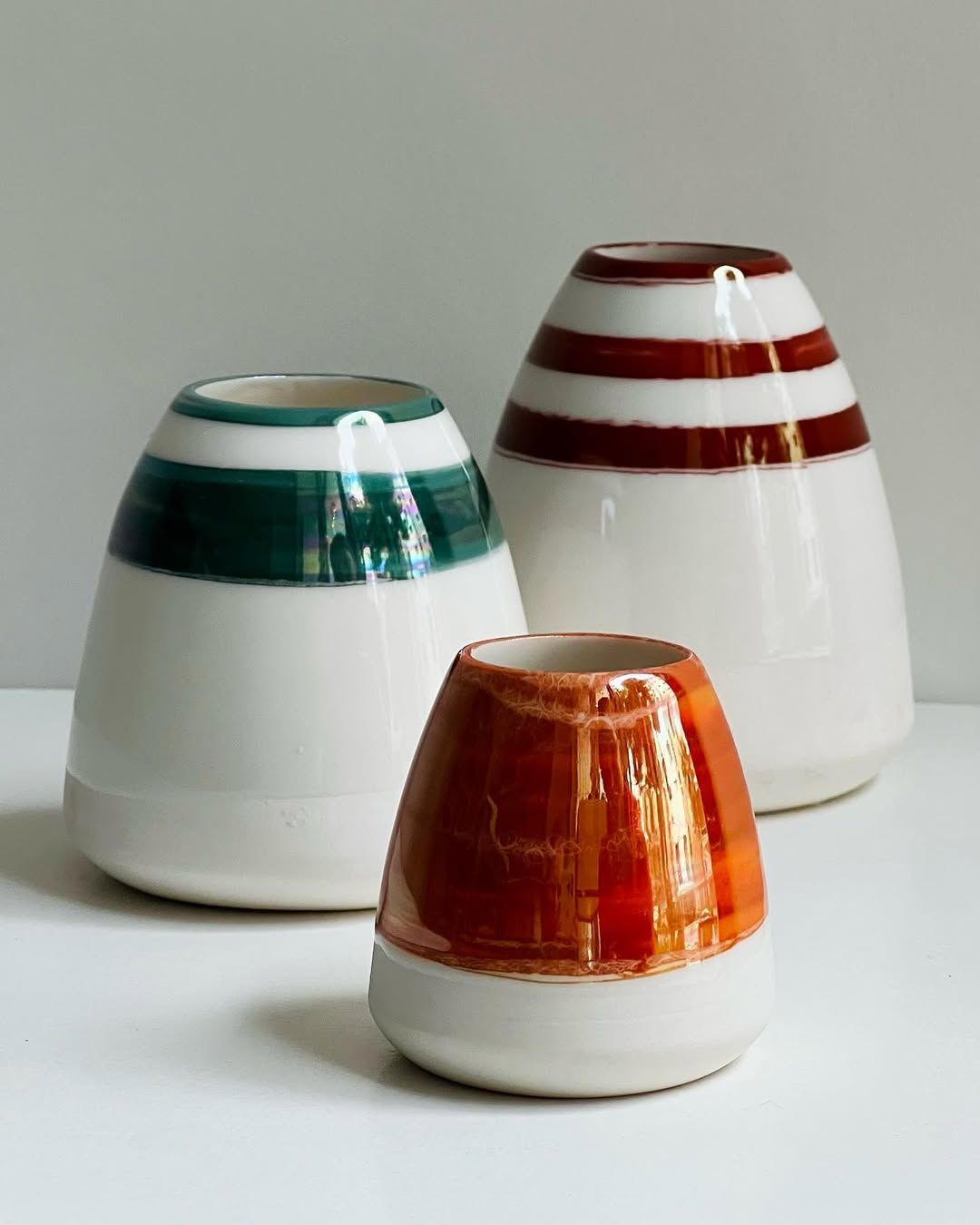
@hanterra.istanbul
Lustres represent one of the most fascinating decorative techniques in the world of ceramics. While requiring precision and a dedicated firing, they allow for results of great aesthetic impact even with simple decorations.
Whether you choose classic liquid gold to enhance a border or a coloured lustre to create iridescent and contemporary effects, third-fire offers endless creative possibilities.
If you wish to start decorating with lustres, choose products specifically for third-fire, use the right tools, and always respect the recommended firing temperatures. With correct application, you can achieve bright, durable, and professional decorations.
Domande frequenti
Does gold lustre contain real gold?
Yes, gold lustre (or liquid gold) contains a small amount of real gold, dispersed in a special medium made of resins and solvents. During the third-fire firing, the organic part evaporates, leaving a very thin layer of gold on the surface of the ceramic, responsible for the characteristic brilliance and metallic effect.
What is liquid gold for ceramics?
Liquid gold is a third-fire product that, after firing, leaves a thin layer of shiny real gold on the ceramic.
At what temperature is gold lustre fired?
Generally around 700 °C on ceramics. For some porcelains, the temperature can reach up to about 750-815 °C, following the manufacturer's instructions.
Is it applied on already fired glaze?
Yes. Lustre is always applied to a surface that is already glazed and fired, perfectly clean and dry.
What is the difference between lustre and liquid gold?
Coloured lustres produce metallic and iridescent effects in various shades, while liquid gold leaves a true golden deposit with the typical brilliance of gold.
Can it also be used on porcelain?
Yes. Lustres and liquid gold can be used on both ceramics and porcelain, respecting the correct firing cycle.
Is a second firing needed?
In fact, a third firing is needed, also known as third-fire. After applying the lustre to an already glazed and fired piece, a new pass in the kiln is necessary for the metal to permanently fix to the surface.
Can lustre go in the dishwasher?
Although lustre is fixed to the ceramic through firing, it is advisable to always wash by hand items decorated with gold lustre, platinum, or other metallic lustres. Aggressive detergents and high-temperature cycles in the dishwasher can gradually dull or wear down the decoration. To preserve its brilliance over time, it is preferable to use a soft sponge and a mild detergent. Additionally, gold or platinum decorations are not suitable for microwaves, as they contain metal.
The images and works present in this content are owned by @hanterra.istanbul and @rebeccadenamel.