 Italiano
  English
  Français
  Español
  Deutsch
Silicone rubber is a synthetic material commonly used in the world of art, decoration, and design for making moulds and producing objects in series.
Silicone rubber is versatile, durable, and suitable for a wide range of different materials - plaster, resins, wax, soap, but also metals and concrete – and can be used to create statues, figurines, bas-reliefs, decorations, furniture, architectural objects, and much more.
However, there are many types of silicone rubbers, each with different characteristics and areas of application, which can be intimidating or confusing when it comes to choosing the right product. This practical guide will help you understand the different characteristics and types of silicone rubbers and identify the one most suitable for your project.
Silicone Rubber: Definition and Characteristics
As we mentioned at the beginning, silicone rubber is a synthetic material suitable for creating moulds and casts. It is usually available in liquid form (also known as “pourable”) or in paste (“mouldable”) and is poured (or moulded) over the object from which you want to create the cast. Once the rubber has hardened, the object can be removed, leaving you with the mould.
To harden, silicone rubber requires a catalyst that must be mixed in varying proportions depending on the type of rubber and the size of the cast to be made. As we will see later, it is very important to know the ratio of rubber to catalyst and to adhere to it precisely.
All silicone rubbers have characteristics that make them ideal for creating moulds.
- Flexibility: even once hardened, silicone rubber remains flexible and elastic, making it easy to separate from the model.
- Durability and Stability: silicone rubber moulds are long-lasting and resistant even to extreme temperatures. They can be placed in the oven or freezer without losing stability and elasticity.
- Non-stick and Fidelity: silicone rubber leaves no traces or residues and ensures great fidelity in reproducing even small details.
On the other hand, each type has specific properties that make it more or less suitable for various uses. It is important to know what these properties are and what they entail in order to evaluate the products and choose the one most appropriate for us.
The catalyst ratio indicates the amount of catalyst that should be mixed with the rubber for optimal results. As we have already mentioned, it is essential to know the proportion of rubber to catalyst, as even the slightest discrepancy can compromise the hardening of the rubber. Catalysis can also be inhibited by certain substances, such as sulphur. Therefore, it is advisable to always check the instructions on the label of the chosen product before making a cast.
The hardness of a rubber influences its ability to retain the details and features of the original model. To determine whether a silicone rubber is harder or softer, you need to check the Shore A index, which typically ranges from 10 to 50. The higher the index, the less soft the rubber is, and thus its ability to stretch and ease of extraction decreases. If we want to create a mould of an object rich in details, we will need to choose a rubber with a low Shore A index.
Other characteristics to consider are:
- Tear Resistance, which indicates how much the rubber can withstand stretching and elongation, especially for extracting the cast from the mould.
- Temperature Resistance, which is important for understanding which materials we can use for the cast and what uses the mould can have (if it can go in the oven or fridge, for example, without being damaged).
- Working Time, which indicates how quickly the rubber hardens.
Types of Silicone Rubber: Polyaddition and Polycondensation
Silicone rubbers can be divided into two main "families" that differ in characteristics and possible applications. Let’s delve into each one, with a focus on specific products and their intended uses.
Polyaddition Silicone Rubber
Polyaddition silicone rubber is completely non-toxic: it does not release substances and does not cause allergic reactions, making it ideal for creating moulds suitable for the food sector, jewellery, or other items intended for personal use.
It has a relatively short curing time and typically has a catalyst ratio of 1:1, which makes its use easier and more intuitive. On the downside, polyaddition silicone rubber is inhibited upon contact with certain substances, such as sulphur. Therefore, it is important to always read the label of the individual product to know which substances to avoid.
Polyaddition silicone rubbers are generally pourable, but there are also mouldable types.
The GLS-PRO series, suitable for pouring plaster, wax, soap, and resin, features 4 types, from 10 to 40, indicating their respective Shore A index. All have a working time of 90 minutes and a curing time of about 8 hours.
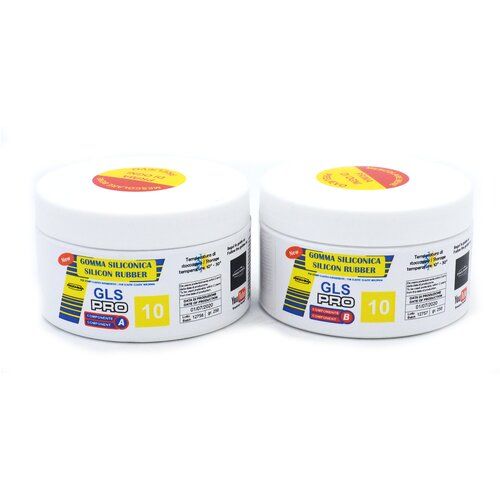
GLS-Pro 10
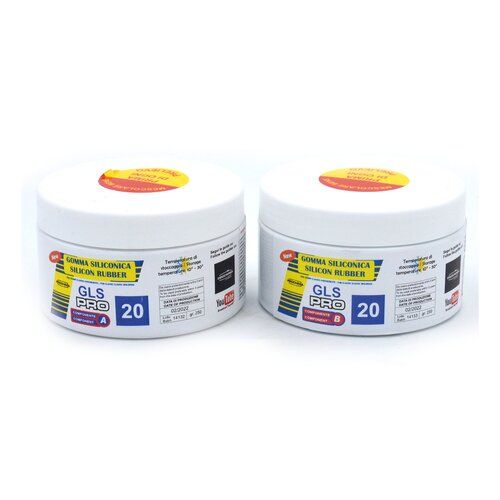
GLS-Pro 20
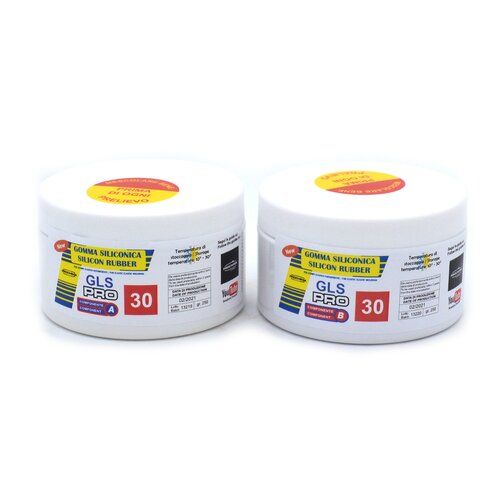
GLS-Pro 30
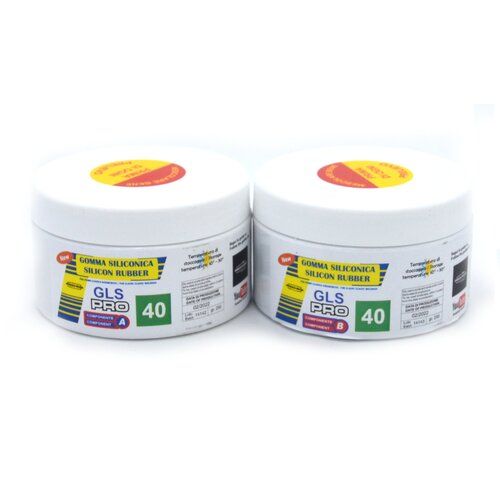
GLS-Pro 40
The GLS-PRO are particularly suitable for creating well (single cavity) moulds of highly detailed objects with significant undercuts, such as figurines, bas-reliefs, or candles.
The most suitable materials for pouring are plaster, wax, soap, and resins.
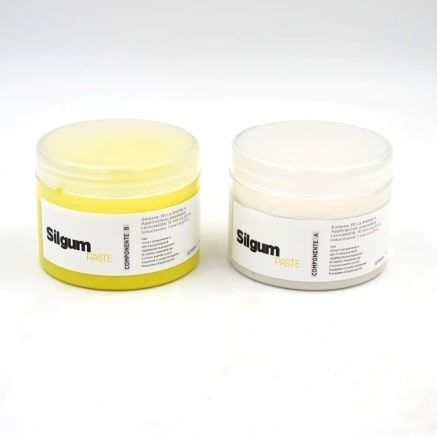
Silgum Paste is a mouldable polyaddition silicone rubber, suitable for plaster and resins. It has a very short working time (10 minutes) and about an hour of curing time. This allows for the rapid creation of small moulds with a high level of fidelity in details. Ideal for jewellery and small modelling parts.
Silgum Paste is a mouldable polyaddition silicone rubber, suitable for plaster and resins. It has a very short working time (10 minutes) and about an hour of curing time. This allows for the rapid creation of small moulds with a high level of fidelity in details. Ideal for jewellery and small modelling parts.
Polycondensation Silicone Rubber
Unlike the previous type, this silicone rubber cannot be used on personal items because it releases substances and residues that could cause allergic reactions. It is a very durable rubber, and its catalysis is not inhibited by contact with external substances. The catalyst ratio, in this case, is typically around 5%. Among its downsides is its reduced longevity.
Polycondensation silicone rubbers are also generally pourable and are suitable for making moulds with plaster, resin, soap, or wax.
The varieties most suitable for creating simple moulds, with few details and without the need for stretching during extraction, are:
- Silgum LF, a pourable rubber with high tear resistance. It withstands temperatures up to 150 °C and has a Shore A index of 30.
- Silgum MF, which stands out for its very short working times – between 15 and 20 minutes – and low tear resistance.
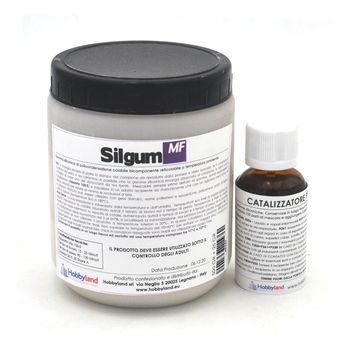
Silgum MF
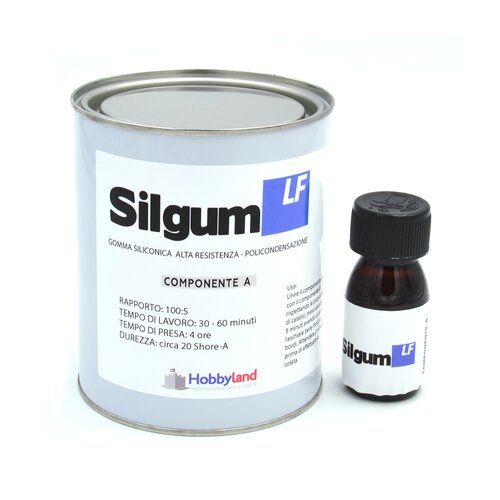
Silgum LF
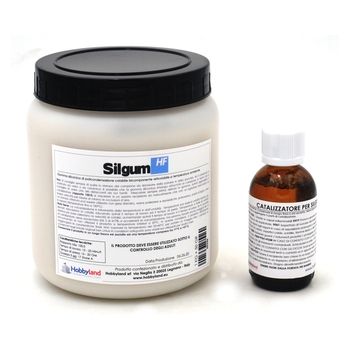
For creating moulds that are very rich in details and features, you can use Silgum HF, which has a temperature resistance of 150 °C, a Shore A index of 20, and a very long working time, ranging from 90 to 150 minutes.
For creating moulds that are very rich in details and features, you can use Silgum HF, which has a temperature resistance of 150 °C, a Shore A index of 20, and a very long working time, ranging from 90 to 150 minutes.
The Silgum line also includes a silicone rubber suitable for pouring metals (with a melting point of up to 330 °C), Silgum Fire, and a mouldable rubber, Silgum TIXO, which is suitable for vertical use for creating moulds from originals, especially in cases of large objects such as frames, capitals, or other architectural elements.
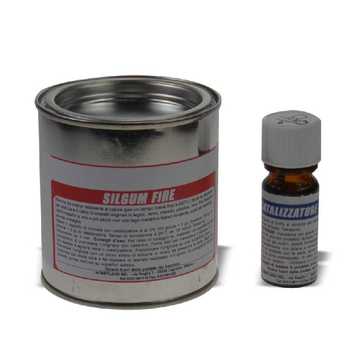
Silgum Fire
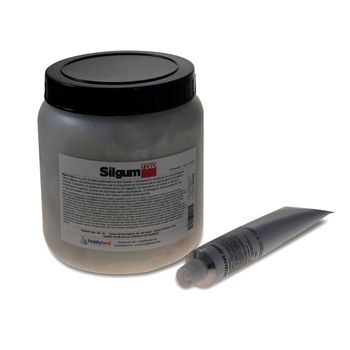
Silgum Tixo
Now that we have deepened our understanding of silicone rubbers, it will be easier to identify and choose the products best suited to your needs.
All that’s left is to get to work!