 Italiano
  English
  Français
  Español
  Deutsch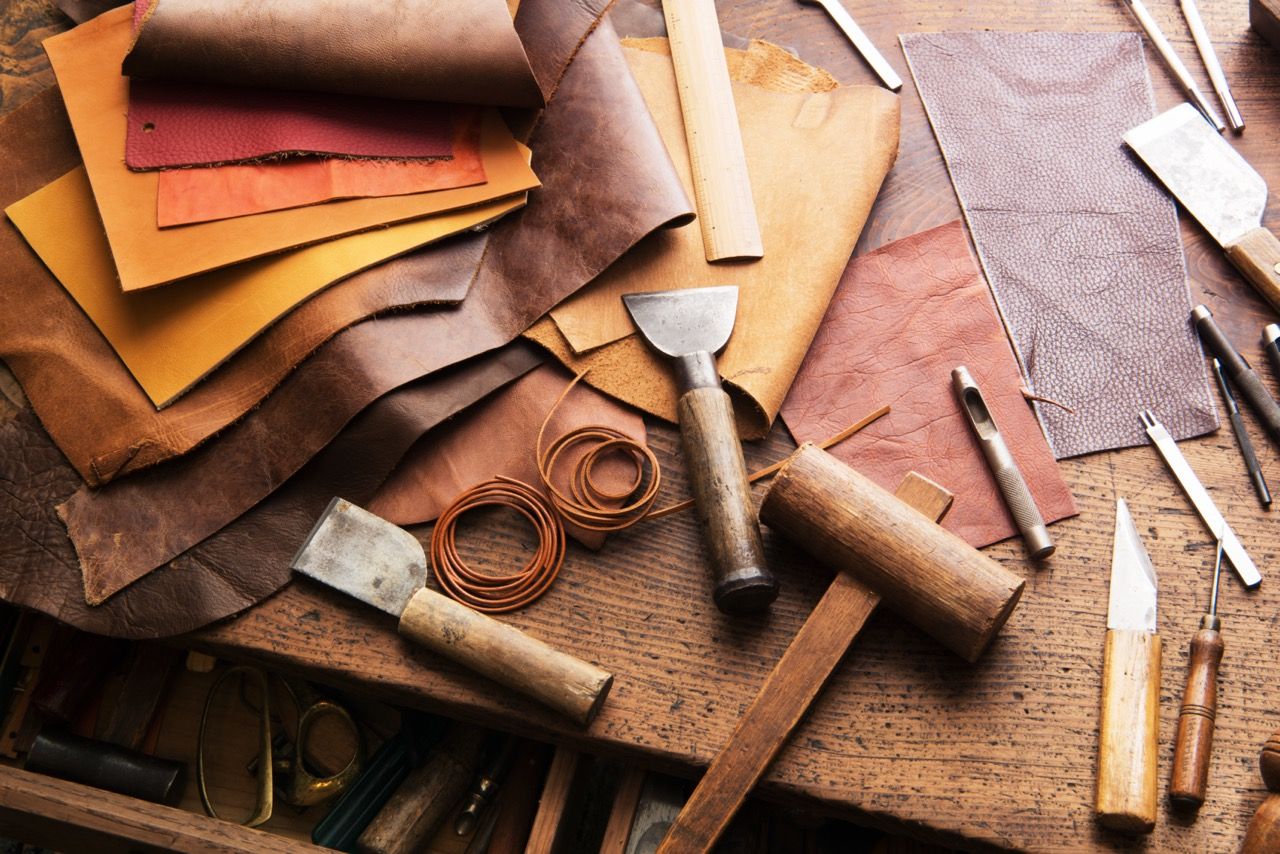
The range of objects and accessories you can create by working with leather and hide is truly vast: from keychains to belts, from wallets to bags, and even clothing and footwear creations, which may be reserved for professionals rather than experts, but can still serve as inspiration.
Leatherworking attracts many enthusiasts, and it is important to remember that it is a practice that originated to reclaim an already existing waste. Animals, in fact, are not killed for their skin, but rather for their meat.
If you have decided to challenge yourself with leather and hide working, one of the first steps is certainly to get to know the raw material well: the types, the different cuts available on the market, the thicknesses that distinguish them, and, above all, which choices are most suitable depending on the project you have in mind.
For this reason, we have put together this brief practical guide to help you choose the materials for your leatherworking.
Leather or hide? Let’s clarify
Let’s start with an important premise: in the advice, indications, and suggestions you will find in this guide, we will refer to leather and hide without particular distinctions. The reason is simple: what is commonly referred to as "hide" is simply a subset of the category "leather" (or hide), namely the product of processing animal dermis.
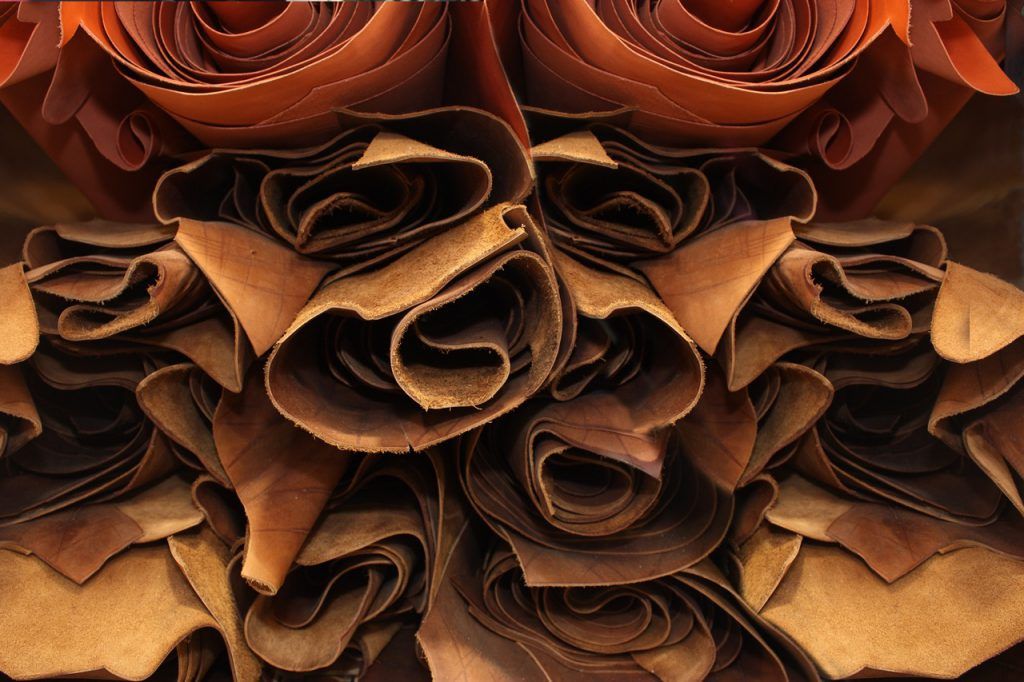
When discussing the difference between leather and hide, we are essentially referring to the fact that hide is leather that has been treated with tanning, and therefore has characteristics that make it suitable for processing. So, unless expressly specified, when we talk about leather in this article, we will still be referring to tanned leather, that is, hide.
What is tanning and what is it for?
Tanning is the process by which leather – which is an organic material, and therefore perishable – is made non-decaying, resistant to processing and wear, but also permeable and therefore breathable.
Tanning can be vegetable or chrome. In the first case, the leather is treated with natural substances, such as tannins. Vegetable tanning has a long history and is what gives hide the characteristics we consider most typical: naturalness, softness, and a lived-in appearance that gains charm over time.
Chrome tanning, which uses chemical agents, is the one that is now used for the vast majority of leathers.
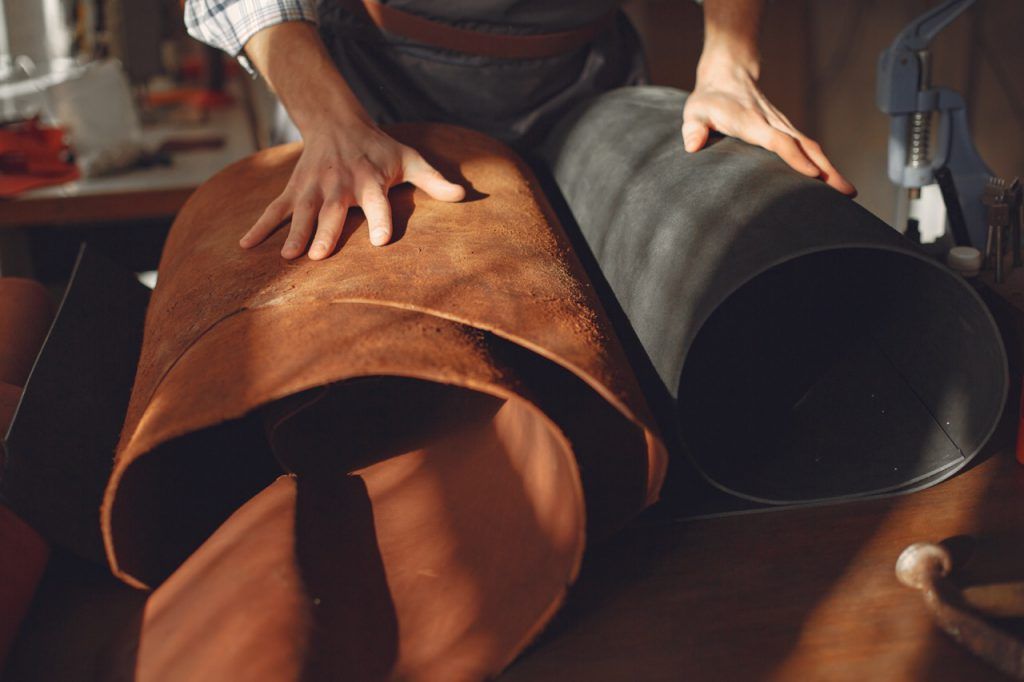
As you can imagine, each of these methods has its pros and cons. For example, vegetable tanning gives a more natural effect, contains no potentially toxic substances, and has a lower environmental impact, but requires a lot of time and a certain economic expenditure. Chrome tanning, on the other hand, is faster, cheaper, and gives hide waterproofing and greater heat resistance, but the final product will have a less natural appearance and a less characteristic smell, along with environmental implications.
Choosing the right material for leatherworking
Now we can get into the heart of what it means to choose the right raw material for leatherworking. The types you can choose from change not only depending on the tanning that the hide has undergone but also on the type of animal it comes from, the cut, and its size, as well as the thickness of the leather, which will obviously vary between different animals and cuts.
Type of animal
As we often explain in our guides, there are no absolutely right raw materials, but choices that are more or less suitable depending on what you want to create and the result you want to achieve. This also applies to leather: there are animal hides that are more suitable for making clothing and others that perform better in creating footwear, bags, and so on.
In general, soft and elastic leathers such as those from sheep (lamb, sheep, ram), calf, and reindeer are very well suited for making clothing items like jackets and coats.
Bags and belts may require thicker leathers and different resistance: in this case, bovine leather (cowhide) or pig leather is usually chosen.
And for furniture accessories and objects? Again, it depends a lot on the type of product you intend to create, but in general, it is advisable to choose from the ranges of bovine leather (cow, bull, calf, etc.). Faced with so many possibilities, it is easy to feel indecisive or confused… but we are here for that! Tell us about your project, and our experts will be happy to help you choose the most suitable leather to realise it.
Full grain leather and split leather
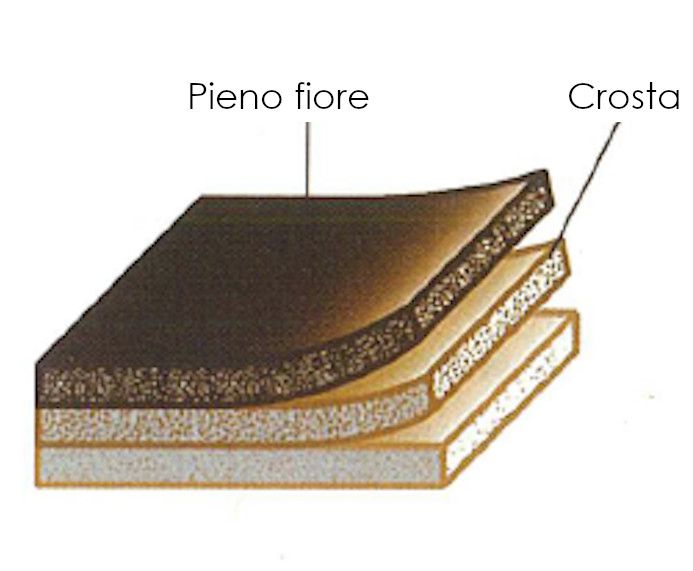
Full grain leather and split leather are both types of leather, but they have significant differences in quality, appearance, and use.
Full grain leather is the top layer of the hide, used for high-quality products and has a soft and uniform texture. The leather is dyed evenly and shows fewer marks or defects compared to split leather.
Full grain leather and split leather are both types of leather, but they have significant differences in quality, appearance, and use.
Full grain leather is the top layer of the hide, used for high-quality products and has a soft and uniform texture. The leather is dyed evenly and shows fewer marks or defects compared to split leather.
Split leather, on the other hand, is the lower part of the hide that is not used for high-quality products. It has a rougher (suede) texture and shows more defects and marks compared to full grain leather. Split leather is often used to produce items such as belts, gloves, or bags at lower prices.
In summary, full grain leather is more expensive and of higher quality than split leather, but both can be used to produce a wide range of leather products.
Thickness of leather
The thickness of the dermis of each animal varies depending on the cut you choose, and obviously not all thicknesses are suitable for all types of work. The secret to the success of good leatherworking, therefore, also lies in choosing the right thickness based on the project.
Let’s see what the most suitable thicknesses are for the different types of work.
For this type of measurement, ounces are usually used, especially internationally. One ounce is approximately 0.4 millimetres, and in the following indications, we provide both measurements.
- To create small objects, especially if they require shaping the leather into particular forms (think of keychains, small containers, decorative objects), as well as for creating clothing decorations or linings, it is ideal to choose leather with a reduced thickness, between 1 and 3 ounces (that is, between 0.41 and 1.19 mm).
- Slightly thicker leathers, up to 2 millimetres (about 5 ounces), are more suitable for creating thin wallets, small bags, or light cases for phones, cigarettes, or lighters.
- From 2.5 mm upwards, up to about 3 millimetres (from 6 to 8 ounces), the leather is more suitable for making more durable items: wallets, cases, book covers or albums, semi-rigid bags, cases for heavier items like tablets or cameras, and also light shoes like loafers.
Finally, for creating belts, rigid bags, cases and holsters, straps, and bands, or for making artistic engravings, we recommend choosing a thickness of no less than 3.5 millimetres (from 9 ounces upwards).
You can find further indications in the summary table below.
| Thickness (mm) | Ounces (oz.) | Typical Uses |
|---|---|---|
| 0,5 ~ 1 mm | 1 ~ 3 oz | Shoes, Lightweight bags, Linings, Cases, Apparel |
| 1 ~ 2,5 mm | 4 ~ 7 oz | Footwear, Bags, Knife sheaths, Aprons |
| 2,5 - 3,5 mm | 8 ~ 9 oz | Belts, Tack, Collars, Straps, Holders, Book covers |
| 3,5 ~ 5 mm | 10 ~ 13 oz | Heavy-duty belts, Shoulder straps, Tack, Machine belts |
| 5 ~ 6 mm | 14 ~ 16 oz | Soles, Safety harnesses |
These are just a few examples and tips, but remember that you can ask our experts for advice and suggestions on the best cuts and thicknesses for your specific project.
Cuts of leather
We have talked about thicknesses and uses, but the part of the animal used also influences the type of work.
What are, therefore, the cuts most frequently used for leatherworking?
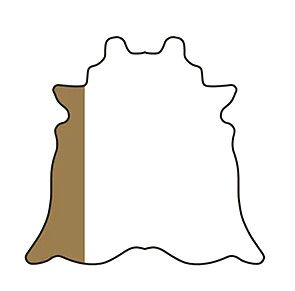
Side. It is elongated and narrow and has less texture than the rest of the animal's hide. It is well suited for producing belts, sandals, wallets, and other accessories.
Side. It is elongated and narrow and has less texture than the rest of the animal's hide. It is well suited for producing belts, sandals, wallets, and other accessories.
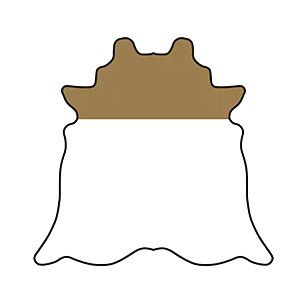
Shoulder. Corresponds, as you can imagine, to the shoulder area of the animal. It is a solid area, but remains malleable and flexible, and for this reason, it is often used for belts and straps.
Shoulder. Corresponds, as you can imagine, to the shoulder area of the animal. It is a solid area, but remains malleable and flexible, and for this reason, it is often used for belts and straps.
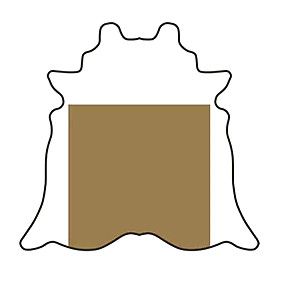
Rump. Refers to the lower part of the animal's back and can be single (half) or double fold (both sides). Extremely durable, it is usually used to make belts, technical items, and accessories.
Rump. Refers to the lower part of the animal's back and can be single (half) or double fold (both sides). Extremely durable, it is usually used to make belts, technical items, and accessories.
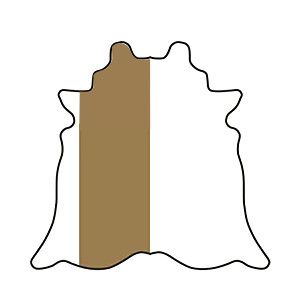
Back. It is a wider cut that includes shoulders and rump. Also due to its size, it is often used not only for belts and horse harnesses but also for clothing and other accessories, including furniture.
Back. It is a wider cut that includes shoulders and rump. Also due to its size, it is often used not only for belts and horse harnesses but also for clothing and other accessories, including furniture.
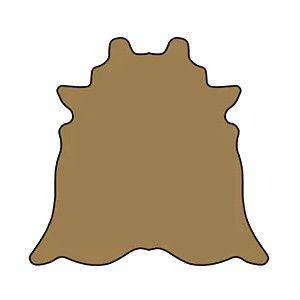
Whole hide. Includes all the parts we have listed and therefore represents the maximum size available. For this reason, it is chosen to make clothing, furniture, car seats, and upholstery in general.
Whole hide. Includes all the parts we have listed and therefore represents the maximum size available. For this reason, it is chosen to make clothing, furniture, car seats, and upholstery in general.
Where and how to buy leather
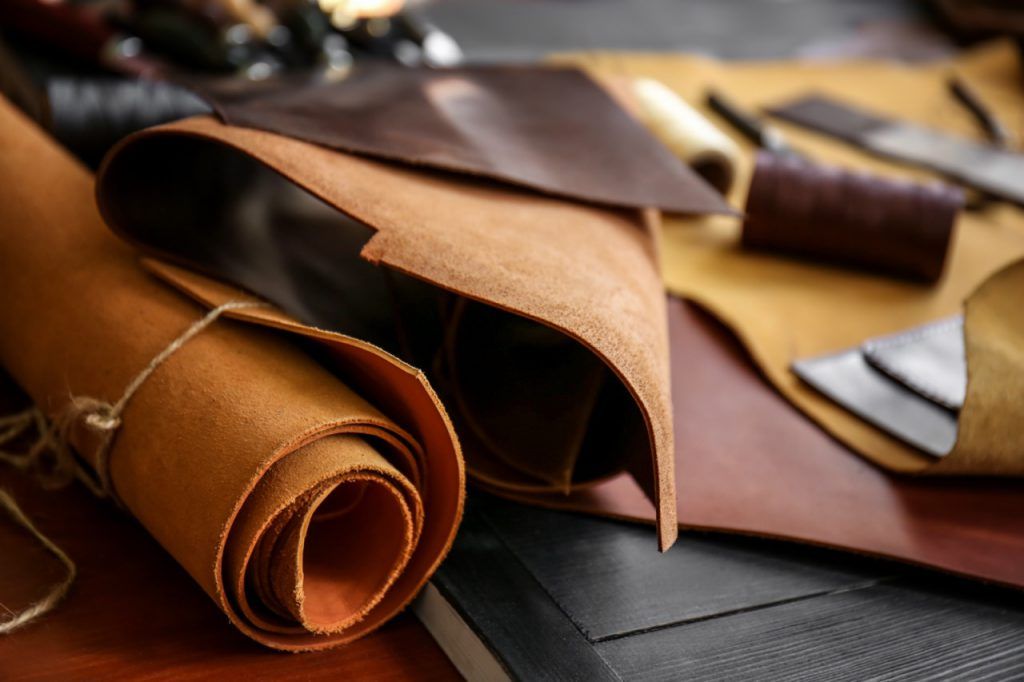
The many tanneries and factories produce huge quantities of waste and remnants from processing that, instead of being thrown away, become our main source of raw material. Scraps, cuttings, and pieces of leather and hide are available in large quantities and endless varieties of cuts and colours. On our website, for example, you can find vegetable-tanned hide in various cuts, such as shoulder or rump, as well as pre-cut belts and bracelets, or already die-cut elements, ideal for decorations and small gift items.
Before you begin: dyeing and treatments
Another aspect that personalises your project concerns the treatment of the leather. Will you use it natural, or do you plan to dye it? Will the product you want to create be exposed to wear and external agents, or will it remain in a closed and protected place?
Thinking about these aspects will help you decide which other steps to take before starting the actual processing.
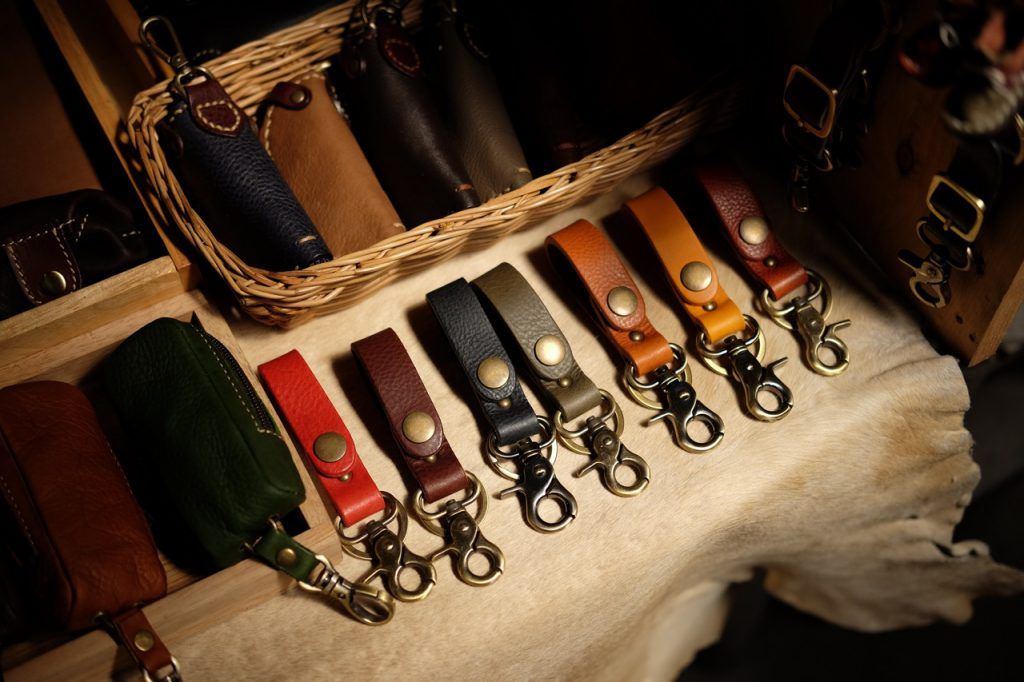
If you have decided to dye the leather, you can follow our advice on how to dye hide with water-based dyes, or also explore other types of dyes and colour application techniques.
Also in our guide to dyeing hide, you will find useful advice and indications on protective and fixing treatments, which will help ensure the leather protection from wear, hydration, and elasticity over time.