
In the first part of this guide, we talked about the various types of candles you can create at home and the different types of wax you need to make them.
In this article, we’ll talk about the materials and tools you need to make candles at home, which molds to choose, and how to organize your workspace.
In the third and final part, we’ll go through the process of making candles at home together.
Here is the table of contents:
- What do you need to make the candles?
Wax
Melting containers and wax melter
Wicks
Colors and pigments
Candle fragrance oil
Molds or containers
Thermometer - Melting containers for various types of candles
- Choosing the right wick
Round wick
Flat wick
Natural wick
Waxed wick
Table summarizing wicks by candle type
The measurements of the wicks
Calculate the diameter for wick measurement - About colors and pigments
How can I control the amount of color?
Does the color of the candle stint? - Choosing the right mold
- Kits with everything you need to make candles at home
- Organize the work area
What do you need to make candles at home?
Wax
Surely wax is the basic ingredient you need to make candles at home: Hobbyland has many types of wax in store, each with unique characteristics. If you’re starting from scratch, before placing your order we suggest you read here, where we talk about the different types of wax.
Melting containers and wax burners
Wax has a relatively low flash point (from 160°C and up), so it’s crucial not to exceed this temperature. That’s why it’s better to heat the wax in a double boiler with an aluminum container inside a pot with water, or use a double-walled pot. If you want something more professional, you might consider an electric stove: they come in various sizes. Here you’ll find various types of equipment (double boilers and containers of various shapes and sizes).
Warning: the melting process should always be monitored in person, NEVER leave the wax unattended on a lit stove!
Wicks
One of the most intriguing challenges when you want to make candles at home is finding the right wick. When choosing it, you’ll need to consider every aspect of the candle: shape, size, type of wax, color, and scent. If you’re just starting, you can follow the guidelines on wicks a bit further down.
Colors and pigments
There are two types of colors for wax: dyes and powdered pigments.
- Dyes, in liquid form or in stick form, are generally used to completely color (even inside) the candles. These dyes behave in wax like sugar does in water: they mix with the melted wax and dissolve perfectly. However, they have a lower resistance to ultraviolet rays: this means the candles might fade over time.
- Powdered pigments, on the other hand, have great coloring power and hold up well over time, making them especially suitable for coloring the surface of white candles by dipping.
However, be careful: the fact that they are in powder form makes them more resistant, but also more difficult to work with: they dissolve with more difficulty compared to liquid dyes and must be mixed carefully. Moreover, if the candle is not colored carefully, residual traces of pigment can hinder combustion. And well, a candle that doesn’t burn well isn’t a well-made candle…
Keep in mind that in liquid wax, the pigment tends to always settle at the bottom, so you need to stir continuously before starting the work.
Important: do not use wax crayons to color your candles. They do not blend well with the wax, clog the wick, and compromise proper combustion.
Wax flavorings
Wax fragrances are synthetic blends based on essential oils designed to withstand the wick’s flame.
You will need to add the fragrances according to weight percentages between 3 and 10% depending on the type of wax you use. For example, 6% of fragrance on 100 grams of wax will be 6 grams.
As a general rule, you should add candle fragrances at a temperature between 70 and 80°C. If you add it at higher temperatures, you might “burn” the fragrance, compromising its final aroma, while adding it at lower temperatures risks “sweating” the fragrance, which would compromise the proper burning of the candle.
Always check the flash point of the fragrance: in some cases, this could be at temperatures lower than 70°C. So how do you do it? You test: conduct tests to find the right compromise for the pouring temperature.
The pouring temperature of the wax with fragrance inside the molds or containers varies depending on the type of wax. As with everything: try, experiment, test (always safely and with quality materials!). No advice will ever be worth your experience.
And essential oils?
We advise against using essential oils to scent candles. Most of these tend to “burn” when poured at high temperatures, and even adding large amounts, the candle will hardly have an intense fragrance.
Molds or containers
Hobbyland has a huge assortment of candle molds, in polycarbonate, metal, silicone, ideal for making any type of candle. If you want to make jar candles or tealights, you will also find a good selection of containers.
Thermometer
The thermometer is a fundamental tool for making candles: the melting temperature of the wax and the pouring temperature can substantially affect the final result. Hobbyland offers a specific glass thermometer with a protective cage, suitable for being suspended in the melting wax container.
Melting containers for various types of candles
Dipping candles
You will need containers at least 40 cm high, to place in a larger container for the bain-marie. For beeswax candles, you need at least two containers; consider that more wax colors require a container each in which the candle will be dipped to create the different layers. At Hobbyland, you can find both aluminum cylinders and the container for the bain-marie. You can also find a specific electric “bain-marie” (stove) that keeps the wax always at the right temperature.
Mold candles
If you need to melt wax for molds and use only one color, it’s better to use small wax melters, which are easy to handle. You’ll also need: thermometer and molds in polycarbonate, metal, silicone.
Hobbyland offers a wide selection and you can also create a custom mold using the silicone rubber line.
For casting temperatures I refer you to the other post where we talked about waxes.
Choosing the right wick
The wick is a fundamental element in candle making: without the right wick, the candle will burn poorly. And what kind of candle is it if it doesn’t burn well?!
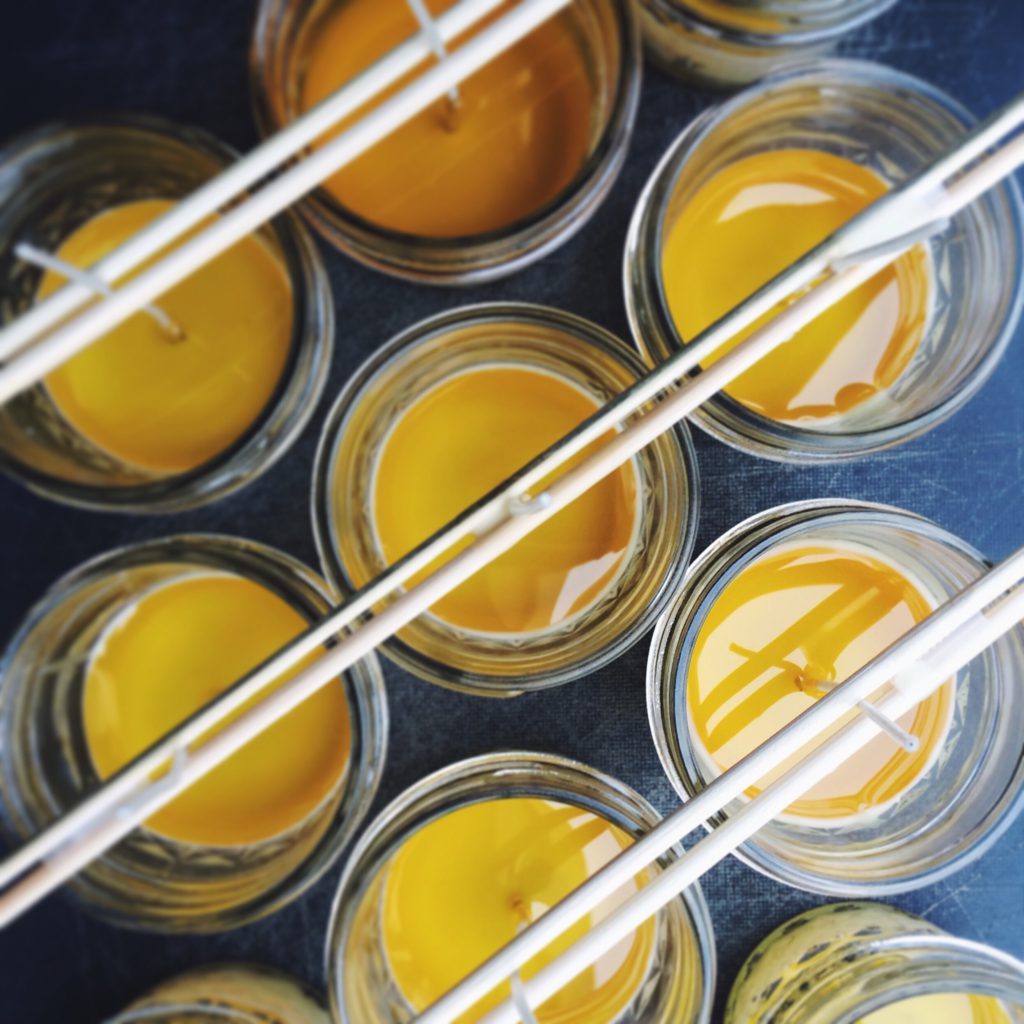
A candle with the right wick will have these qualities:
- A continuous flame with a constant size. The flame will not emit sparks.
- When lit, it will form a “pool” of wax at the flame without dripping.
- The container will have a moderate temperature.
Unfortunately, there’s no magic formula to determine the correct wick: the ideal solution can vary based on the wax used, the size of the candles, the type and amount of scents and colors used. Only your experience and continuous experimentation will give you the answer.
Besides the wick, you might need wick trimmer scissors and tweezers.
To help you start off on the right foot, here’s a brief overview of our wicks and the most recommended uses:
Round wick
Pure cotton, with a paper core, ideal for container candles and tealights. You can use it with paraffin, wax pearls, soy wax.
Flat wick
Pure cotton, braided and soft. Used for cylindrical, conical, or twisted candles. It can also be used in candles with irregular shapes, figures, characters, etc., when you want to avoid dripping as much as possible. The flat wick is suitable for paraffin and wax-stearin blends, but not suitable for beeswax.
Natural wick
Eco-friendly, made of mixed cotton and linen fiber, this wick is specially designed for vegetable waxes and all soft filling waxes, where high percentages of fragrances are used. It is not treated with chlorine-based products or chlorine derivatives and is not made with materials harmful to health.
Pre-waxed wick
- Natural, with wick holder clip, made of cotton with a linen core, waxed with soy wax. It is suitable for candles with a diameter up to 80 mm.
- Round rigid wick with clip, for powder, gel, or traditional candles. Ideal for candles up to 80 mm in diameter.
Let us summarize:
| Wick type | Container candles | Self-supporting candles | Candle tealights |
|---|---|---|---|
| Round wick with paper core | ✅ | ||
| Flat wick | ✅ | ||
| Natural wick | ✅ | ✅ | ✅ |
| Pre-waxed wick | ✅ | ✅ | ✅ |
The measurements of the wicks
There are different sizes for each type of wick based on the candle’s diameter.
Round wick
- No. 4: candles with a diameter up to 50 mm.
- No. 6: candles with a diameter up to 80 mm.
- No. 8: candles with a diameter up to 100 mm.
Flat wick
- No. 12: candles with a diameter up to 20 mm.
- No. 24: candles with a diameter up to 40 mm.
- No. 48: candles with a diameter up to 50 mm.
- No. 72: candles with a diameter up to 70 mm.
- No. 105: candles with a diameter up to 100 mm.
Natural wick
- No. 6: candles with diameters up to 40 mm.
- No. 10: candles with diameters up to 70 mm. No. 12: candles with diameters up to 100 mm.
Calculate the diameter for wick measurement
The first thing to consider is the diameter you need. Here are some examples of how to calculate the diameter:
- In a tapered candle with a base of 10 cm, the median diameter will be 5 cm, and consequently, you’ll use a wick for candles up to 5 cm in diameter.
- If you have a spherical candle of 8 cm, you’ll use a wick for candles up to 4 cm in diameter.
- For a cylindrical candle with a diameter of 6 cm, you’ll need a wick for candles up to 6 cm in diameter.
- If your candle is symmetrical, you’ll evaluate the diameter of the base.
The flat wick does not have a verse, while the round wick does. On the flattened part you can see a “V” shape. That will be the upper part of the wick.
About colors and pigments
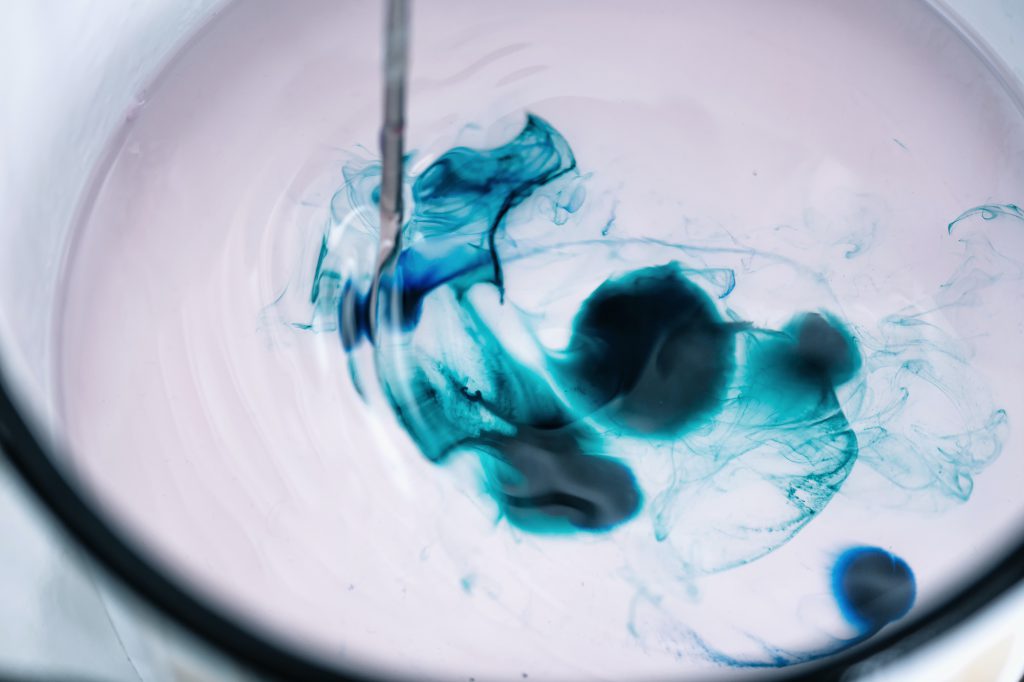
We’ve already talked to you about the various colors and pigments. Now let’s take a useful step forward for crafting.
How can I control the amount of color?
To check what the final color of the candle will be, you can dip a few drops of melted wax into a container of cold water. The wax will solidify immediately and allow you to assess the color.
However, consider that the finished candle will have a slightly more intense shade because there’s a greater amount of wax. It’s always a good idea to add the dye little by little so you can adjust the intensity.
Does the color of the candle stint?
If you’ve used a lot of dye, it’s inevitable that some color will transfer to whatever comes into contact, like the base or packaging. That’s why we recommend protecting the candle, if it has intense colors, with the special lacquer for candles or by dipping it in pure paraffin.
Choosing the right mold
The more the mold withstands the temperature, the higher the melting temperature will be and the better the result.
The greater the difference between the ambient temperature and the melting temperature and:
- The wax will contract more as it cools
- The candle will be easier to remove from the mold
- The candle will be more compact, smooth, and shiny
- There will be fewer residues in the mold.
Beeswax candles are more difficult to remove from the mold, so it’s better if you use conical or pyramid molds, or two-part molds or flexible silicone molds.
Of course, the more asymmetrical the mold, the more problematic it is, both for removing the candle and for burning, so it’s good to do a bit of experimentation.
How much wax do I need for the mold?
Generally, just fill the mold with wax granules to get the amount you need. However, remember that wax shrinks when it cools, so calculate a bit more wax to top up the mold.
How much does wax shrink when it cools? For gel wax, the ratio is 1 liter = 750 g. Roughly, considering the volume, a regular glass holds 200 ml, so with 1 liter of gel wax, you can make about 5 glasses.
It’s more difficult to calculate the amount of wax you need for dipped candles because to fully immerse the candle, the container must be full.
Kits with everything you need to make candles at home
If you want to have everything you need, already selected and prepared, we have two kits for you.
The basic kit includes:
- 2 Kg of wax blend
- 3 pigment sticks assorted colors
- 1 wax melting container
- 1 container tongs
- 1 cylindrical mold
- 1 pack of candle wick 3m
- 1 pack of wax fragrance
- 1 book on candles.
The deluxe kit is more complete, and includes:
- 1 electric wax melting stove with 6 containers
- 1 container tongs
- 10 Kg of pre-mixed wax pearls
- 3 packs of 50 g powdered pigments in various colors
- 1 wax thermometer
- 1 pack of candle wick 50m
- 3 packs of wax fragrances
- 3 acrylic candle molds, 1 cylinder, 1 square, and 1 sphere
- 1 pack of candle lacquer 250 ml
- 1 mold release spray
- 1 book on candles.
Organize the work area
Wax or dye stains are difficult to remove, so if you want to make candles at home, it’s best to carefully prepare the area where you’ll be working.
It’s better if you cover the work surfaces with newspapers and the stovetop with some aluminum foil.
Have everything you need within reach: melting container, wax, colors, scents, wick, molds or containers, scissors, scrapers, thermometer, decorative elements.
In the third part of the guide, we’ll see in detail all the steps to create beautiful, wonderfully scented candles at home, made with your own hands!