 Italiano
  English
  Français
  Español
  Deutsch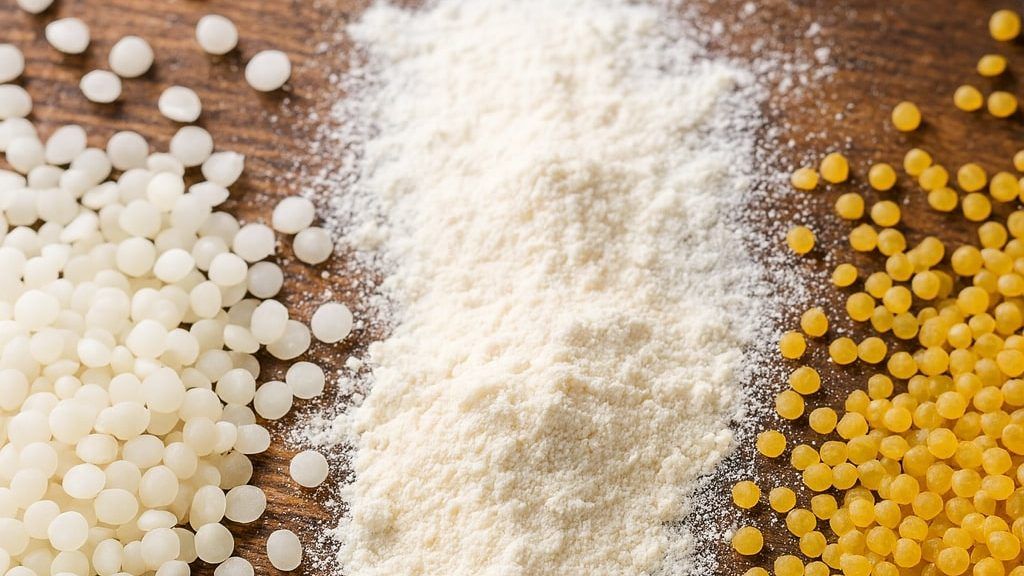
In recent years, hobbyists and candle professionals have increasingly shifted their choices towards vegetable waxes rather than paraffin wax (a petroleum derivative).
The reasons are various, let's explore them together:
- Environmental aspect: natural waxes (vegetable or animal) are biodegradable, renewable (or at least partially) and generate less harmful emissions compared to paraffin.
- Combustion quality: they often produce less smoke, soot, and residue.
- Sensory experience: some waxes, like beeswax, carry a delicate natural scent; others hold added fragrances better.
- Branding and market: candles made with vegetable waxes are appreciated by consumers who are mindful of sustainability.
- That said, each type of wax has its pros and cons: there is no “perfect wax” for every use. The ideal approach is to understand their characteristics, experiment, and adapt the choice to the type of candle you want to create (containers, pillar, scented, decorative, etc.).
Types of vegetable wax: characteristics, advantages, and limitations.
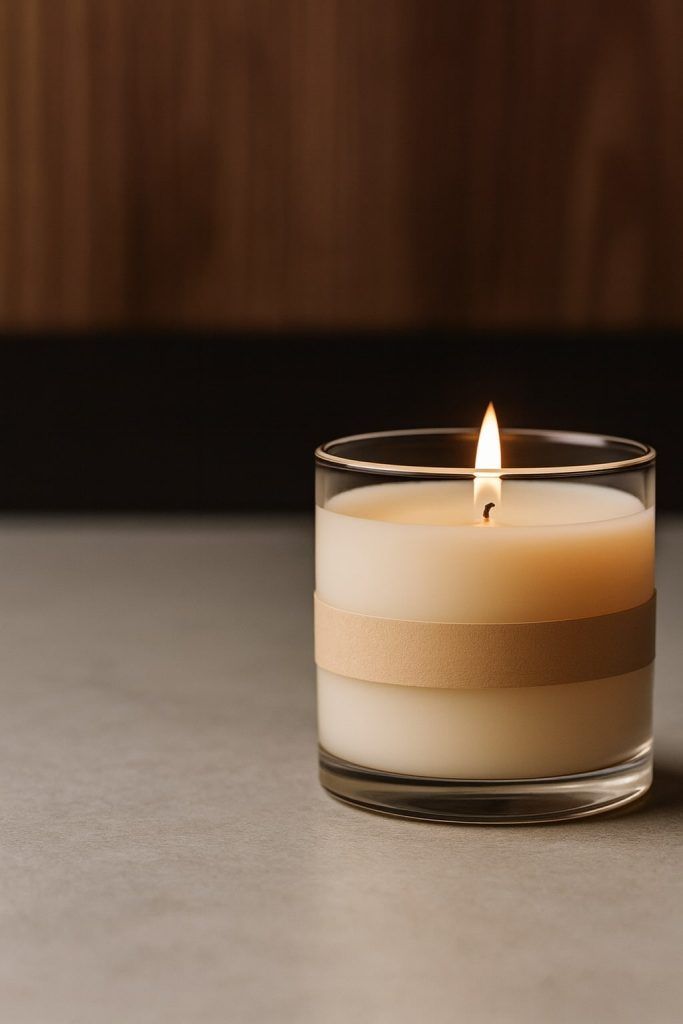
SOY WAX
Soy wax is obtained through the hydrogenation of soybean oil, this process transforms the fats, the oil “hardens” and becomes a solid wax.
Main advantages
- Burns in a more “clean” manner compared to paraffin, with less soot.
- Is biodegradable.
- Good ability to hold and release fragrances.
Disadvantages / limitations
- Low melting point: by nature, soy wax is quite “soft”, making it difficult to work with and store if temperatures are high.
- Cannot support vivid colours like some synthetic waxes (the pigments appear muted).
- Sometimes the added fragrance does not “impact” as strongly as with paraffin, if not well balanced.
Therefore, often the soy-based waxes you see on the market are blends, which correct the limitations by adding, in calibrated percentages, other hard waxes such as vegetable stearin.
You can find soy wax in two types:
- Ecosoya Pillar Blend: specifically designed for use in moulds.
- Ecosoya CB-135: optimised for containers (jars, glasses, vases).
Why two different varieties?
Because they have specific characteristics: the wax for moulds, during cooling, tends to shrink slightly allowing for easy release from the mould, while the one for containers does not shrink, thus remaining perfectly adhered to the walls of the container.
PALM WAX
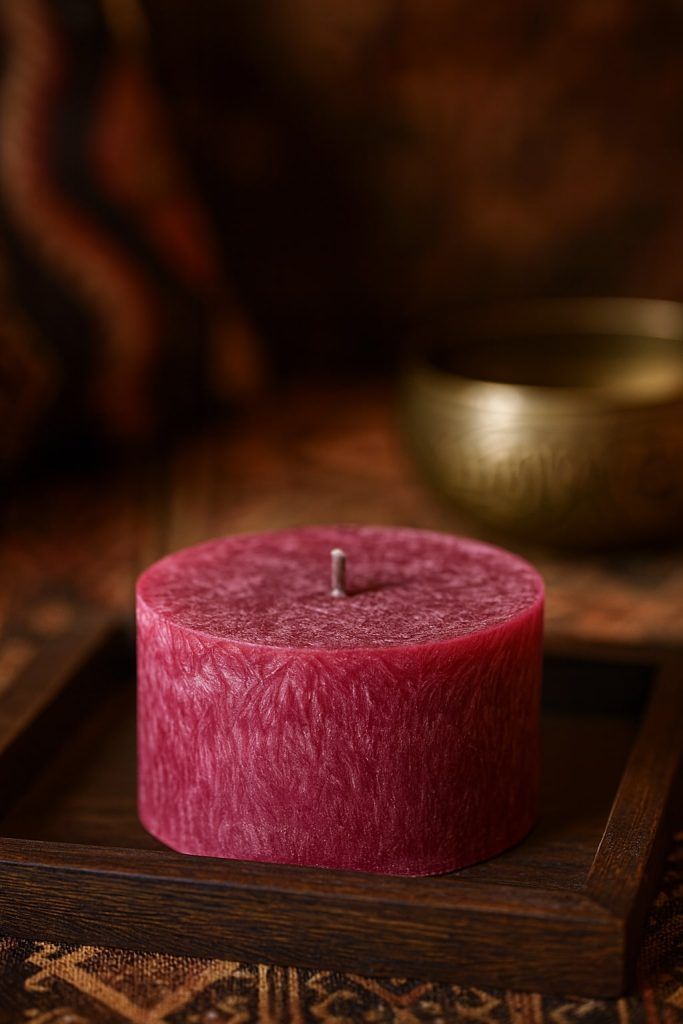
Palm wax is obtained from hydrogenated palm oil. It is a hard vegetable wax that creates special effects on the surface.
Main advantages
- It is harder and more heat-resistant compared to soy.
- Generates characteristic surface decorations: crystallisations, veining, “scaly” effects that many enthusiasts seek for aesthetic purposes.
- Has good power to hold fragrances and colours.
- Greater stability in warm climates compared to waxes with a lower melting point.
Disadvantages / limitations
- While it holds fragrances well, the scent diffusion during combustion is slightly more delicate compared to soy.
- Can be “brittle”: in cold environments, it may form cracks or chips.
There is also a version of palm wax for moulds and those for containers.
BEESWAX
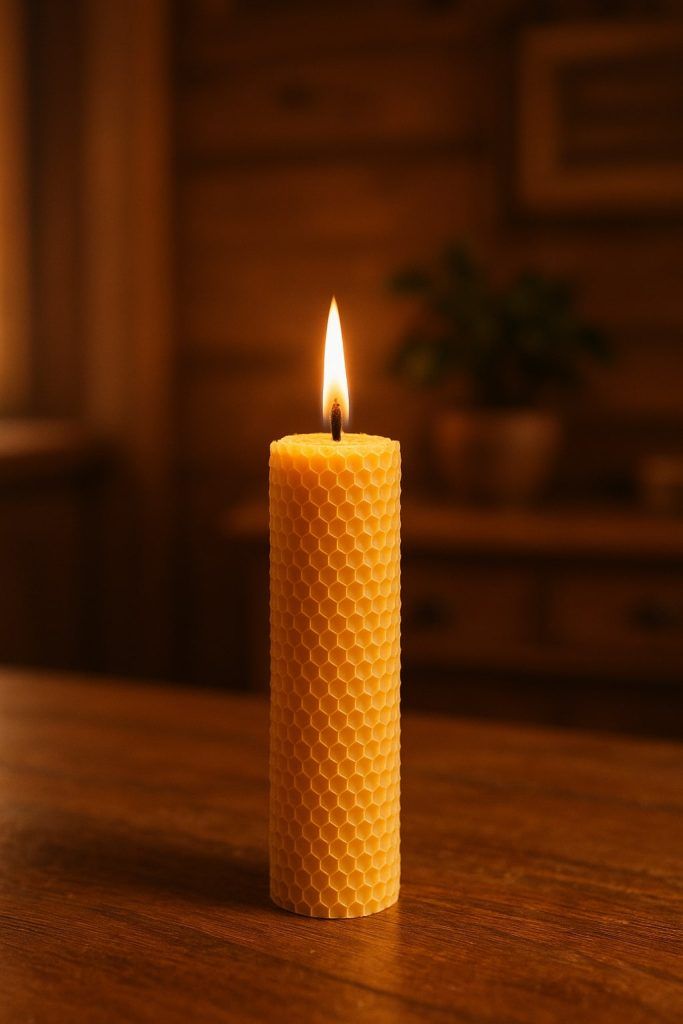
The first wax in history. As early as 3000 BC, candles were made with beeswax. This is because it forms from a natural process: bees produce it naturally in the honeycombs (hives).
Main advantages
- Burns very “cleanly”, with very little smoke or residue.
- Has a sweet, natural scent characteristic of the hive, making the candle almost “self-scented”. In fact, fragrances are rarely added.
- It is hard and stable, excellent for pillar candles, torches, decorative candles.
Disadvantages / limitations
- Cost: it is often more expensive compared to vegetable waxes or blends, due to harvesting and processing.
- Ability to hold fragrances: it is not as “neutral” as vegetable waxes — the scent of the wax can interfere with added fragrances.
- Colour: it can have yellowish, brown tones — often it needs to be toned down or filtered to achieve light colours.
- Not a very high melting point: if the candle is exposed to high temperatures, the wax may soften.
OLIVE WAX
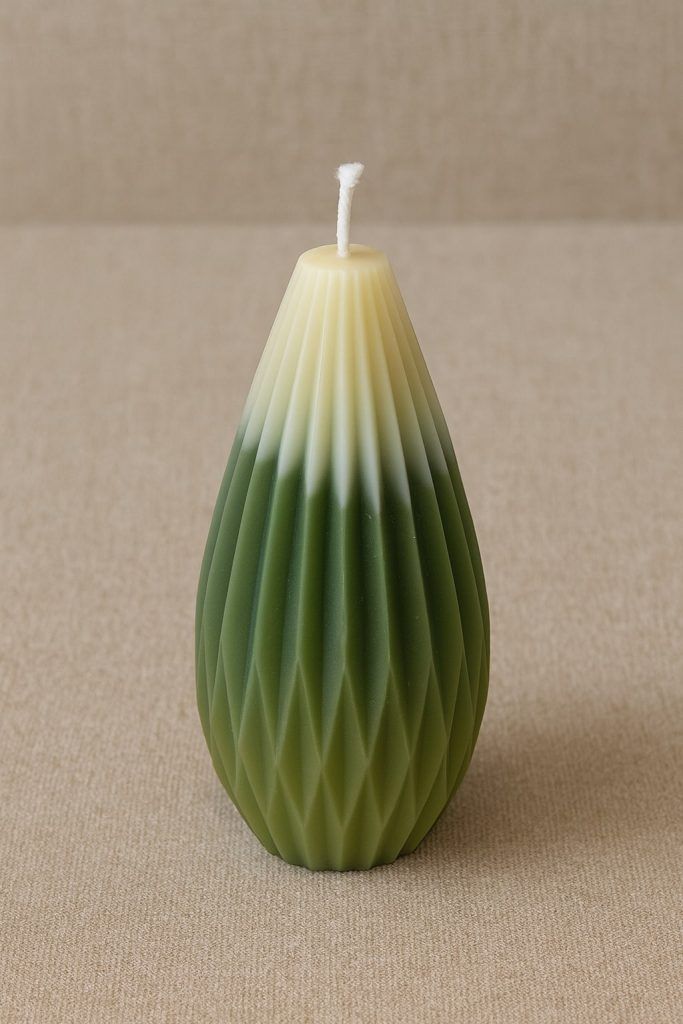
This is a vegetable blend based on olive oil. The oil is refined and hydrogenated as is done for soy, so that it transforms from a liquid state to solid.
Main advantages
- A more sustainable vegetable wax compared to others, as it uses a typical Mediterranean base (the olive) and reduces dependence on crops like palm or soy.
- Has a clean burn, good yield with fragrances, and a smooth, even finish.
Disadvantages / limitations
- It is considered a “premium” wax for natural candles, so in some cases, the cost may be higher compared to soy.
- It is not yet widely available: it may be harder to find.
VEGETABLE STEARIN
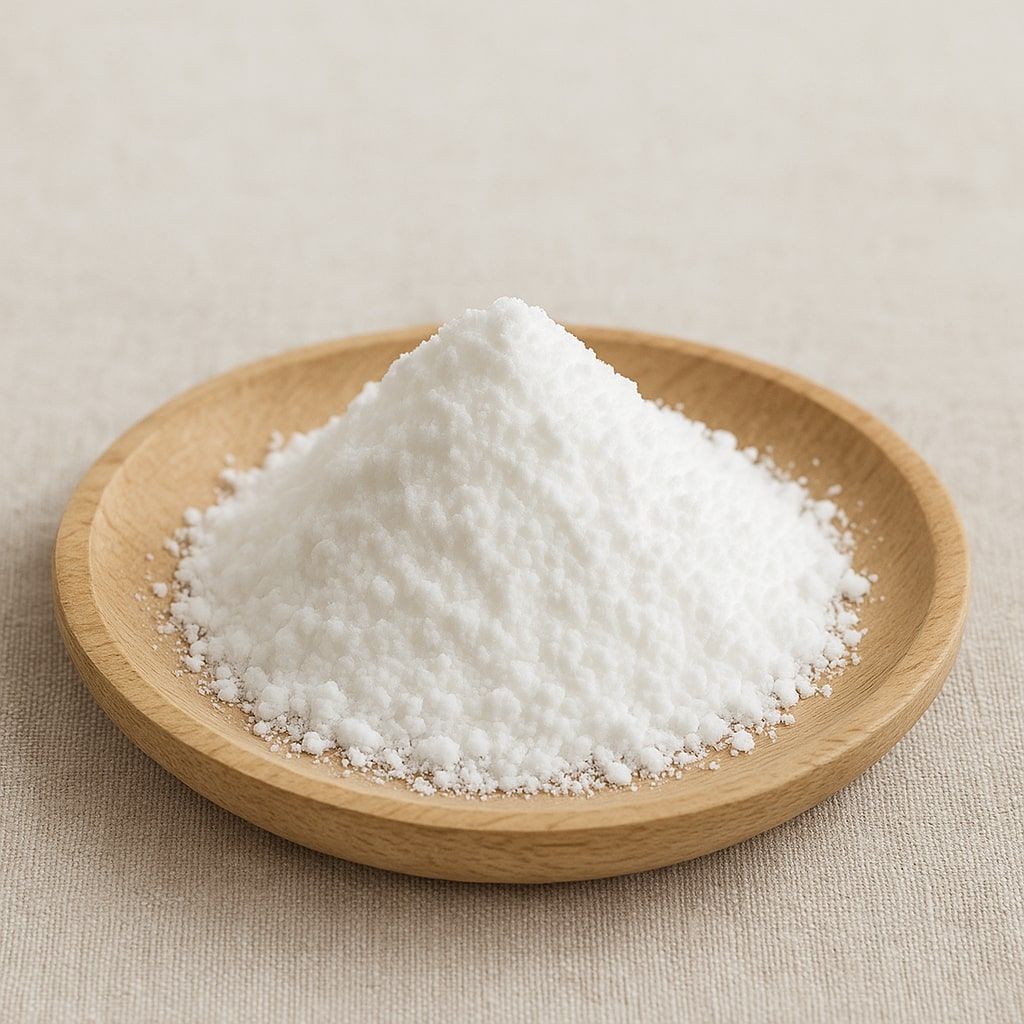
Vegetable stearin is often used as an additive to vegetable waxes to:
- Increase hardness / melting point
- Improve surface finish (reduce sinkholes, improve stability)
- Increase fragrance yield
- Stabilise combustion
How to add it
- 10–20% to soy and olive wax → to make it harder and more resistant.
- 5–10% to palm and beeswax → to improve stability and combustion.
So you wouldn't use it alone (or if you do, with caution), but as a “corrector” in the formulas.
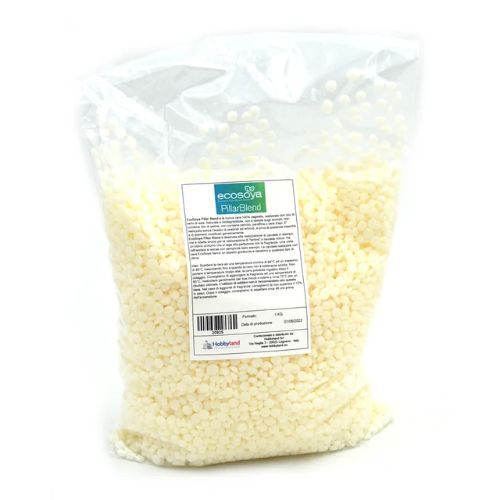
Soy Wax Pillar Blend
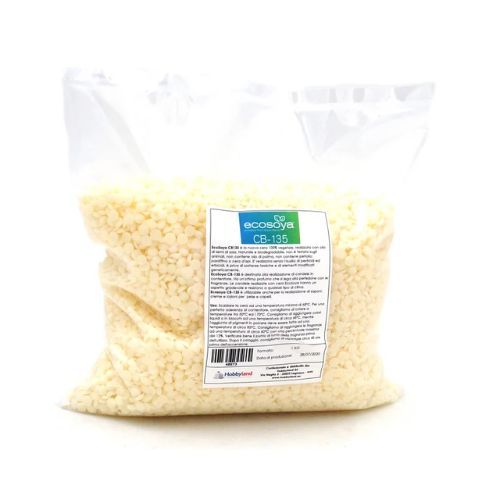
Soy for Containers
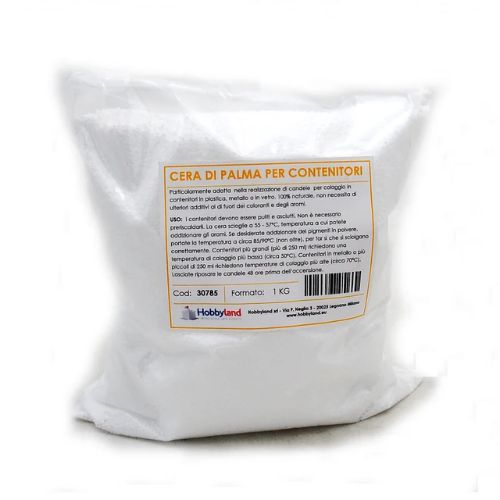
Palm for Containers
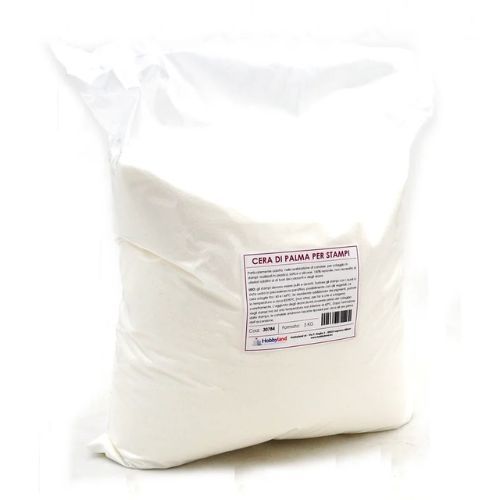
Palm for Moulds
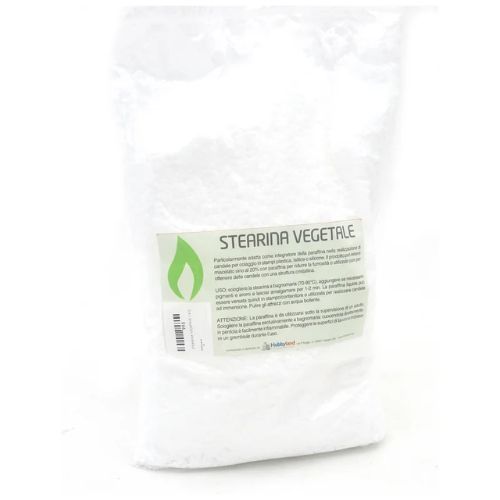
Stearin
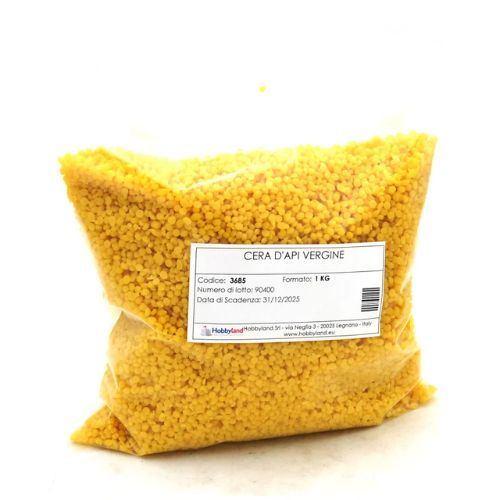
Bees
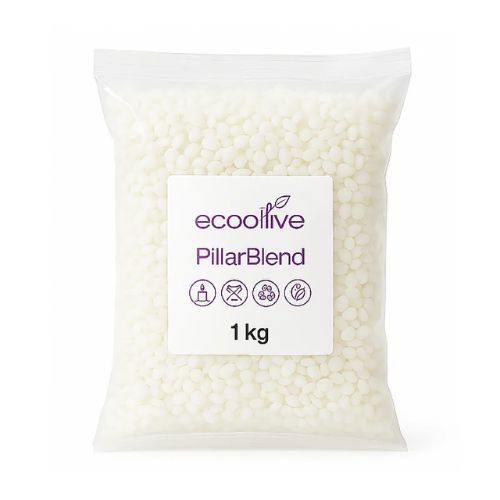
Olive
So, which wax should you choose for your project?
Here’s a summary to guide you:
| Types of wax | Recommended use | Advantages | Limits |
|---|---|---|---|
| Soy for containers | For jars and containers | Burns cleanly, holds fragrance well | Less heat-resistant |
| Soy for molds | Pillar candles and special shapes | Burns cleanly, holds fragrance well | Less heat-resistant |
| Palm wax for containers | For jars and containers | Unique crystalline effects, heat-resistant | Can be brittle in cold environments |
| Palm wax for molds | Pillar candles and special shapes | Unique crystalline effects, heat-resistant | Can be brittle in cold environments |
| Beeswax | Pillar candles and special shapes | Naturally scented | Higher cost |
| Olive wax | Pillar candles and special shapes | Smooth, glossy finish; releases cleanly from molds | Less common and harder to source |
| Stearin | Additive for wax blends | Increases hardness and improves burn performance | - |
Don't miss the other content on the blog that talks about candles, you can find it at this link.
Tutorials, tips, and practical guides are waiting for you!